
Cat S and Cat N Write-Offs Explained
Category S means your car suffered structural damage. Category N means the damage was not structural. Both can legally return to the road after proper repair, and both stay on the car’s history permanently. Your car is off the road and a letter has just told you it is finished. That letter looks like a verdict on the car, and it is not. A write-off is an economic decision by an insurer, not a statement that the car is beyond saving, and drivers regularly scrap repairable cars because nobody explained the difference. This guide covers all four categories, how the decision is made, and whether keeping the car is sensible.
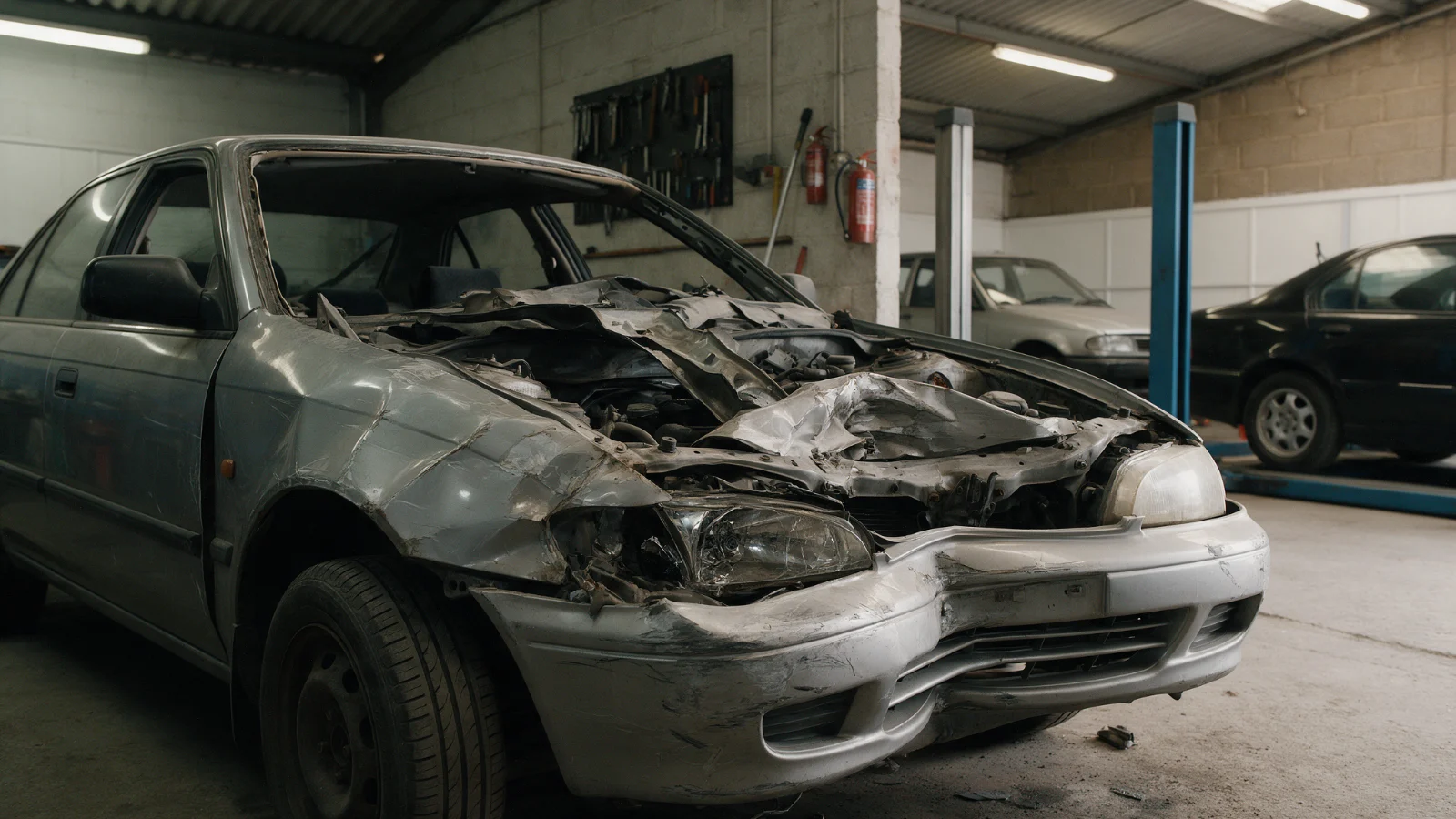
What are the write-off categories
Four categories exist under the salvage code the insurance industry works to, and only two of them allow the car back on the road. The system replaced the older Category C and D labels, which is why a car from that era can still show a C or a D on its history.
| Category | What it means | Back on the road | Parts reusable |
|---|---|---|---|
| A | Damage so severe the whole vehicle must be crushed | No | No, nothing may be salvaged |
| B | Extensive damage, the bodyshell must be crushed | No | Yes, parts may be reused |
| S | Structural damage, assessed as repairable | Yes, after proper repair | Yes |
| N | Non-structural damage, uneconomic to repair | Yes, after proper repair | Yes |
We assess categorised cars at the Rumney workshop, Unit 4 Wentloog Buildings, CF3 1TH, where Ali Hindal will tell you whether your car is worth saving, using six work bays and an on-site spray booth. Category A is the only one where nothing at all survives. Category B is a car whose shell is finished but whose parts have value. Those two are decisions about safety, and they are not negotiable.
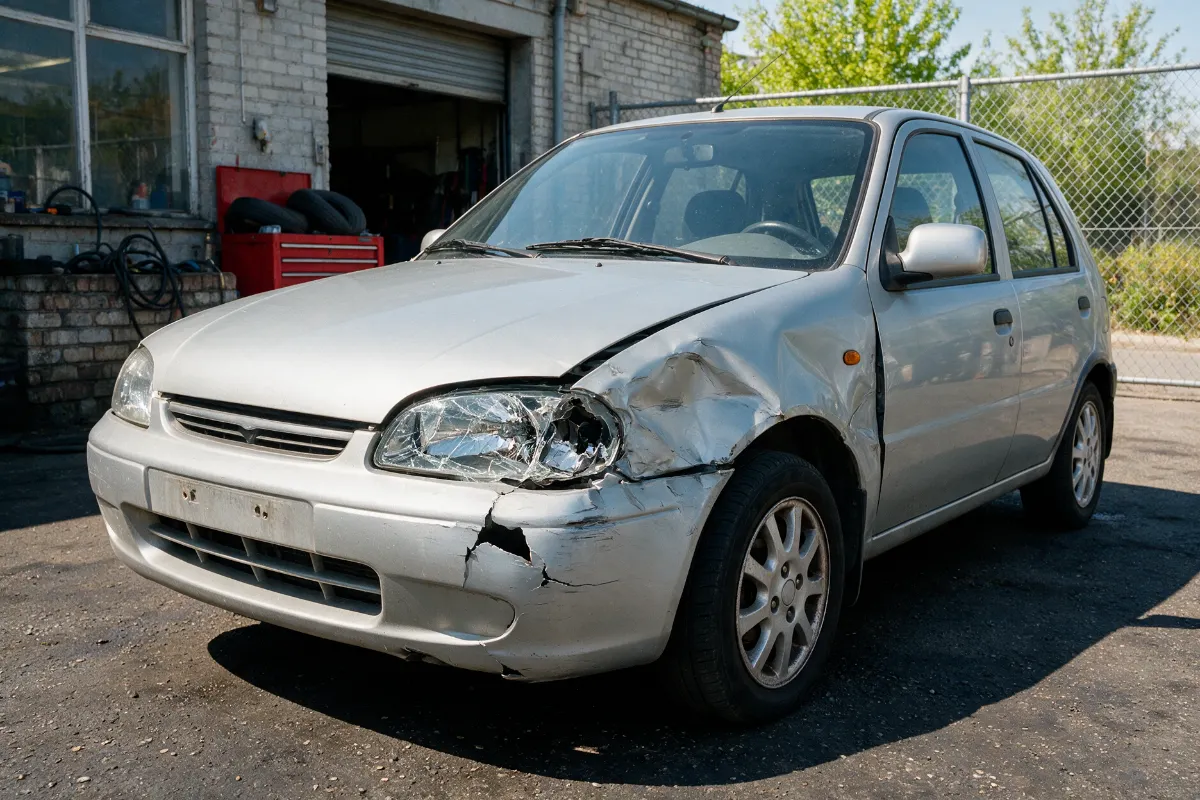
Category S and Category N are decisions about money. In both cases somebody looked at the repair cost against what the car was worth and concluded the arithmetic did not work. A written off car is not always a wrecked one: a kerbed wheel, a dented wing and a scraped bumper on a low value car can add up past the threshold on their own. The car itself may be entirely repairable, and thousands of them are repaired every year.
Cat S against Cat N: what is the difference
The difference is where the damage is, not how much of it there is. Category S means the damage reached the structure: the chassis, a rail, a pillar, a crumple zone or the bodyshell itself. Category N means it did not.
| Category S | Category N | |
|---|---|---|
| Damage type | Structural: chassis, rails, pillars, crumple zones | Non-structural: panels, lights, trim, electrics, water damage |
| Typical cause | A significant impact | A smaller impact, theft recovery, flood, vandalism |
| DVLA notification | Yes, the insurer notifies and the car must be re-registered | No DVLA notification required |
| Repair demands | Jig work, alignment, structural welding to a safe standard | Panels, paint, parts, electrical work |
| Effect on value | Larger reduction, typically the greater discount | Reduction, usually smaller than Category S |
| Insuring it afterwards | Possible, some insurers decline or load the premium | Possible, generally easier than Category S |
| On the car’s history | Permanent | Permanent |
One warning about Category N. Non-structural does not mean unimportant. A Category N car can still have damaged brakes, steering, suspension or airbags, because those are not structural components in this definition. A Category N label is not a guarantee that the car is mechanically sound, and anyone treating it as one is making an assumption the category does not support. Cat S is the structural category, and what structural damage means in practice is set out in chassis and structural damage.
How does an insurer decide to write a car off
An insurer writes a car off when repairing it costs more than the car is worth, or more than a proportion of that worth once salvage value is taken into account. The engineer compares the repair estimate with the pre-accident market value and applies the insurer’s own threshold.
Three things push your car over that line, and only one of them is the severity of the shunt.
A low market value. An older car with a modest value reaches the threshold on damage that would be routine on a newer one. Identical damage to two cars, ten years apart in age, produces opposite outcomes.
Parts and paint costs. A car needing panels that are scarce, or a respray in a three stage pearl finish across several panels, carries a repair bill out of proportion to its value. A deep scrape down one side can cost more to put right than a dent that looks far worse.
Salvage value. The insurer recovers money by selling the damaged car, and a higher salvage figure makes writing it off more attractive. This is why a car in demand for parts is written off sooner. Electric cars reach that point sooner when the battery is involved, as electric and hybrid accident repair explains.
The threshold is not a fixed industry percentage, whatever you read. It varies by insurer and by circumstances, so the same car can be a repair for one company and a write-off for another. What the engineer is actually weighing is set out in the insurance engineer’s assessment.
Can I keep my car and repair it
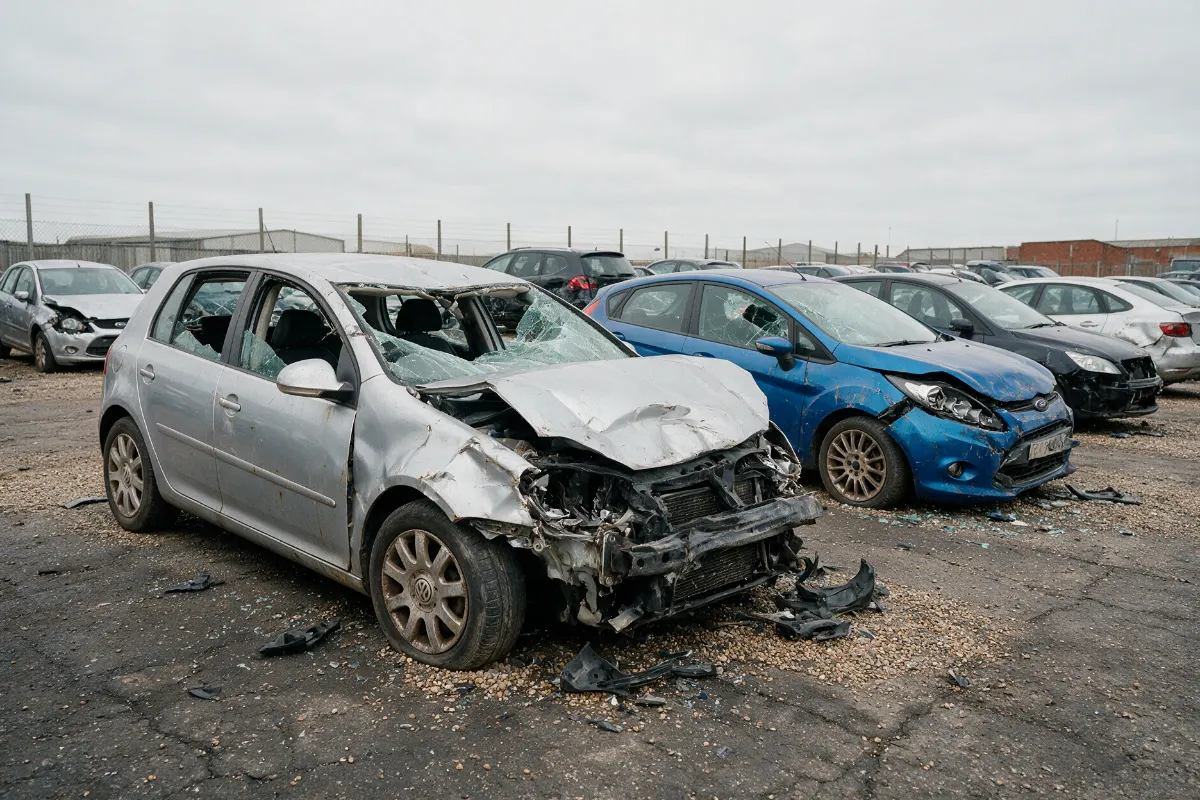
Usually yes, on Category S and Category N. The option is called retaining the salvage, and it means you keep the damaged car and accept a reduced settlement, with the salvage value deducted from what you are paid.
- Tell the insurer you want to retain the salvage before you accept any settlement. Once the car has gone to a salvage agent, getting it back is difficult or impossible.
- Ask for the settlement figure and the salvage deduction separately, so you can see what keeping the car is actually costing you.
- Get an itemised repair figure from a body shop before you decide. This is the number the whole decision rests on and most people never obtain it.
- Compare three figures. The reduced settlement, the repair cost, and what the car will be worth afterwards carrying its category.
- Have the repair done properly, with the work documented and photographed at every stage.
- Deal with the DVLA on a Category S car. The insurer notifies them, the V5C is surrendered, and the vehicle must be re-registered before it goes back on the road.
The arithmetic is the whole thing. If the reduced settlement plus a repair costing less than the car’s post-repair value leaves you ahead, keeping it makes sense. If the repair is structural and the car is worth very little, it rarely does. We will give you the itemised figure either way, and tell you plainly when a car is not worth saving, which is the same judgement set out on the bodywork repair page.
Do I need to tell the DVLA
On a Category S car, yes, and the process is specific. The insurer notifies the DVLA that the vehicle has been written off, the V5C registration document is surrendered, and the car has to be re-registered before it can legally return to the road. Until that is done, the vehicle record shows it as written off.
On a Category N car there is no DVLA notification requirement, because the damage was not structural. The category still attaches to the car through the insurance industry’s records and appears on any history check, so nothing is hidden.
Two further things matter whichever category applies. Tell your own insurer that the car has been repaired and carries a category, because failing to disclose it can affect a future claim. And keep every piece of documentation from the repair: the itemised invoice, photographs of the work in progress, and receipts for parts. That file is what makes the car sellable later.
A repaired write-off also needs a valid MOT like any other car, and an MOT is not a certification that a structural repair was done correctly. Those are separate things, and buyers conflate them constantly.

How does a write-off category affect resale
A category reduces what the car is worth permanently, and the size of the reduction depends on which letter it carries and how well it was repaired. Category S normally costs more value than Category N, because buyers treat structural damage as the more serious history.
The reduction does not fade with time. History checks are cheap and universal, and any serious buyer runs one. A category found during a sale that the seller did not mention ends most transactions, so the only workable approach is to declare it openly and price accordingly. Your excess, your claim and any courtesy car arrangement are settled separately from the car’s value, and none of them change what the category does to it.
What you can influence is the evidence. A repaired write-off with a complete file, photographs of the work, an itemised invoice and a named repairer sells far more easily than an identical car with nothing but a category and an assurance. The file is what converts an unknown risk into a known one.
The practical consequence is that a repaired category car is a better buy than a sale. If you intend to keep the car for years, the reduced value matters little and the saving is real. If you plan to sell within a year or two, the discount you take will probably exceed what you saved.
Is it safe to buy a Cat S car
A Category S car can be safe to buy, and it needs checking rather than trusting. A Category S car repaired properly by a competent body shop is safe. One repaired badly, or cosmetically over a structural problem, is not, and the difference is not visible from the driver’s seat.
- Ask for the repair documentation. An itemised invoice from a named repairer, ideally with photographs of the work. No paperwork is the answer to the question.
- Check the panel gaps and the doors. Uneven gaps, doors that need pushing to close, or a boot that sits proud all point to a shell that is not straight.
- Look down the side at a shallow angle. A reflection that bends where it should run straight means the panel is not flat.
- Check the shuts and the underside. Paint that stops at the visible edge, overspray on seals, or fresh underseal hiding a repair are all signs of work done to be sold.
- Have it inspected independently before you buy. A structural inspection costs a fraction of the discount you are being offered.
- Confirm you can insure it at a sensible price, before you commit. Some insurers decline categorised vehicles outright.
The discount on a Category S car exists because it carries real risk. Do the checks and the discount is worth having; skip them and you have bought somebody else’s problem at a small saving. The same checks work on any used car, and they are the ones in accident repair in Cardiff.
Told your car is a write-off?
Get an itemised repair quote before you accept the settlement. We will tell you honestly whether the car is worth saving. Unit 4, Wentloog Buildings, Wentloog Road, Rumney, Cardiff CF3 1TH, Monday to Saturday, 9am to 6pm. Ring the workshop, or send the photographs, and we will tell you what your car needs.
Write-off questions we get asked
Can I drive a Cat S car before it is re-registered?
No. The V5C is surrendered and the vehicle must be re-registered with the DVLA before it legally returns to the road.
Is Cat N always minor damage?
No. Category N means the damage was not structural, which is not the same as minor. Brakes, steering, suspension and airbags can all be involved.
Can I refuse the write-off and have the car repaired?
You can retain the salvage, take a reduced settlement and arrange the repair yourself. Say so before you accept anything.
Does the category ever come off the car?
No. It stays on the vehicle’s history permanently, whoever owns it afterwards.
What happened to Cat C and Cat D?
They were replaced by Category S and Category N. Older cars still carry C or D on their records from the previous system.
Can you repair a categorised car?
Yes, where the repair can be done properly and safely. We will tell you before starting if we think it cannot, and we document the work so you have the file afterwards.
Get the itemised repair figure before you accept a settlement. A write-off is an economic decision, not a verdict on the car. Call 07400 454839 or use the contact form.