
Dent and Scratch Repair in Cardiff
Dent and scratch repair covers everything from a car park ding pushed back out without paint, to a keyed door that needs filling, spraying and blending. Which of those your car needs is decided by one thing: whether the paint is still intact. Your car is sitting on the drive looking worse than it drives, and the question underneath it is will the repair show. Bring it to the Rumney workshop, let Ali Hindal run a fingernail and a light across the damage, and you get a written quote after the strip down rather than a number guessed from a photograph.
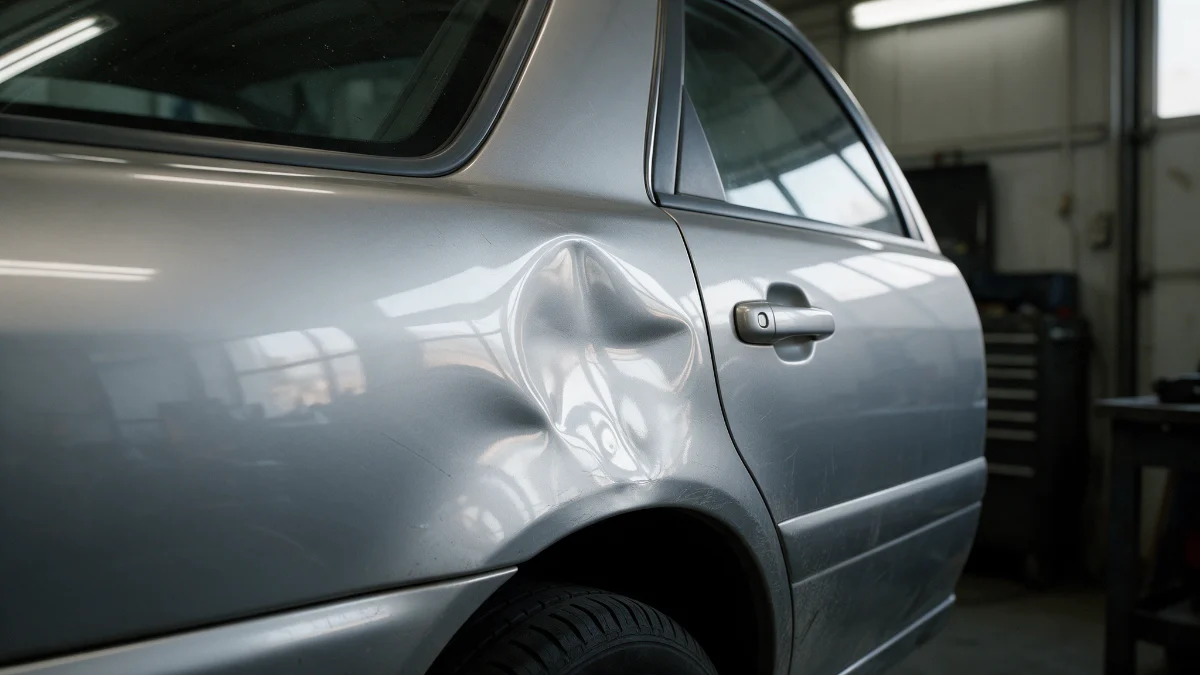
What is paintless dent removal and when does it work
Paintless dent removal, or PDR, is the reshaping of a dented panel from behind using rods and picks, with no filler and no paint. It works when your paint is unbroken, the metal has not been stretched past its memory, and the technician can reach the back of the panel. Get all three and your car leaves with its original factory finish, which is the one finish nobody can ever match again once it is gone.
Supermarket dings, trolley knocks and door taps are the usual PDR candidates. So are the shallow creases you get when somebody leans a bicycle against a wing. The metal in those cases has flexed rather than torn, and it will go back if it is worked slowly from the inside out.
You should care about this more than the price difference suggests. Factory paint was applied to bare metal, baked at a temperature no body shop oven can safely reach with a built car, and it is the single biggest thing a future buyer or an inspector looks at. Every time you repaint a panel you spend a little of that. The heavier end of the same work, where metal is beaten back into shape and skimmed, is described on bodywork and panel repairs.
When can a dent not be pushed out
A dent cannot be pushed out when the paint is cracked, the metal is stretched, the damage sits on a body line, or the back of the panel is sealed. Any one of those takes PDR off the table, and a shop that tells you otherwise is about to make your car worse.
Cracked paint is the obvious one. Push a dent out from behind and the crack opens further, so the panel needs filling and painting anyway. Stretched metal is less obvious and more common: a sharp impact thins the steel, and when you push it back the surface goes slightly proud and ripples, which is why a badly done PDR looks like a pond in the sun.
Body lines are the ones people argue about. A dent sitting across a swage line has deformed a fold that was pressed at the factory under tonnes of force, and recreating that by hand is slow work with a real risk of a soft, wandering line. Sealed panels, bonded sections and some aluminium bonnets simply cannot be reached from behind. When your dent falls into any of these, the repair becomes a fill, prime, colour and lacquer job, which is set out on paint and spray repairs.
How deep is the scratch, and does that decide the repair
Scratch depth decides the repair completely, and you can measure it with your fingernail. Run a nail gently across the scratch. If it glides over, the damage is in the lacquer and it polishes out. If it catches, the scratch has gone through to the colour, the primer or the steel, and it needs paint.
Your car has four layers. Lacquer on top, carrying the gloss and the UV protection. Colour under that. Primer under that, which is what the colour grips. Then the steel or the plastic. Each layer down is a different job, a different cost and a different amount of your time.
The one that catches people out is primer-depth damage, usually grey or white in the bottom of the scratch. It looks minor and it is not, because primer is porous. Water sits in it, finds the metal underneath, and you have a rust bubble by the following winter. A scrape you can see grey in is not a cosmetic problem, it is a timer.
How long does a dent or scratch repair take
A paintless dent takes from an hour to most of a day, and a dent that needs filling and painting takes two to four days. The gap between those two numbers is the whole reason the fingernail test matters to you.
PDR is quick because nothing has to cure. Your technician works the metal, checks it under a line board, works it again, and when the reflection runs straight the job is finished. A single door ding is often done while you wait. A hail-damaged roof with forty dents in it is a day or more.
Paint turns your repair into stages, and each stage has to dry before the next one starts. Fill, flat, prime, colour, blend, lacquer, then leave it alone. That is why we will not promise you a painted repair back the same afternoon, however small the mark looks. Timelines across the whole range of work are set out in how long an accident repair takes.
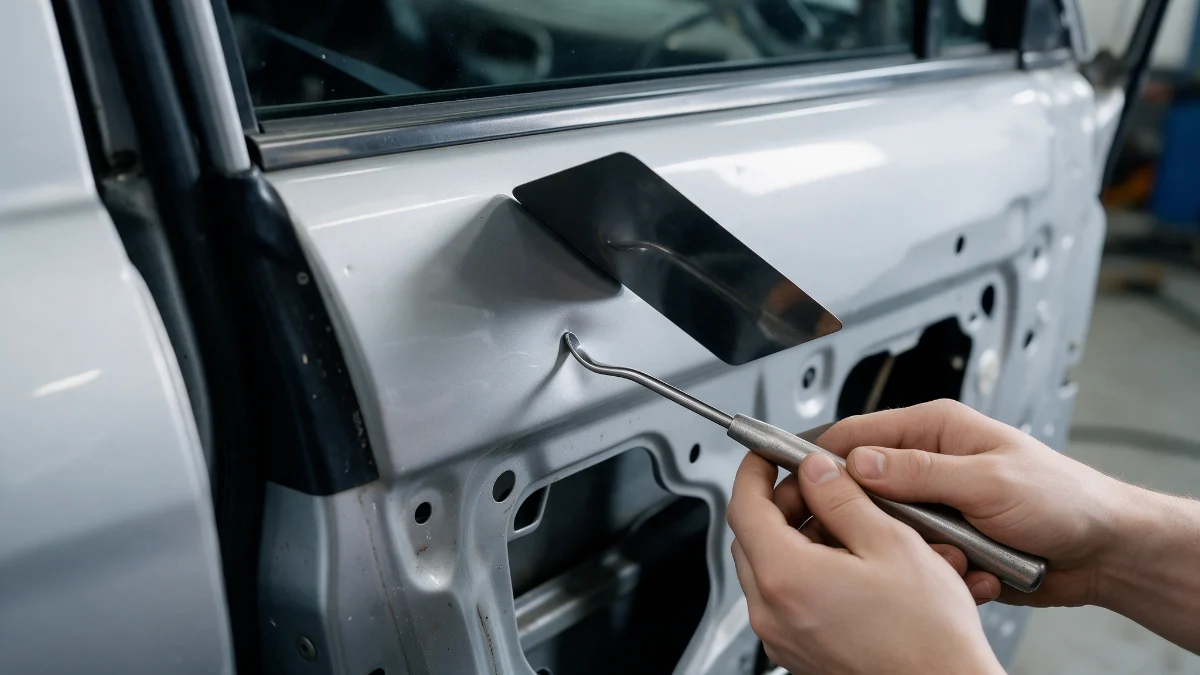
What makes one dent cost more than another
Dent cost is driven by access, depth, paint condition and position on the panel, not by how big the dent looks from the pavement. A wide, shallow dent in the middle of a door is often cheaper to put right than a small sharp one on an edge.
Access comes first. If your technician can get a rod behind the panel through an existing aperture, the job is quick. If a door card, a lamp cluster or a wheel arch liner has to come off, you are paying for that time at both ends. Some panels have no access at all without drilling, and we do not drill your car.
Then depth and sharpness. A dent with a crease in it has to be worked out in stages, releasing the tension gradually, and rushing that leaves a high spot you will see forever. Position matters because edges and body lines are stiffer than the flat middle of a panel. And if the paint is cracked, the price is no longer a dent price at all, it is a respray price for that panel plus a blend. What sits behind every quote is explained on what drives a bodywork repair price.
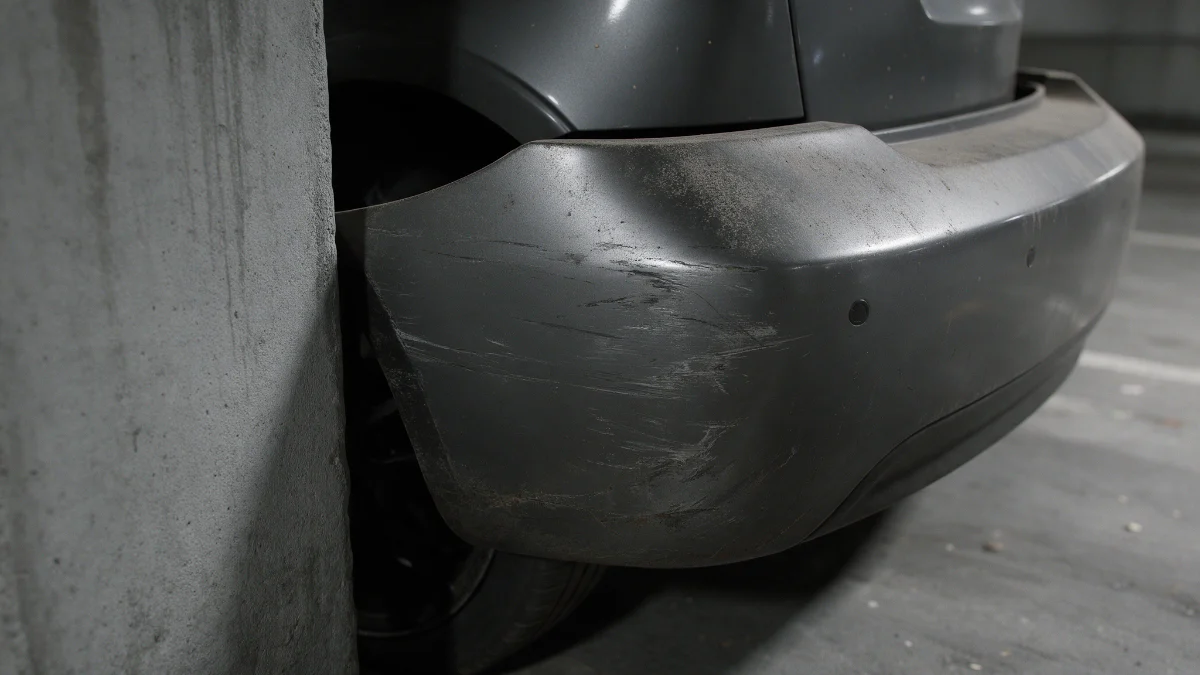
Do dents and scratches affect your car value or MOT
Dents and scratches do not fail an MOT unless they are sharp enough to injure somebody or they obstruct your view, but they do take money off your car at sale and at trade-in. The MOT answer surprises people. A dented wing is a cosmetic matter. A torn panel edge with a sharp lip, a cracked lamp or a mirror you cannot see from is not.
Value is the real cost. A trade buyer prices your car by what it needs to go on a forecourt, and every scuffed bumper, kerbed wheel and keyed door is a line in that sum, usually costed higher than you would have paid to fix it yourself. Three small marks can move a trade price more than one obvious one, because they read as a car that has not been looked after.
Corrosion is the slow cost, and it is the one people miss. A scrape left through a Welsh winter with primer or metal showing turns into corrosion, and corrosion is a welding job rather than a paint job. If you are gathering evidence before deciding, the way to photograph the damage so a shop can actually quote from it is set out in photographing car damage for a quote.
Should you claim on insurance for a dent or a scratch
A dent or scratch repair usually costs less than a typical excess, so paying privately leaves you better off and keeps your no claims discount where it is. That is the general shape of it, and it is worth doing the arithmetic rather than assuming either way.
Work out your excess first, including the compulsory and the voluntary parts, because people routinely forget the second one. Then get a written quote. If the quote is below your excess, a claim pays you nothing and still appears on your record. If it is somewhat above, you have to weigh the difference against what a claim does to your premium over the following years.
The calculation changes when somebody else caused the damage. If another driver hit your parked car and you have their details, the cost should come off their policy and your excess and discount stay where they are. If they drove off, the situation is different again. Both routes are worked through in claim on insurance or pay for the damage yourself.
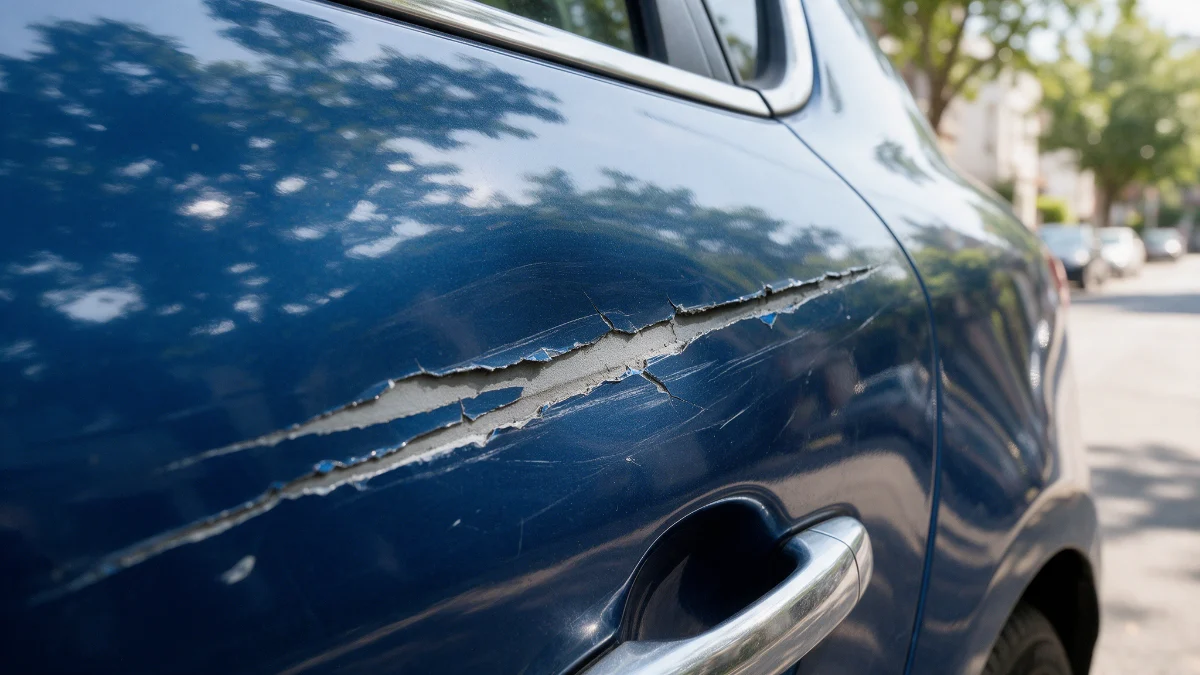
What about car park damage nobody owned up to
Car park damage with no note on the windscreen is treated as an uninsured loss, which means you either claim on your own policy and lose your excess, or you pay for the repair yourself. The repair itself is the easy part. The money is where it gets annoying.
Do three things before you decide. Photograph the damage and the parking bay. Ask the car park operator to preserve the footage in writing rather than asking to see it, because they will almost never release it to you directly but they will often keep it for the police or an insurer. And check your own policy for an uninsured loss recovery add-on, which a lot of drivers are paying for without knowing.
In the meantime, a scuffed bumper or a kerbed alloy from a tight multi-storey is exactly the sort of damage this workshop turns around quickly, with six work bays and an on-site spray booth at Unit 4 Wentloog Buildings. Who pays, and how to push it, is covered in car park damage and who pays.
Get a dent or scratch looked at in Cardiff
We are at Unit 4 Wentloog Buildings, Wentloog Road, Rumney, Cardiff CF3 1TH, Monday to Saturday, 9am to 6pm. Run your fingernail across the mark, send us a photograph taken in daylight at an angle rather than head on, and we will tell you whether your car needs PDR, a touch in or a panel. Drivers bring cars to us from right across Cardiff and the towns around it.
Dent and scratch questions we get asked
Can you get a dent out without repainting?
Yes, when your paint is unbroken and the metal has not stretched. That is paintless dent removal, and it keeps the factory finish on your car, which is worth more than the saving on the job.
Will a dent puller from the internet work?
On a wide, shallow dent in the flat of a panel you might improve it. On anything with a crease you will stretch the metal and turn a one hour job into a panel respray. Suction pullers work by force, and force is what you are trying to avoid.
How do I know if my scratch needs paint?
Run a fingernail across it. If the nail glides, it polishes. If it catches, it needs paint. If you can see grey or bare metal in the bottom, it needs paint soon rather than eventually.
Can you repair a dent on a body line?
Sometimes, and it is slow. A dent across a pressed body line has deformed a fold made under enormous factory pressure, so recreating it by hand carries a real risk of a soft line. We will tell you honestly which of your dents are worth attempting.
Does a touch-up pen do any good?
It seals a chip against water, which is the point. It does not make the chip invisible, and layering it thickly makes it more obvious, not less. Use it on stone chips to stop rust, not on anything you will be looking at.
My car is leased. Does that change anything?
It raises the stakes. Lease return inspections price every dent and scratch against a published damage standard, and those charges are usually higher than a workshop repair. Get the car looked at a few months before handback, not a week before.
Run your fingernail across the mark, photograph it in daylight at an angle, and send it in for a written quote. Call 07400 454839 or use the contact form.