
What to Do After a Car Accident in Cardiff: A Step by Step Guide
Stop, make the scene safe, exchange details, and photograph everything before the cars are moved. You are shaken, the other driver is talking, and everything you do in the next ten minutes will either make the claim simple or make it a fight. Under section 170 of the Road Traffic Act 1988 you must stop and give your details, and you must report the accident to the police within 24 hours if details were not exchanged at the scene or if anyone was injured. This guide runs through the first ten minutes, the first hour, the first day and the first week.
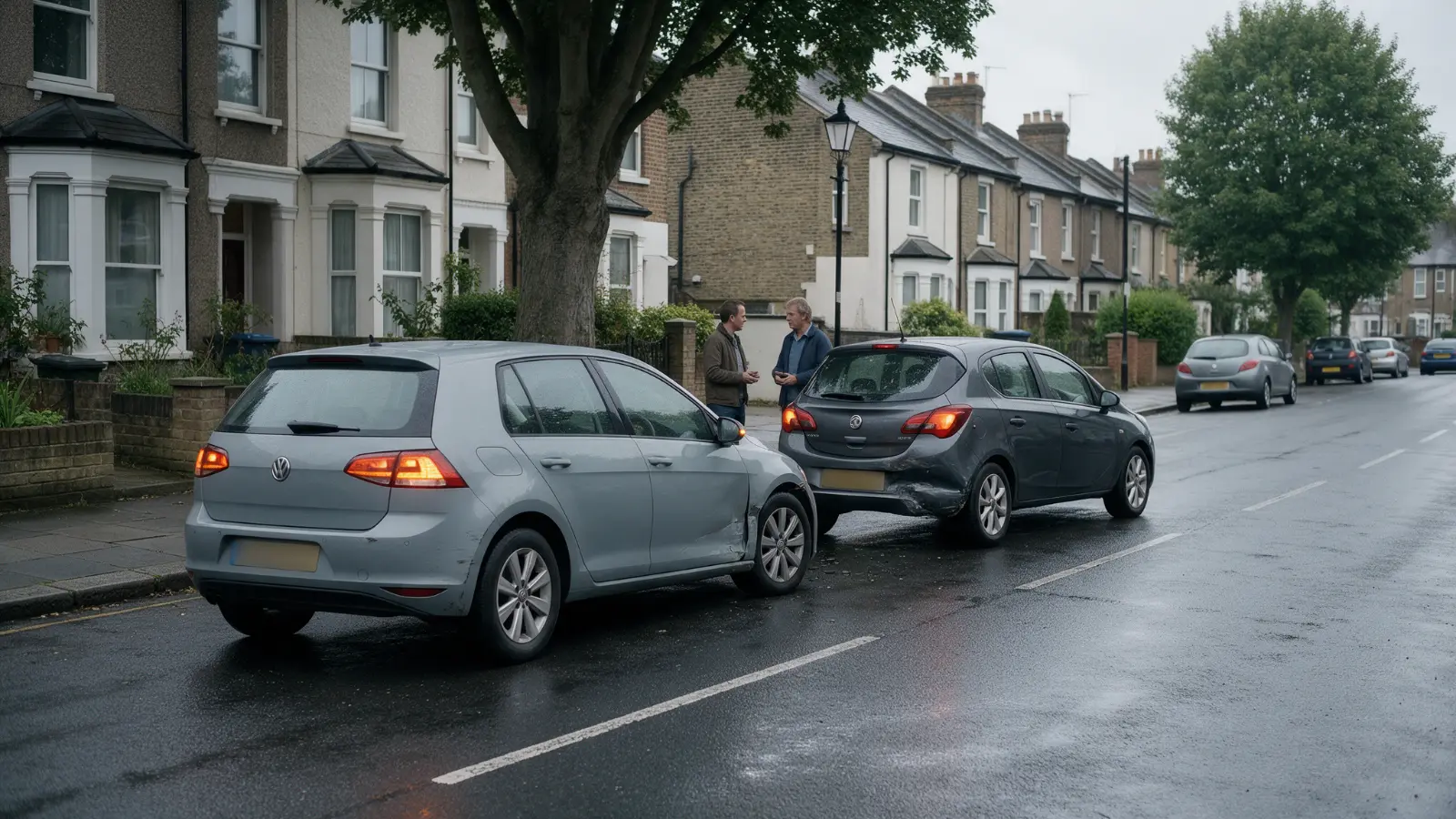
The first ten minutes: at the scene
Stop the car, switch the engine off and put the hazard lights on. That is the law and it is also the sensible order. Then check for injuries, yours first, then your passengers, then anyone in the other vehicle. Ali Hindal answers the workshop phone at Unit 4 Wentloog Buildings in Rumney, and the car is repaired in the same building.
- Call 999 if anyone is hurt, if the road is blocked, or if a vehicle is in a dangerous position.
- Get everyone somewhere safe. On a fast road, that means out of the cars and behind a barrier, not standing between them.
- Do not apologise or accept blame. Say nothing about fault. You do not yet know what happened, and admissions at the roadside are used later.
- Exchange details. Name, address, phone number, insurer and registration for every driver involved. Take the details of the registered keeper too if the driver is not the owner.
- Photograph the scene before the cars move. Both vehicles where they stopped, the damage, the road, the signs and the conditions.
- Get witness details if anyone stopped. A name and a phone number is enough.
Note the registration and ring the police if the other driver will not give their details or drives off. That is exactly what the 24 hour reporting rule exists for. If what you hit was an animal rather than another car, the rules on stopping and reporting are different and are set out in what to do after hitting an animal.
What the law requires you to do
Section 170 of the Road Traffic Act 1988 sets out three duties after an accident involving injury or damage to another person, vehicle or property.
- Stop. You must stop at the scene and stay long enough to exchange details.
- Give your details. Your name and address, and those of the vehicle’s owner, plus the registration, to anyone with reasonable grounds to ask.
- Report it if you could not. If details were not exchanged at the scene, you must report the accident to the police as soon as reasonably practicable and in any case within 24 hours. If anyone was injured and you did not produce insurance details at the scene, the same reporting duty applies.
Reporting to the police is not the same as making a claim, and it does not decide fault. It is a legal duty, and failing to do it is a far more serious matter than the accident usually is.
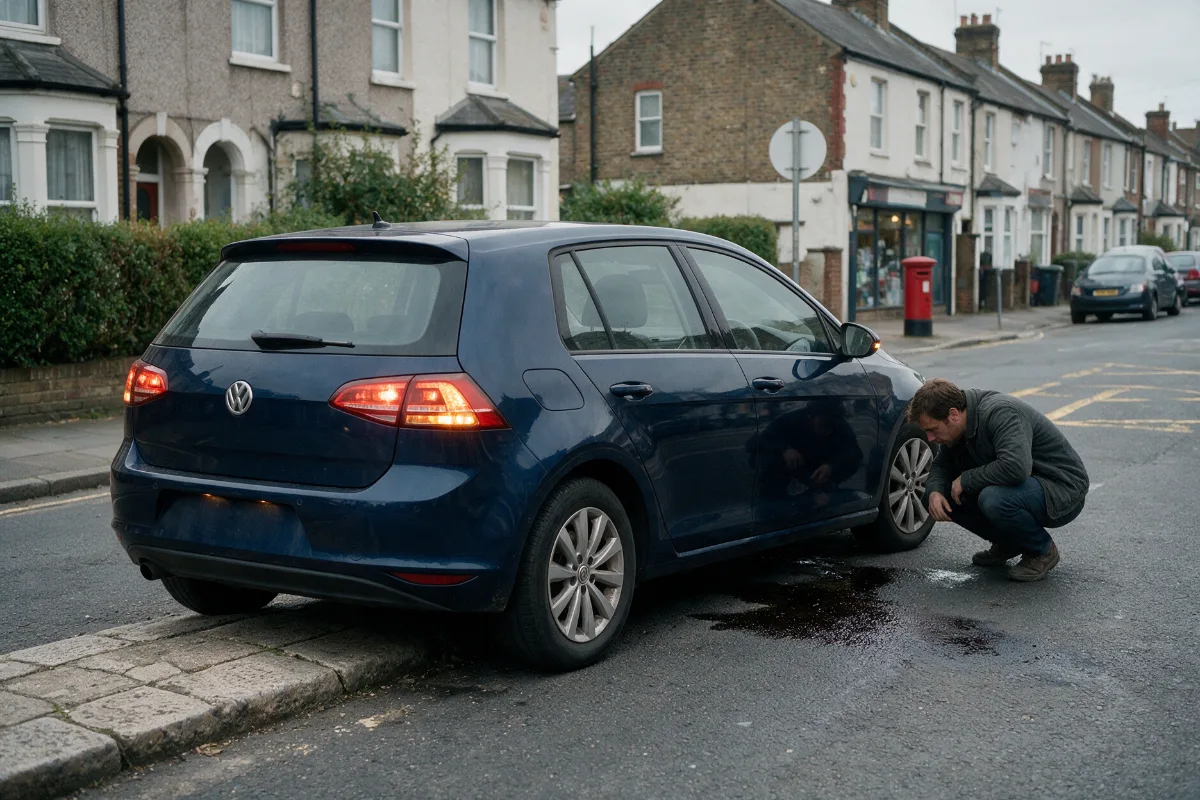
The first hour: getting the car off the road
The next question, once details are exchanged, is whether the car is safe to drive. Do not decide that from inside it.
Walk round and look for fluid on the road, a wheel that is not sitting straight, a panel touching a tyre, a bonnet that will not latch, lights that do not work, or steering that felt wrong when you pulled over. Any of those and the car needs recovering rather than driving.
Check your own cover first: many policies and breakdown memberships include recovery to a garage of your choice, and on a non fault claim the other driver’s insurer often covers it. If neither applies, ring us on 07400 454839 and we will arrange collection. Where the car goes matters more than it seems, because a car recovered to a holding yard can be difficult to get out again.
What to write down while you are still there
Photographs cover most of it, but six things are worth writing down as well, because they are the details that fade within the hour.
- The time. Not roughly, exactly. Insurers cross reference it against the other driver’s account.
- The direction each car was travelling and which lane it was in.
- The speed you were doing, honestly, and what the limit was.
- What the other driver said. Their exact words, particularly anything about not seeing you or being in a hurry.
- Conditions. Wet road, low sun in your eyes, a van blocking the view, roadworks.
- Who was in each car. Passenger claims appear weeks later and are much harder to challenge if nobody recorded how many people were there.
Take a photograph of your own notes, so the record is timestamped on your phone along with everything else.
The three mistakes that cost drivers the most
Apologising at the scene. British instinct, expensive habit. Saying sorry is treated as an admission, and liability is decided on the evidence rather than on who was politest.
Agreeing to settle privately before getting a figure. The damage on the outside is not the cost of the repair. Drivers who accept a few hundred pounds in cash regularly find the bumper alone costs more once the brackets behind it are counted.
Letting the claim book the car in. Say where the car is going in the first call. Once a network repairer has collected it, moving it is awkward, slow and sometimes chargeable.
The first day: reporting it
Tell your insurer within 24 hours even if you do not intend to claim. Policies require notification of an incident, not just a claim, and an accident that reaches them later from the other driver’s side is a much worse conversation.
Have these ready for the call: the registration of every vehicle, the other driver’s details, the time and place, the police reference if there is one, and your photographs. Say clearly whether you intend to claim or are reporting for information only. If the other driver has no insurance or has driven off, the route is a different one, covered in being hit by an uninsured or hit and run driver.
This is also the call where you name your repairer, before the handler offers to book the car in somewhere. You are entitled to choose, and the words to use are in our guide on whether you can choose your own bodyshop.
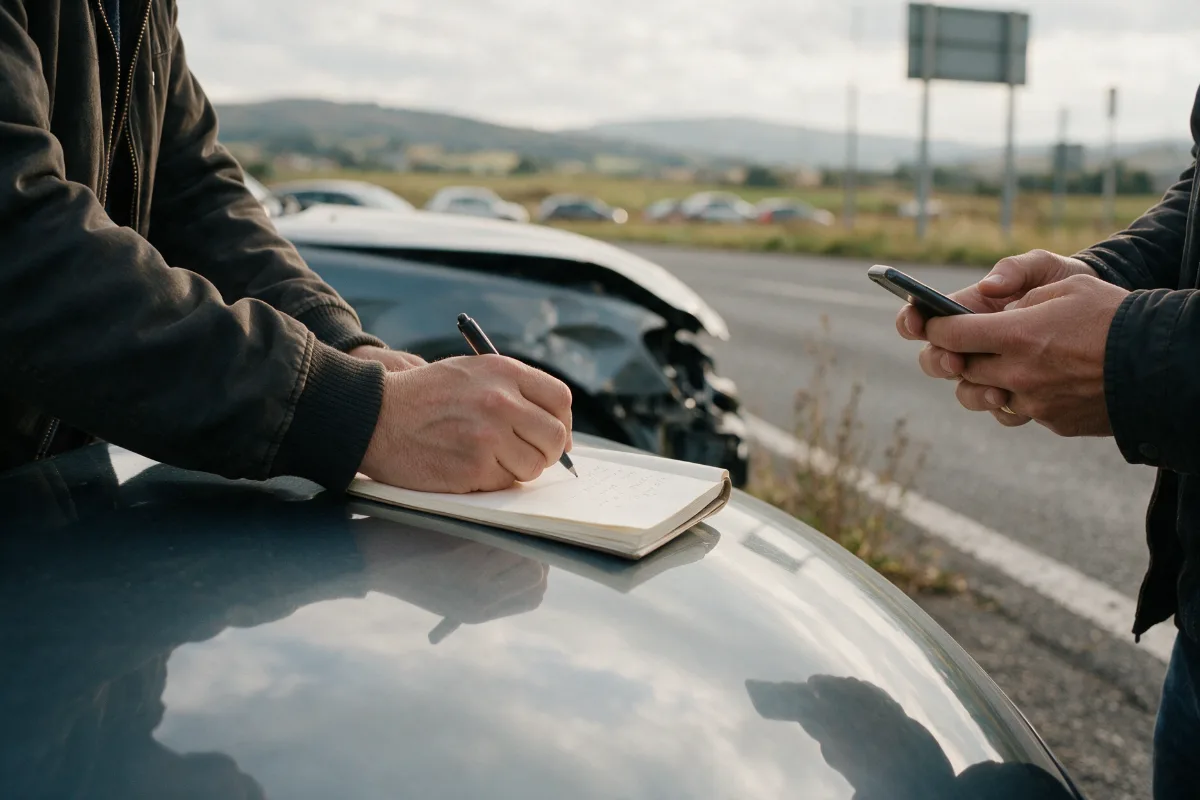
If the accident happened on the A48 or the M4
Fast roads change the order. Getting off the carriageway comes before details, photographs and everything else.
On the A48 through Cardiff there are laybys and junction slip roads at regular intervals, and reaching one is safer than stopping in a live lane. On the M4, use the hard shoulder only if you cannot reach the next exit. Once stopped, get out of the passenger side, get everyone behind the barrier and up the bank, and ring 999. Do not stand between the vehicles and do not try to put out warning triangles on a motorway.
Details and photographs can wait until the scene is safe or the police have arrived. If the other driver has left before you could exchange details, the 24 hour reporting duty applies and the registration number you remembered is the most useful thing you have.
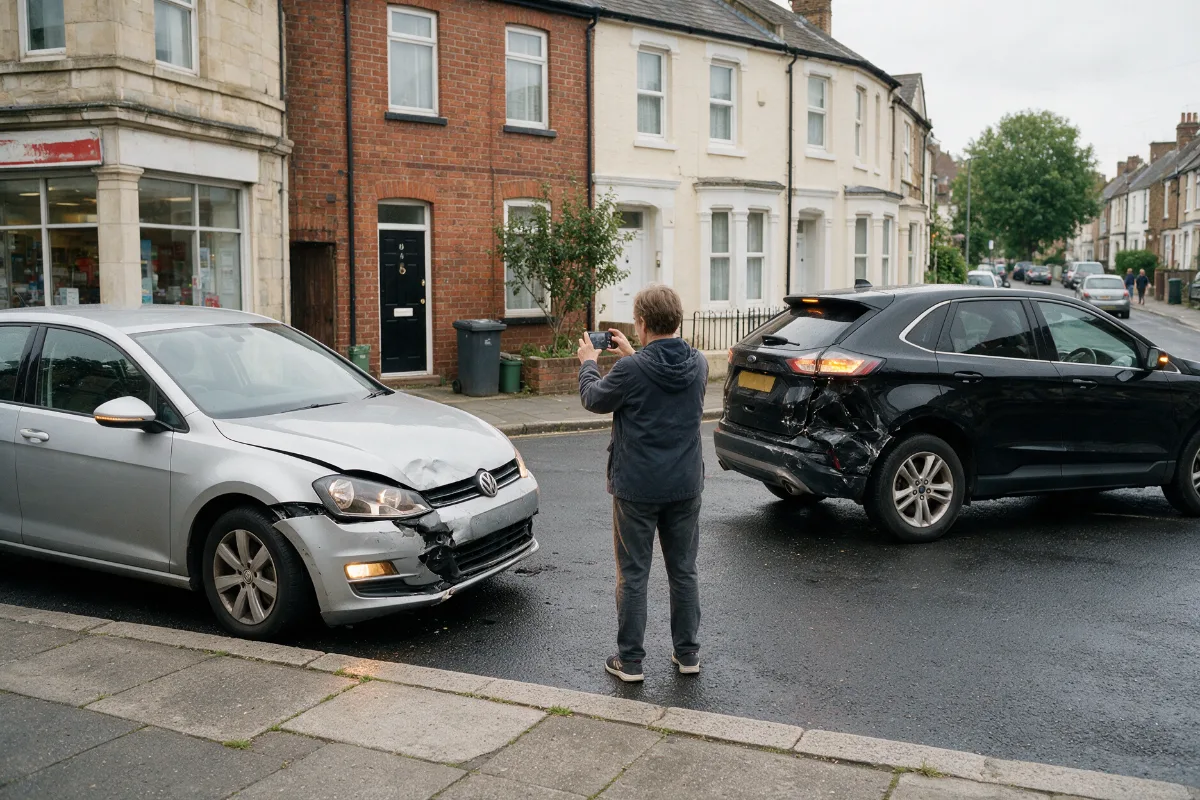
The first week: repair, claim or both
Three routes, and the right one depends on the damage and the excess.
- Claim on your own policy. You pay the excess, your insurer pays the rest. Your no claims discount is affected unless it is protected and the claim is recovered.
- Claim against the other driver when the accident was not your fault. The cost is recovered from their insurer and you should not be out of pocket.
- Pay privately. No claim, no excess and no effect on your renewal. Often the better answer on cosmetic damage once the numbers are compared.
Get an itemised repair figure before you decide, because all three routes depend on what the repair actually costs. Once the car is safe and the details are exchanged, the next step is getting accident repair booked and assessed properly.
Damage you cannot see from the driver’s seat
A car that looks straight after a low speed impact often is not. Bumper skins spring back, and behind them sit the crash bar, the impact absorbers, the sensor mounts and the brackets that hold everything in line. Those crush and snap on purpose, and they do not recover.
The signs that something is wrong behind the panel come later: a pull to one side, uneven tyre wear, a parking sensor that reads phantom obstacles, a headlamp pointing slightly off, or damp carpet weeks after the impact. Have the car looked at properly even if it drove home fine, particularly before a long journey. The checks worth asking for, and what each one finds, are in hidden damage after a minor knock.
If you are not sure what to do, ring us first
You do not have to have decided anything before you ring. Most people who call the workshop after an accident want to know two things: is the car safe to drive, and what happens next. Both can be answered in a couple of minutes with the registration and a photograph.
We will tell you whether it needs recovering, whether it is worth claiming, and what the repair involves. Photographs help, and how to take them is covered in our guide to photographing damage for a quote.
Had an accident in Cardiff?
Ring the workshop with the registration and a photograph and we will tell you what happens next, claim or no claim. Unit 4, Wentloog Buildings, Wentloog Road, Rumney, Cardiff CF3 1TH. Monday to Saturday, 9am to 6pm. Ring the workshop, or send the photographs, and we will tell you what your car needs.
Questions drivers ask after an accident
Do I have to report every accident to the police?
No. You must report it within 24 hours if details were not exchanged at the scene or if anyone was injured and you did not produce your insurance details there. Otherwise exchanging details at the scene satisfies the duty.
Do I have to tell my insurer if I am not claiming?
Yes. Policies require you to notify them of an incident. Telling them is not the same as claiming, and you can still pay for the repair yourself.
What if the other driver has no insurance?
Report it to the police and to your own insurer. Claims involving uninsured drivers are handled through your own policy or through the Motor Insurers’ Bureau, and your insurer will tell you which applies.
Can I drive the car if it looks fine?
Only after you have checked underneath and around it for fluid, tyre contact, loose panels and lights, and only if the steering felt normal. If anything is uncertain, have it recovered.
How long do I have to make a claim?
Report it to your insurer straight away. The legal time limit for a personal injury claim is generally three years, but insurers expect prompt notification and delay makes everything harder to prove.
What if the damage seems too small to bother with?
Photograph it anyway and get it looked at. A bumper corner that has moved a few millimetres can have broken mountings and a crushed absorber behind it, and damage that is written off as trivial on the day is far harder to attribute to the accident weeks later, whether you claim or not.
Should I accept the other driver’s offer to pay cash?
Not before you have a written repair figure. Damage that looks like a few hundred pounds on the outside regularly costs more once the panel is off, and once you have taken cash the conversation is over.
Ring the workshop as soon as the scene is safe. We will tell you whether the car can be driven and what happens next. Call 07400 454839 or use the contact form.