
Alloy Wheel Refurbishment in Cardiff
Alloy wheel refurbishment is the stripping, repairing and refinishing of a damaged wheel so it goes back on your car looking factory rather than kerbed. The job divides into two families, painted and diamond cut, and the one your car has decides the method, the time and what you pay. You kerbed it on a tight corner, it has annoyed you every time you walk up to the car since, and the question underneath it is will the repair show. Bring the wheels to the Rumney workshop, let Ali Hindal check the finish and the structure, and you get a written quote after the wheel is stripped rather than a guess over the phone.

What does alloy wheel refurbishment involve
Alloy refurbishment runs through five stages: strip, repair, prime, finish and lacquer, with the tyre off the wheel for all of them. Anybody offering you a full refurbishment with the tyre still fitted is refinishing the face and leaving the rim edge, which is exactly where your damage is.
The strip takes your old lacquer and paint back to bare alloy, either chemically or by blasting. That is the step that decides whether the new finish holds, because lacquer laid over old, lifting lacquer will lift with it. Repair then deals with the physical damage: kerbed gouges filled and reprofiled, flat spots worked back, corrosion cut out. The principle is the same one we apply to a dent in a panel.
Primer, colour and lacquer follow in the on-site spray booth, cured properly between coats, the same way we respray a panel. A wheel lives in road salt, brake dust and standing water, so a finish that was not cured is a finish that will be flaking by spring. The full list of what the workshop handles is on our services.
Is your wheel diamond cut or painted
A diamond cut wheel has a bright machined face with fine concentric lines you can see in sunlight, and a painted wheel has a flat uniform colour with no machining marks. Check yours before you ring anybody for a quote, because the two are different jobs with different limits.
Painted wheels are the straightforward family. Silver, gunmetal, graphite, gloss black or anything custom, all of it strips, repairs and resprays, and it can be done as many times as the metal lasts. Your options are open, and a colour change costs little more than a straight respray in the original silver.
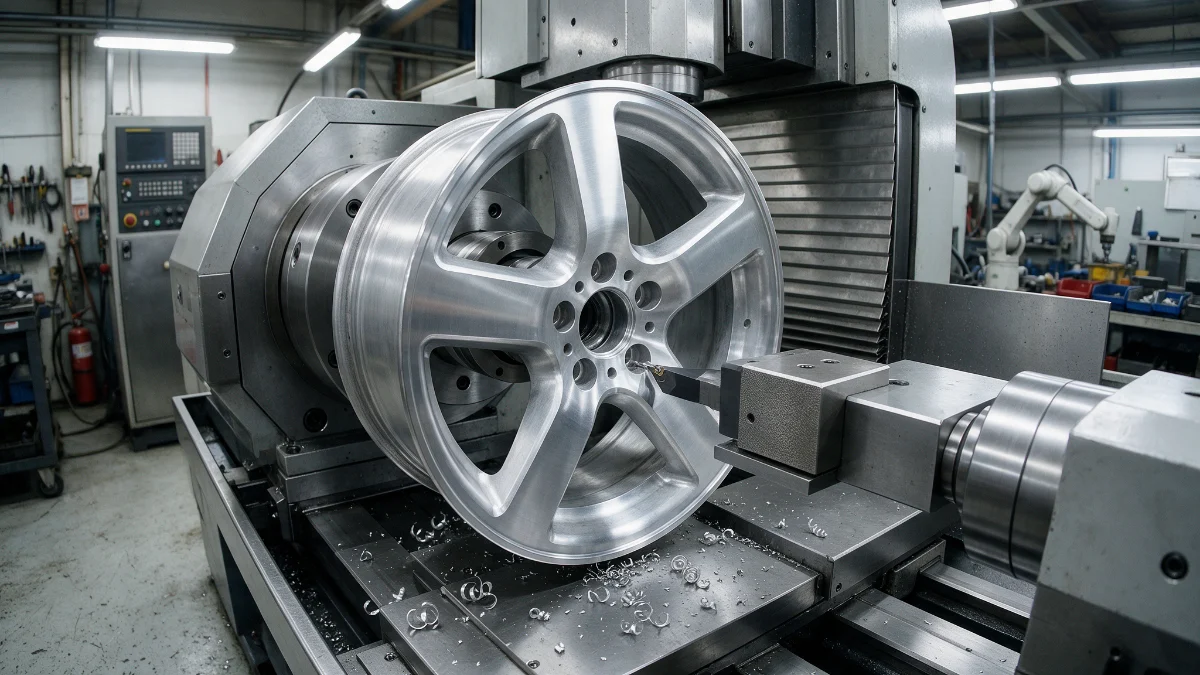
Diamond cut wheels are machined on a lathe after painting, which removes a thin layer of alloy to expose the bright face. The limit is physical: every recut takes more metal off, so a wheel can only be diamond cut a handful of times before the face becomes too thin to be safe. Once a wheel reaches that point the honest answer is to paint it in a close colour rather than cut it again, and any shop that will cut it a fifth time is selling you something it should not. How the paint side of that works is set out on paint and spray repairs.
Can a cracked or buckled alloy be repaired safely
A cracked alloy can be welded safely in some positions and must be scrapped in others, and the difference is not something to guess at on a wheel that carries your family at seventy miles an hour. Welding alloy is work this business does every day on the welding side, which is exactly why we turn some wheels away.
Position decides it. A split in the inner barrel, away from the spokes and the mounting face, is usually weldable: it is vee-ed out, crack tested to confirm nothing is left, welded, then the wheel is checked for run-out on a lathe. A crack that runs into a spoke, across the hub face, or through a bolt hole is in a load path. Those are not repairs, they are replacements, whatever anybody tells you.
Buckles are a separate question, and a pothole on Newport Road has written off more rims than any kerb. A rim pulled out of true by a pothole can often be straightened on a hydraulic former, then checked for run-out, and you get one that holds air and tracks straight again. Hairline cracks sometimes appear alongside a buckle though, so the wheel gets crack tested before it is signed off. Impact damage rarely stops at the wheel either, so if you hit something hard enough to buckle a rim, have the suspension and alignment looked at, and ask about a courtesy car, as part of the accident and crash repair check.
Why does lacquer peel and corrosion keep coming back
Lacquer peels on alloys because water gets under the finish at the rim edge or through a chip, then lifts it from behind, and corrosion returns when a wheel was refinished over the old coating instead of being stripped. Both failures start out of sight.
White powdery corrosion is aluminium oxide, and it spreads underneath the lacquer rather than on top of it. By the time you can see the bubbling, the affected area is already wider than it looks, in the same way a scrape on a wing is wider under the paint than on top of it. Skim over that with new paint and you have sealed in an active problem, which is why your refurbished wheel can start bubbling again within a year.
Cardiff roads do not help. Salt through the winter, standing water, and brake dust that holds moisture against the wheel all shorten the life of a finish that was not properly cured. A full strip is slower and it is the only version that lasts, which is why your quote for a proper refurbishment is not the cheapest number you will be given, which is the same argument that runs through what drives a bodywork repair price.

Should you do one wheel or the full set
One wheel is worth doing when the others are sound and the finish is standard, and a full set is worth doing when the wheels have aged together or you are changing colour. The deciding factor is whether a single refinished wheel will match three that have been on the road for six years.
On a silver or gunmetal painted wheel, a single kerbed rim refinishes and blends in well, because those finishes age slowly. On diamond cut wheels a single wheel can stand out, since a freshly machined face is brighter than three that have dulled. And if your other three are already showing lacquer lift at the edges, doing one wheel now means doing the other three within the year anyway.
A money argument runs alongside it. The labour of setting up, stripping and spraying is more efficient across four wheels than one, so four wheels never cost four times one wheel. Photograph all four before you decide, in daylight, so the comparison is real rather than remembered. How to take photographs a workshop can actually quote from is covered in photographing car damage for a quote.
How long does it take, and what happens to the tyres
Alloy refurbishment takes one to three days, and the tyres come off the wheels and go back on afterwards, rebalanced. That is the honest version. A shop promising you a full refurbishment in two hours with the tyres on is refinishing the face only.
Plan for your car being off the road unless you have a spare set to run on, and ask whether a courtesy car is available if you need one. Some drivers keep a cheap set of steels for exactly this. If your car has tyre pressure sensors in the valves, they come out with the tyre and go back in, and the system usually needs a short relearn drive afterwards before the warning light clears.
Tyres get inspected while they are off, which is a useful side effect. Inner edge wear you cannot see with the wheel on the car is visible the moment the tyre is off, and inner edge wear means your alignment is out. Timelines for the rest of the workshop are in how long an accident repair takes.
What makes one wheel cost more than another
Wheel cost is driven by the finish type, the depth of the damage, the rim diameter and whether any structural repair is needed, not by how it looks from across the car park. A kerbed silver eighteen inch wheel sits at the simple end of any quote. A cracked, corroded twenty two inch diamond cut wheel sits at the other.
Finish is the biggest single factor. Painted refinishing is one process. Diamond cutting adds a lathe operation and a second lacquer stage. A two-tone wheel, with a machined face and painted pockets, needs masking between stages and takes longer again.
Then damage. Surface kerbing is quick. Deep gouges need filling and reprofiling so the rim lip reads as a continuous curve again. Corrosion means more stripping. Cracks and buckles mean welding, crack testing and run-out checking, which is a different job with a different standard. If somebody else kerbed your wheel in a car park and left, the question of who pays is worked through in car park damage and who pays.
Changing colour, and wheels on a lease car
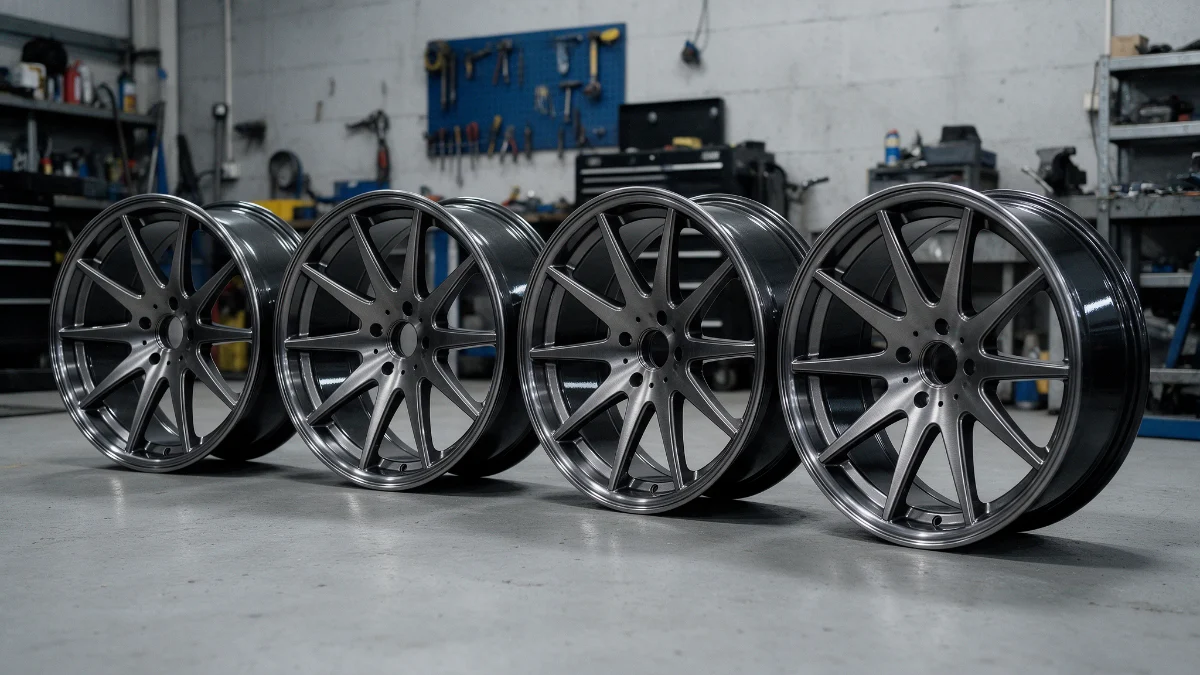
You can change your wheel colour freely, and you should check your lease agreement before you do, because a finance company can charge you to put it back. Owned cars are your choice entirely. Leased cars are somebody else’s asset with your name on the paperwork.
Lease and PCP agreements ask for your car back in a standard specification, so a set of gloss black wheels on a car that left the factory in silver counts as a modification. The charge for returning them to standard is usually more than you would pay to have them resprayed yourself before handback.
The other half of the same problem is damage. Lease return inspections price every kerbed wheel, dent and scrape against a published damage standard, and those charges tend to be higher than a workshop quote. Get the wheels looked at a couple of months before handback rather than the week before. Whether to put damage like this through insurance at all is weighed up in claim on insurance or pay for the damage yourself.
Get your alloys refurbished in Cardiff
We are at Unit 4 Wentloog Buildings, Wentloog Road, Rumney, Cardiff CF3 1TH, Monday to Saturday, 9am to 6pm, with six work bays and an on-site spray booth. Send photographs of each damaged wheel in daylight, including one straight at the rim edge, and tell us whether your wheels are painted or diamond cut. Drivers bring wheels to us from across Cardiff and the surrounding towns.
Alloy wheel questions we get asked
How many times can a diamond cut wheel be refurbished?
A handful, and there is no fixed number because it depends how much metal each cut takes. Once the face is thin, the right answer is to paint the wheel in a close colour rather than cut it again.
Can you repair a cracked alloy?
Sometimes. A crack in the inner barrel can usually be vee-ed out, crack tested and welded. A crack running into a spoke, the hub face or a bolt hole is in a load path and the wheel gets replaced. We will tell you which yours is.
Do the tyres have to come off?
For a proper refurbishment, yes. Your damage is almost always on the rim edge, and the rim edge is under the tyre bead. Anything done with the tyre fitted is a face refresh, not a refurbishment.
Will refurbished wheels match my other three?
On painted silver or gunmetal, usually very closely. On diamond cut, a single new wheel can look brighter than three that have dulled, so we will tell you honestly when doing two or four is the better call.
My wheel is losing air slowly. Is that the wheel or the tyre?
It is often corrosion on the bead seat, where the tyre seals against the rim. That is fixable: the seat is cleaned back and sealed when the tyre is off. Get it checked rather than topping the tyre up every fortnight.
Can you do a colour change on just the faces?
Yes. A two-tone finish, with a machined or contrasting face and a painted pocket, is a common request. It needs masking between stages, so allow a little more time than a single colour.
Photograph each wheel in daylight, straight at the rim edge, and tell us whether they are painted or diamond cut. Call 07400 454839 or use the contact form.