Insurance Claim Repairs in Cardiff: Use the Repairer You Choose
Insurance claim repairs at Cardiff Accident Repair start with one call to your insurer telling them you want your own repairer. The moment that catches drivers out is the first call, when a handler offers to book the car in somewhere before anyone has asked where you want it repaired. You are being pushed towards a repairer you did not choose, while your car sits off the road. Ali Hindal then deals with the assessor, agrees the repair cost, orders the parts and takes your excess at collection. The workshop works with all UK insurers, including Admiral, Aviva, Direct Line, LV= and Hastings, and the car is repaired in Rumney rather than sent away.
What is an insurance claim repair
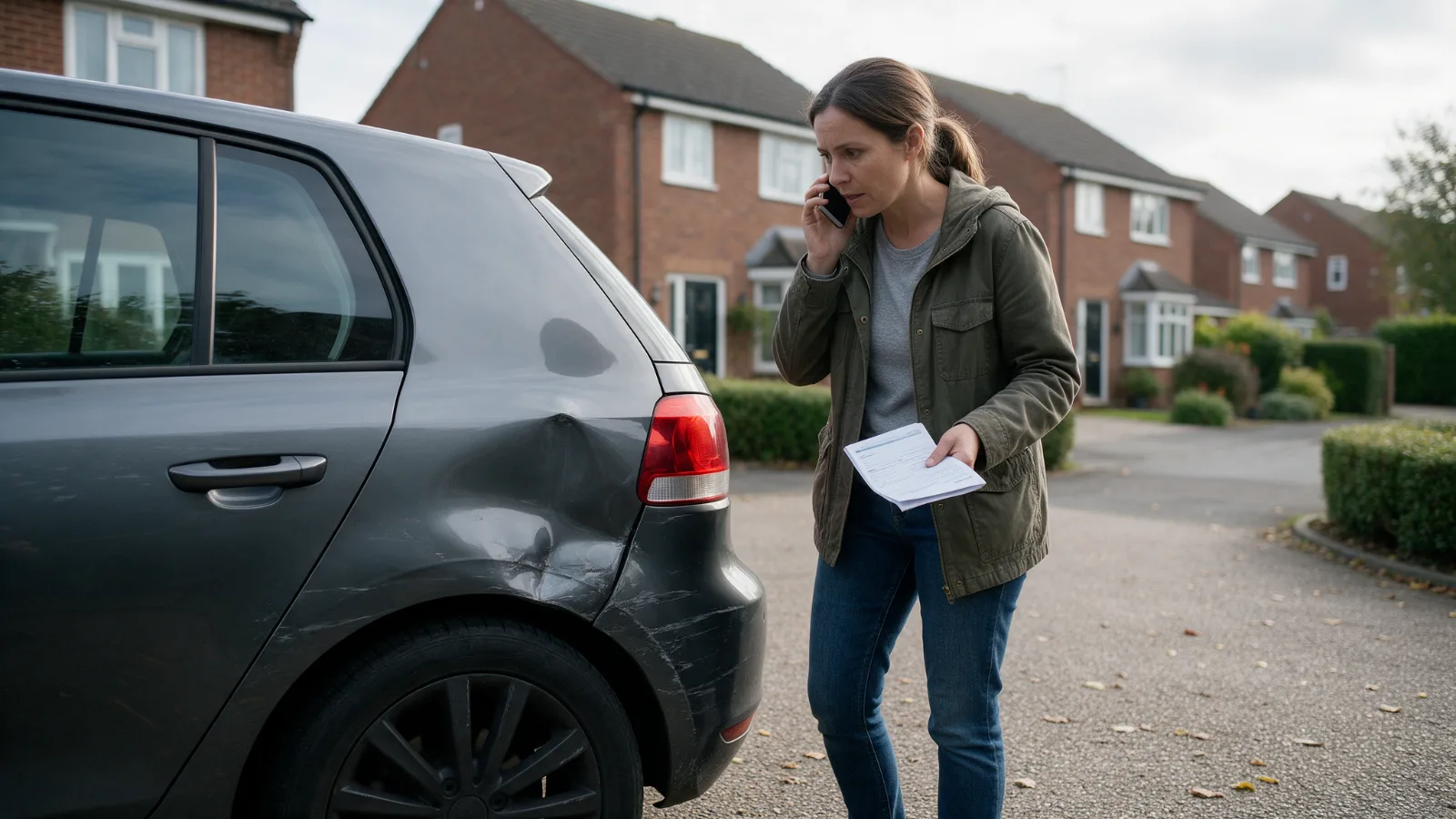
An insurance claim repair is accident damage repaired at your insurer’s cost, less the excess you agreed when you took the policy out. You report the accident, the insurer opens a claim, the repair cost is agreed with the repairer, and the work is authorised before it starts. You pay your excess, the insurer pays the balance. Ali Hindal deals with the assessors himself from the Rumney workshop, Unit 4 Wentloog Buildings, where the six work bays and the on-site spray booth sit under one roof.
Three words do most of the work in that sentence. The claim is the report you make. The excess is your fixed contribution, made up of a compulsory part set by the insurer and any voluntary part you chose to lower your premium. Authorisation is the insurer’s agreement to pay for a specific list of work, which is why no honest body shop starts cutting and spraying before it arrives.
The alternative is paying directly, with no claim and no excess. That route, and the rest of the work the workshop does, sits on the car body repair services page.
Can I choose my own repairer instead of my insurer’s
Yes. You can have your car repaired by the body shop you choose, and your insurer cannot force you to use one from its approved network. Insurers recommend their networks because they have negotiated rates with those repairers, not because you are contractually bound to them.
What the insurer can do is attach conditions to the choice. Some policies only provide a courtesy car when you use an approved repairer. Some will pay up to the rate they would have paid in their own network and ask you to cover the difference. Some ask for a second estimate. Those are commercial conditions, not a veto, and they are written in your policy booklet under the repairs or claims section.
Say this on the call: “I am claiming, and I want the car repaired at my own choice of repairer. Please send me the details for a non approved repair.” If the handler pushes back, ask them to note on the file that you have requested your own repairer, and ask for the policy wording that removes your right to choose. If you are told outright that you have no choice and you believe the policy says otherwise, the Financial Ombudsman Service takes complaints once the insurer’s own complaints process is finished.
The full argument, including what to do when a handler keeps steering you back, is in our guide on whether you can choose your own bodyshop.
How does a claim repair work with Cardiff Accident Repair
Five steps, in this order. The whole point of the order is that nothing starts before it is agreed in writing.
- Report the claim and name us. Ring your insurer, give them the accident details and tell them your repairer is Cardiff Accident Repair in Rumney. Write down the claim number.
- Send us photographs, or bring the car in. We look at the damage, strip the affected area where the car is with us, and prepare an itemised estimate with parts, paint and labour listed separately.
- The assessor reviews it. The insurer’s engineer either inspects the car or assesses our photographs and estimate remotely, then agrees the method and the figure.
- Authorisation, then parts. Once the insurer authorises the work, parts are ordered. If the strip down finds damage nobody could see, we raise a supplementary estimate and wait for that to be authorised too.
- Repair, check, collection. The car is repaired, checked and road tested. You pay your excess at collection and take the keys.
A non fault accident takes a different and usually cheaper route for you, because the cost is recovered from the other driver’s insurer. That case is covered under accident repair in Cardiff, which also explains what the strip down finds.
What to have ready before you ring the insurer
- The registration, make and model of every vehicle involved
- The other driver’s name, address, phone number and insurer, if there was another driver
- The date, time and location of the accident, and the road conditions
- Photographs of the damage to both cars and of the scene, taken before anything was moved
- The police reference number, if the accident was reported
- Our name and address as your chosen repairer: Cardiff Accident Repair, Unit 4 Wentloog Buildings, Rumney, Cardiff CF3 1TH
Having that list in front of you keeps the call short and stops the handler booking your car into a network garage while you are still looking for a phone number.
What does the insurance assessor do
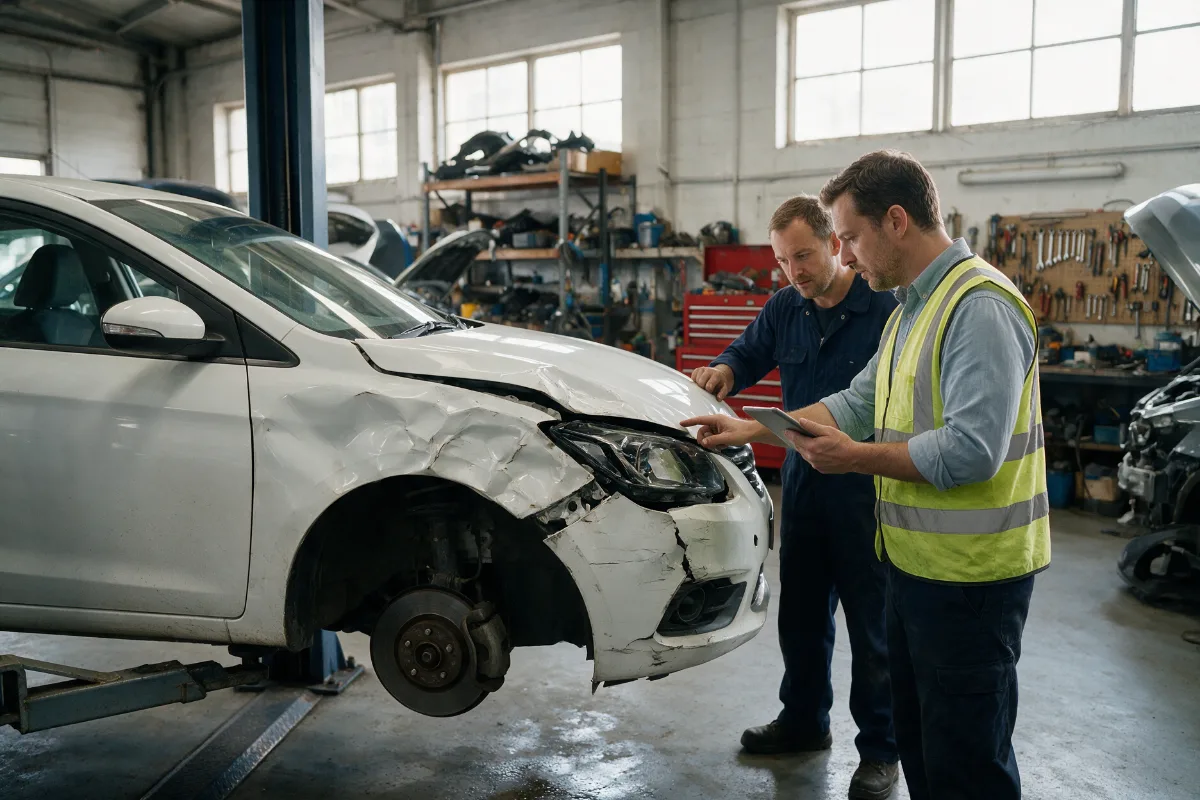
The assessor, also called the insurance engineer, decides what the insurer will pay for. They agree two things: the repair method for each damaged part, and the cost of carrying it out. A panel the workshop would repair might be authorised for replacement, or the other way round, and that decision changes both the bill and the time the car is off the road.
Assessments are now done mainly from photographs and the repairer’s estimate rather than in person. A desktop assessment is faster, but it only sees what the photographs show, which is why hidden damage found at strip down is handled through a supplementary estimate rather than absorbed quietly by the repairer. A body shop that never raises a supplementary is either seeing unusually straightforward damage or absorbing work it has not been paid for.
Our job at this stage is to defend the method. If a panel needs replacing because the metal is stretched beyond a proper repair, we say so and show why. Damage that only shows once panels come off is the usual reason an estimate grows, which is covered in damage you cannot see after a knock.
Which insurers do you work with
All UK insurers. There is no approved list that excludes us, because we are an independent repairer rather than part of one insurer’s network. Drivers regularly bring us claims from:
- Admiral, and the brands under it
- Aviva
- Direct Line and Churchill
- LV=
- Hastings Direct
- Broker arranged policies, where the underwriter’s name is different from the brand on your certificate
Your insurer is whoever is named on your certificate of motor insurance, not the broker or comparison site you bought the policy from. Tell us that name and the claim number and we will take it from there.
How does the excess work at collection
You pay your excess to the workshop when you collect the car, and the insurer settles the rest directly with us. Your total excess is usually the compulsory amount the insurer sets plus any voluntary amount you agreed, and both appear on your policy schedule.
On a non fault claim handled through the other driver’s insurer, you should not pay an excess at all. If you claim on your own policy first for speed, your insurer normally recovers the excess for you once liability is settled, though that can take months.
One other charge catches drivers out. Betterment is a contribution an insurer can ask for when a repair leaves part of the car in better condition than it was before the accident, most often when a rusty or worn item is replaced with a new one. It is not common on ordinary panel work, and any request for it will be on the authorisation rather than something we add at the counter.
Will I get a courtesy car
That depends on your policy, and it is worth checking before you agree to anything. Two different things get called a courtesy car.
A policy courtesy car is provided as part of your cover while your car is being repaired. Many policies only include it if you use an approved repairer, and it is usually a small hatchback rather than a like for like replacement.
A credit hire car is a replacement arranged for you after a non fault accident, where the cost is recovered from the other driver’s insurer. It is often a like for like vehicle, and the paperwork you sign makes you liable for the hire charges if the recovery fails. Read what you sign, because the daily rates are high.
Say at the start, rather than at collection, that you need a vehicle throughout. We plan the repair around the parts lead time, which is the part of the schedule most likely to keep the car in.
Should I claim or pay privately
Claim when the repair cost is well above your excess or when someone else is involved. Pay privately when the damage is cosmetic, the figure is close to the excess, or protecting your no claims discount and your renewal price matters more than the money you would recover.
Work it out on the numbers rather than the feeling. Take the written repair figure, subtract the excess, and compare what is left with the extra premium you would pay over the next few years after a claim. A claim also stays on your record for years even when the insurer pays out nothing.
The one situation where you should always report it, even if you then pay for the repair yourself, is when another vehicle or another person was involved. Insurers require notification of an accident, not just a claim, and an unreported incident that reaches them from the other side later is a much worse conversation.
What if the insurer says the car is a write off
A write off means the insurer has decided the repair is uneconomic against the car’s market value, not that the car is beyond repair. You have more options than the settlement letter suggests.
Category S covers structural damage that has been assessed as repairable. Category N covers non structural damage, such as panels, lights and trim, where the cost was too high against the value. Both can return to the road after a proper repair, and both stay on the car’s history for good.
You can usually retain the salvage, take a reduced settlement and have the car repaired yourself. Whether that is sensible depends on what the repair actually costs, which is why it is worth having an itemised figure in your hand before you accept or refuse a settlement. Ask us for that figure and compare it with the offer. The bands that sit behind those numbers are explained in the bodywork repair price guide.
Claiming, and want the car repaired in Rumney?
Give your insurer our name and the claim number, then send us photographs of the damage. We deal with the assessor from there. Unit 4, Wentloog Buildings, Wentloog Road, Rumney, Cardiff CF3 1TH, Monday to Saturday, 9am to 6pm. Ring the workshop, or send the photographs, and we will tell you what your car needs. Structural measurement is often what tips that decision, and it is explained in chassis damage and write off calls.
Insurance claim questions we get asked
Does using my own repairer affect my claim?
No. The claim is settled the same way. The conditions your policy attaches to a non approved repair, such as who supplies a courtesy car, are the only practical difference.
Can my insurer refuse to pay your estimate?
An insurer can query the method or the rate rather than refuse outright. We deal with the engineer directly and agree the method before work starts, so the authorised figure is settled in advance.
How long does authorisation take?
Usually two to five working days from the estimate reaching the insurer, longer when an in person inspection is arranged or when a supplementary estimate is needed after strip down.
Do I pay the excess to you or to my insurer?
You pay us, at collection. The insurer pays the balance of the authorised repair directly to the workshop.
What happens if you find more damage after the car is stripped?
We raise a supplementary estimate with photographs and wait for the insurer to authorise it. You see the same information at the same time.
Is the repair guaranteed on a claim?
Yes, on the same terms as a private repair, and the Consumer Rights Act 2015 requires the work to be carried out with reasonable care and skill whoever is paying for it.
Give your insurer our name, then send us the photographs. We will handle the assessor from there. Call 07400 454839 or use the contact form.