
Accident Repair in Cardiff: Collision and Crash Repair Specialists
Cardiff Accident Repair restores cars after front, rear and side impact collisions at its Rumney workshop. Most people ringing us have a car blocking the drive, an insurer on the other line and no idea whether the damage is as bad as it looks. Ali Hindal strips the damaged area, finds the hidden damage behind bumpers and panels, and gives you a written itemised quote before any work starts. The workshop handles private jobs and insurance claims with all UK insurers. Cars that cannot be driven can usually be recovered in.
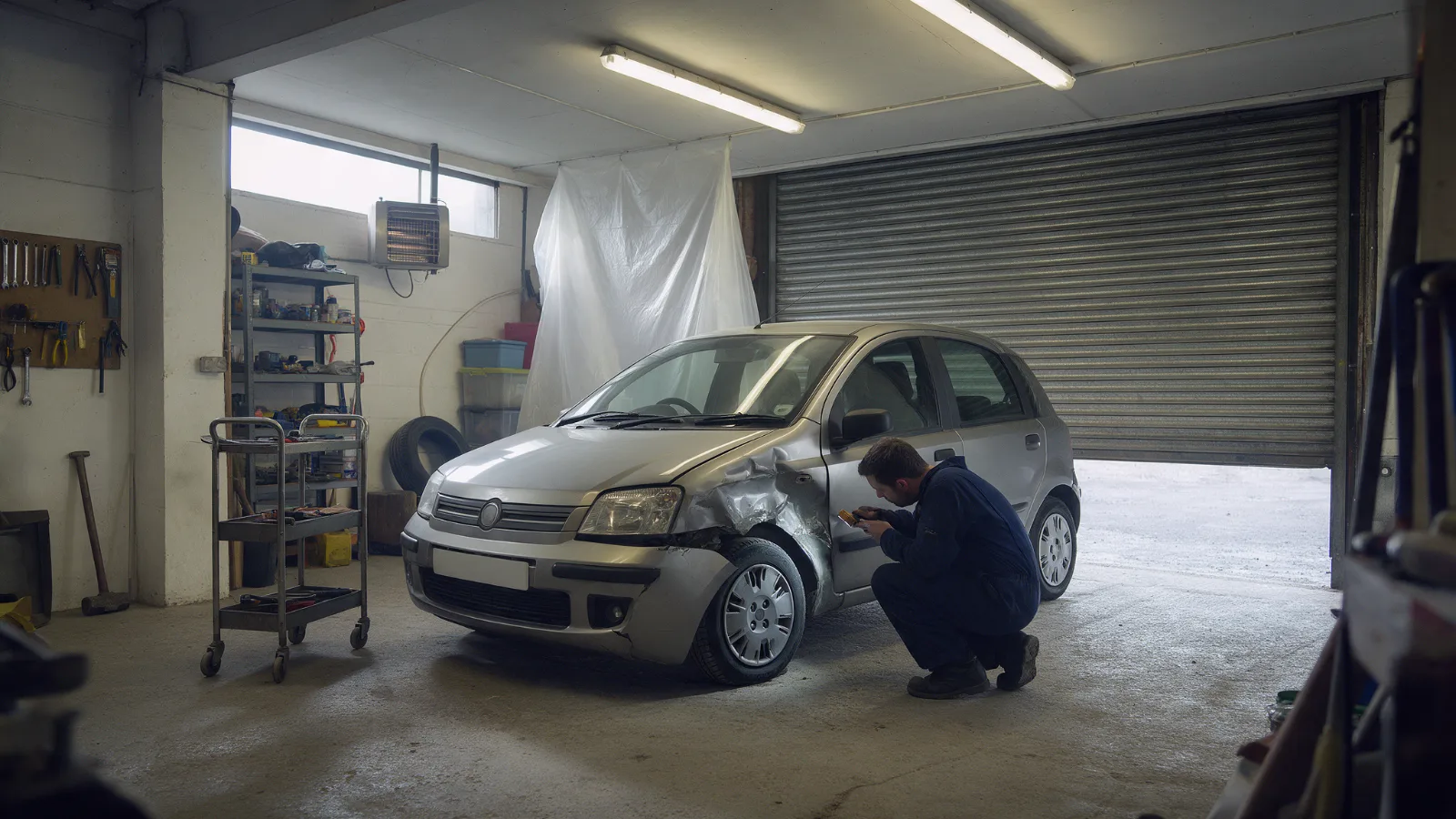
What is accident repair
Accident repair is the work of returning a collision damaged car to its pre accident condition: structure, panels, paint and the parts that sit behind them. It covers two kinds of damage at once. Cosmetic damage is what you can see, so dents, scrapes, cracked bumper skins and scuffed paint. Structural damage is what the impact did to the metal underneath, including the crash bar, the chassis legs, the inner wings and the mounting points that hold the suspension and the panels in line. Ali Hindal works from six bays and an on-site spray booth at Unit 4 Wentloog Buildings in Rumney.
That second half is what separates a body shop from a mechanic. A mechanic fixes what makes the car run. A body shop puts the shell back into shape, then makes the paint match, then checks the car drives straight afterwards. Most accident jobs need both trades, which is why the assessment comes first and the quote comes second.
The workshop sits in Rumney, five minutes off the A48, and covers the full job in one place: strip down, metalwork, paint in the on site spray booth, reassembly and the final check. You can see the rest of the repair services in Cardiff we carry out on the services page.
What collision damage do you repair
We repair front, rear and side impact damage, from a low speed car park knock to a car that has been hit hard enough to need panels replacing. The table below shows what each type of impact usually damages, which is a useful guide to what your quote will cover before the car is stripped. Impacts with animals sit in a category of their own, and what to do about one is in hitting an animal and the damage it causes.
| Impact | What it usually damages | What often hides behind it |
|---|---|---|
| Front end | Bumper, bonnet, wings, grille, headlamps | Crash bar, radiator support, impact absorbers, parking sensors, bonnet slam panel |
| Rear shunt | Rear bumper, boot lid, tailgate, rear lights | Rear crash bar, boot floor, towing eye mount, parking sensors and wiring |
| Side impact | Doors, wing, sill, quarter panel, mirror | Door beams, B pillar, sill inner section, seat belt tensioners, alignment |
| Low speed knock | Bumper corner, wing edge, alloy wheel | Bumper brackets, sensor holders, headlamp brackets, wheel alignment |
Alloys, bumpers and single panels are repaired routinely; a full corner rebuild after a heavier hit takes longer and uses more parts. If your damage is cosmetic rather than structural, the detail of how panels are pulled, filled and refinished sits on the car bodywork repairs page.
How does an accident repair job run from drop off to collection
An accident repair runs in six stages, and the order never changes. Nothing is quoted before the strip down, because a quote written from the outside of a car is a guess. Cars with cameras or radar add a calibration stage at the end, covered in ADAS calibration after repair.
- Strip and assess. The damaged area comes apart. We look behind the bumper skin and the panels for the parts that took the load. This is where the real cost of the job appears.
- Written itemised quote. You get the parts, the paint and the labour written down line by line, with the method for each panel stated as repair or replace. If we find more damage later, you see a supplementary quote before that work happens.
- Parts ordered. Panels, lights, clips and brackets come in. Parts availability, not workshop time, is the usual reason a job waits.
- Metalwork. Panels are pulled back into shape or replaced, mounting points are set true, and the gaps around doors, bonnet and boot are made even again.
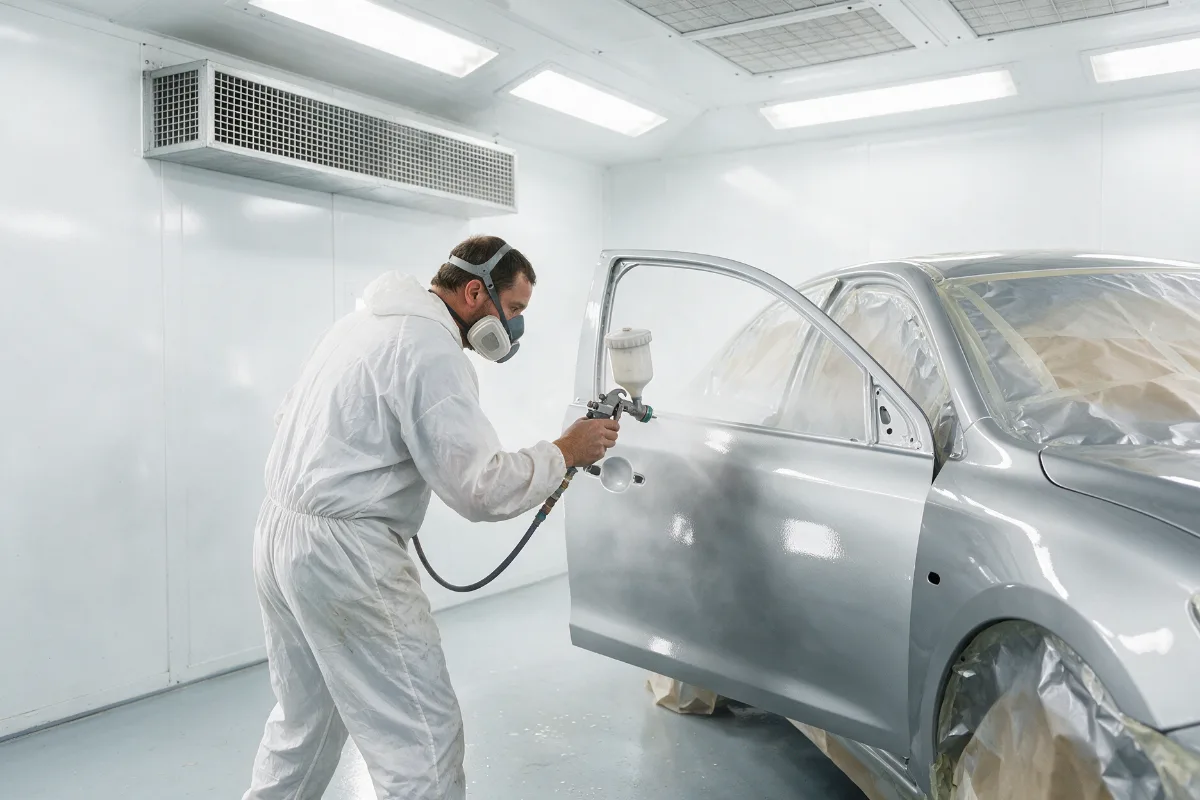
- Paint. Colour is matched to the car, not to the brochure, then sprayed in the on site booth and blended into the neighbouring panel so the repair does not sit as a visible patch.
- Reassembly, quality check and road test. Trim, lights and sensors go back on, the panel gaps and paint finish are checked in the light, and the car is driven before you get the keys.
The order of events on your side matters as much as ours while the car is still at the scene. Our guide to what to do after a car accident covers the first ten minutes through to the first week.
What damage is hidden after a crash
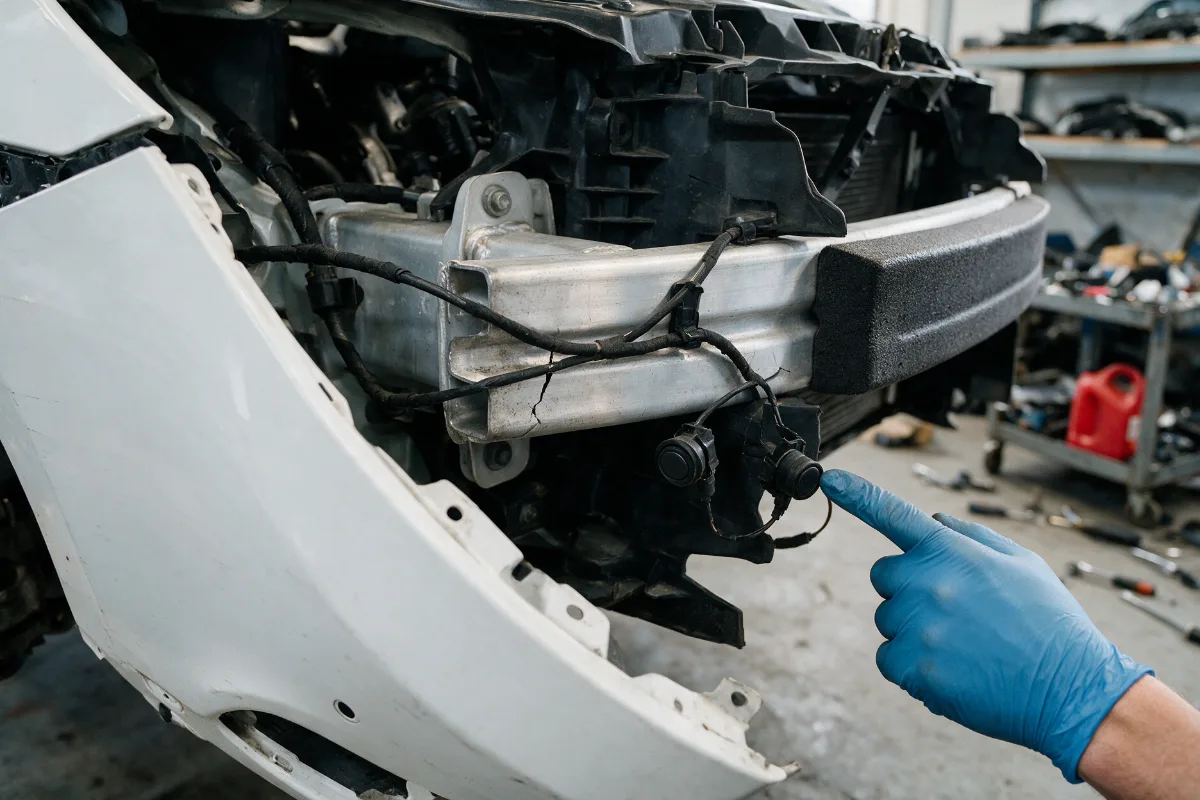
The damage that changes a quote is almost always the damage you cannot see from the driveway. A modern bumper skin is designed to spring back into shape after a low speed hit, so a car can look nearly straight while the structure behind it has taken the impact. These are the parts we check on every job: The checks that find it, and the signs you can spot yourself in the first week, are in hidden damage after a minor accident.
- Impact absorbers and the crash bar. They crush on purpose to protect the car. Once crushed they do not recover, and a second impact meets nothing.
- Parking sensors, cameras and radar. Sensors survive knocks that break their mounts and brackets. A sensor pointing two degrees out reads the world wrong.
- Headlamp and panel brackets. Cheap plastic mountings snap first. They are why a replacement bumper sits proud or a headlamp will not line up.
- Suspension geometry. A kerb strike or a side impact can pull the alignment out, which shows up later as a car pulling to one side and tyres wearing on one edge.
- Seals and water paths. A pushed in wing or boot edge breaks the seal line, and the first sign is damp carpet weeks later.
The strip down comes before the quote for exactly this reason. A minor looking bump can carry several hundred pounds of parts behind the skin, and a driver who accepts a quick over the phone figure usually finds out at the worst moment. It is also why photographs of the outside of a car can only ever give you a range, and why we put the figure in writing once the panel is off. Our guide to photographing damage for a quote shows what to send before the car moves.
Can you repair my car through insurance or privately
Both. You choose, and the choice is yours to make rather than your insurer’s. We handle claims with all UK insurers and we also take private jobs where the driver would rather not claim at all.
On your own policy, you pay the excess and the insurer covers the rest of the authorised repair. On a non fault claim, where someone else caused the accident, the cost is recovered from the other driver’s insurer and you should not be out of pocket for a repair you did not cause. On a private job there is no claim, no excess and no effect on your no claims discount, which is why drivers with cosmetic damage often pay for the work themselves once they see the figure.
What your insurer can do is recommend a repairer from its approved network. What it cannot do is force you to use one. Your options, the excess question and how an approved network actually works are set out on the insurance claim repairs page.
How long will my car be off the road
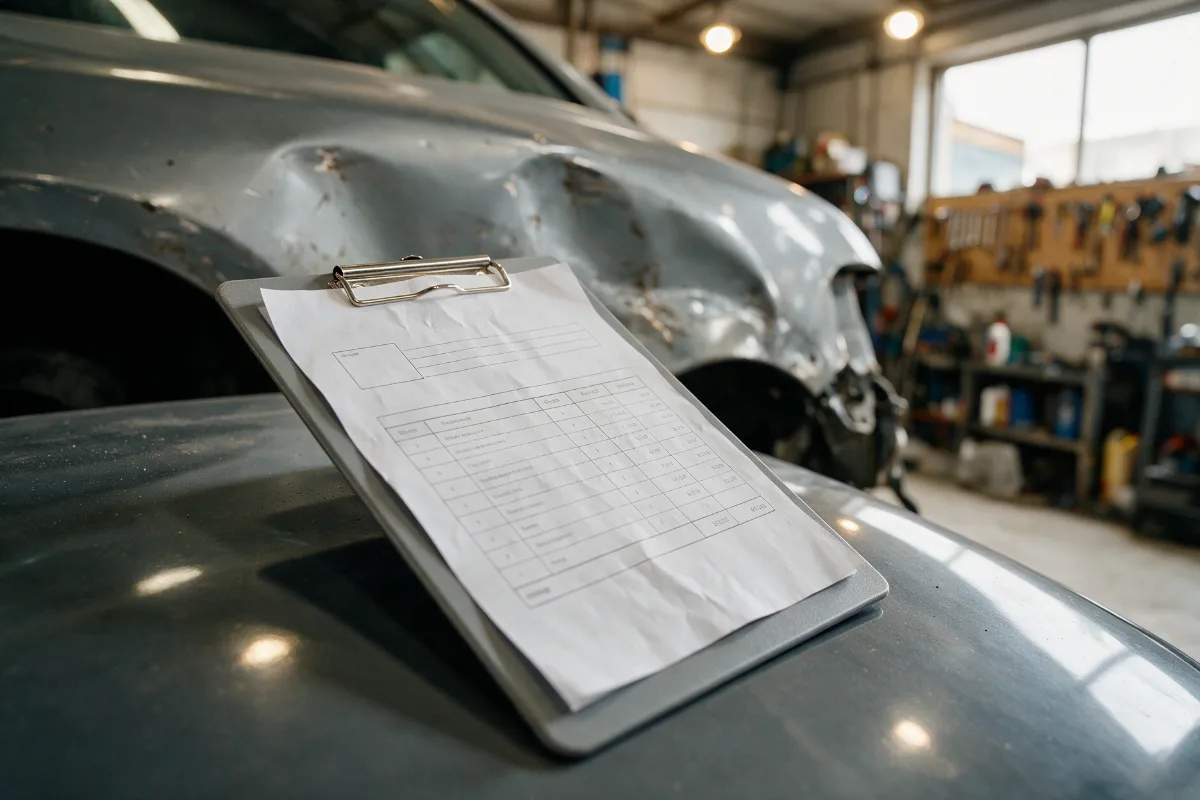
Repair time depends on the depth of the damage, the parts and, on a claim, the insurer’s authorisation. The figures below are typical working day ranges for this class of work, counted from the day the parts arrive rather than the day you ring.
| Damage level | Typical time in the workshop | What stretches it |
|---|---|---|
| Single panel or bumper, repair and refinish | 2 to 3 working days | Colour match on metallics and pearls, paint cure time |
| Two or three panels, one replaced | 4 to 6 working days | Parts lead time, blending into adjacent panels |
| Corner rebuild with structural work | 1 to 2 weeks | Panel availability, alignment checks, sensor work |
| Any repair on an insurance claim | Add 2 to 5 working days | Engineer inspection and authorisation before work starts |
Two things move these numbers more than anything else. The first is parts: a common hatchback bumper is on the shelf, a facelift model wing can take a week. The second is authorisation on a claim, because no insurer pays for work approved after the fact. If the car is a taxi or a van and every day off the road costs money, say so when you ring and we will plan the parts order around it.
What if my car is not driveable after the accident
Recovery to the workshop can usually be arranged, including straight from the scene. A car is not driveable when the lights or steering are affected, when a wheel or suspension arm is damaged, when fluid is on the road, or when a panel is fouling a tyre. Do not drive it to us to save the recovery cost.
- Ring the workshop on 07400 454839 and say where the car is and what is damaged.
- Get it recovered. Your policy may include recovery already; if it does not, we can arrange collection.
- Leave it with us. The car is stored at the workshop while the assessment and, on a claim, the authorisation go through.
Mechanical damage that comes with a heavy impact, such as cooling, steering or drivetrain faults, is handled with our sister workshop next door, so the car does not travel between two sites. Drive times and routes from Newport, Penarth, Barry and Caerphilly are on the areas we cover page.
Is my car worth repairing or is it a write off
A car is written off when the cost of repairing it is judged too high against what the car is worth, not when the damage looks dramatic. On a claim, the insurer’s engineer makes that call, and the same damage can be repairable on a three year old car and a write off on a twelve year old one.
Two categories matter to drivers who want to keep the car. Category S means structural damage that has been assessed as repairable. Category N means non structural damage, so panels, lights and trim, that was uneconomic to repair at the insurer’s figure. Both can legally go back on the road once repaired properly, and both stay on the car’s history. Where the shell itself has moved, the measuring that answers this is described in chassis damage after an accident.
Where drivers get caught out is the gap between the insurer’s valuation and what the car is worth to them. A car with a fresh MOT and a full service history is often worth more to its owner than the market figure on the claim, and paying privately for a repair the insurer called uneconomic can be the better decision. We give you the itemised figure either way, so the choice is made on numbers rather than on a phone call. What moves the figure on a repair of this size is set out in the bodywork repair price guide.
Is the repair guaranteed
Every repair carries your statutory protection under the Consumer Rights Act 2015, which requires a service to be carried out with reasonable care and skill. If workmanship falls short of that, the repairer must put it right. That right applies to any repairer in the United Kingdom and it is not something a garage grants you as a favour.
On top of the statutory position, the written quote states what is covered on your job, including the paintwork and the panels that were refinished. Fair wear, fresh damage from a later incident and corrosion that was already under the paint before we started are not covered, and they are the three things that account for nearly every disputed claim in this trade.
Ask for the guarantee in writing before you authorise work, from us or from anyone else. A repairer who will not put the terms on the quote is telling you something. The written quote for your car is prepared at the workshop by the person who will do the work, and you can meet the owner before you decide.
Get your damage looked at properly
The workshop is at Unit 4, Wentloog Buildings, Wentloog Road, Rumney, Cardiff CF3 1TH, open Monday to Saturday, 9am to 6pm. Send photographs first if the car is off the road and we will tell you what we can before it moves. Ring the workshop, or send the photographs, and we will tell you what your car needs.
Call 07400 454839 Get a free repair quoteAccident repair questions we get asked
Do I have to use the garage my insurer tells me to use?
No. You can have the car repaired at the body shop you choose. An insurer can recommend its approved network and may attach conditions, such as who provides a courtesy car, but the repairer is your decision.
Will you deal with my insurer for me?
Yes. We provide the itemised estimate, deal with the engineer’s inspection and handle the authorisation and any supplementary work on the claim.
Can you match the paint on an older car?
Yes. Colour is matched to the car as it is now, including the fade it has picked up, rather than to the original factory code, then blended into the adjacent panel.
Do I need to report the accident to the police?
Under section 170 of the Road Traffic Act 1988 you must stop and exchange details. You must report the accident to the police within 24 hours if details were not exchanged at the scene or if anyone was injured.
Is it cheaper to pay privately than to claim?
It can be. Once the excess and the effect on your no claims discount are counted, smaller repairs are often cheaper paid for directly. We give you the written figure so you can compare the two before you decide.
How soon can you look at the car?
Ring the workshop and bring it in the same week in most cases. Photographs by message let us give you an idea of the work before the car moves.
Bring the car to Rumney, or send photographs first. We will tell you what the damage is, what it will take and what it will cost, in writing. Call 07400 454839 or use the contact form.