
ADAS Calibration After Accident Repair
ADAS calibration is the process of re-aiming the cameras and radar that run your car’s driver assistance systems, and it is required after any repair that disturbs where those sensors sit or how the car stands. A sensor out by one degree is pointing at the wrong lane by the time it reaches the distance it is measuring. Your car came back from a repair looking perfect, and you have no way of knowing whether the thing that brakes for you still sees straight. Nobody wants to be off the road twice for the same accident. Ali Hindal puts calibration on the job sheet at the Rumney workshop when the repair disturbs a sensor, and the report goes out with your invoice so you can see it was done.
What is ADAS and where do the sensors live
ADAS stands for advanced driver assistance systems, the group of features that includes autonomous emergency braking, lane keeping, adaptive cruise control, blind spot monitoring and parking assistance. Each one depends on a sensor that has to point exactly where the manufacturer put it, whether your car is in for a shunt, a dent or a respray.
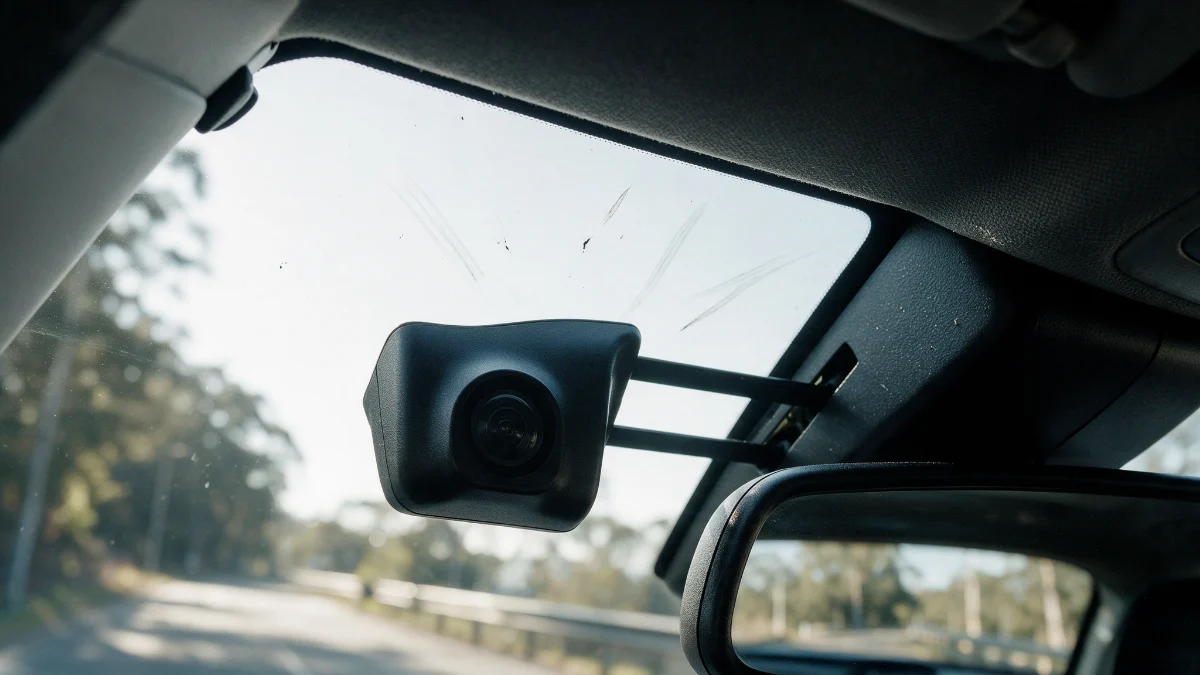
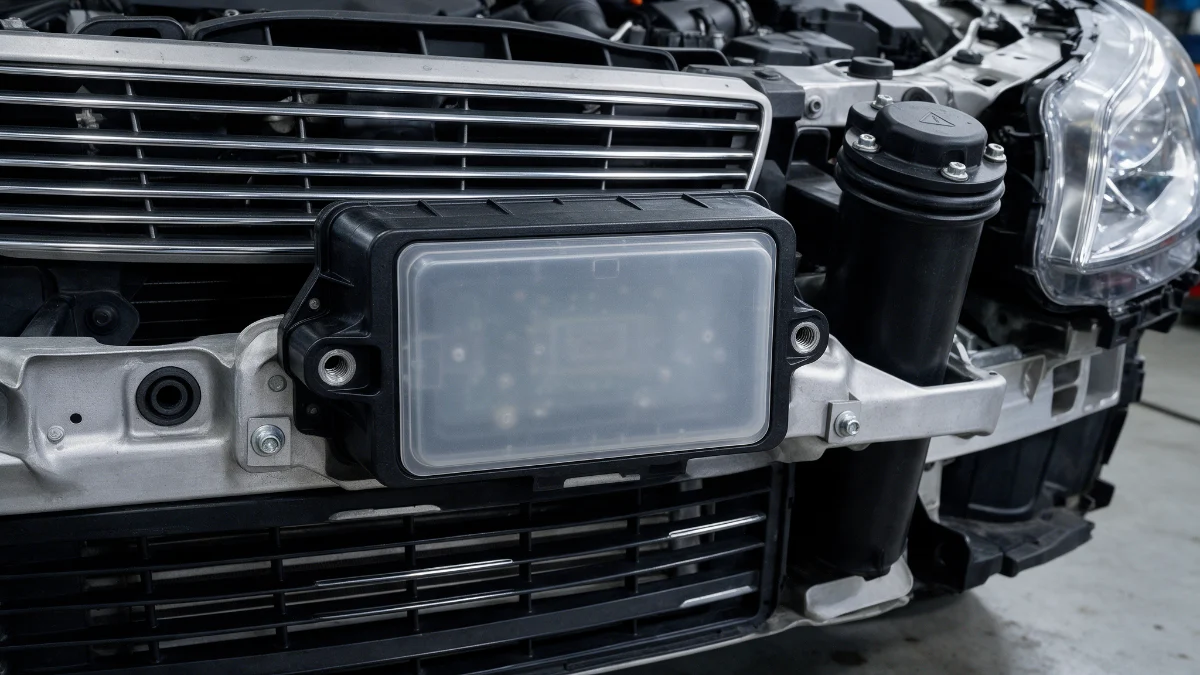
The forward camera usually sits behind your windscreen near the mirror. The main radar sits behind the grille or in the front bumper. Corner radars for blind spot and cross traffic alert sit inside the rear bumper corners. Ultrasonic parking sensors sit in the covers front and rear, and on cars with a surround view system there are cameras in the mirrors, the grille and the tailgate handle.
Every one of those is in a part that gets removed, replaced or repainted after an ordinary front or rear end knock. That is the whole problem in one sentence, and it is why a bumper or dent repair on a modern car is not what it was ten years ago, as covered on bumper repair.
When does a car need recalibrating
Calibration is required whenever a sensor is removed, replaced or disturbed, whenever the glass it looks through is changed, and whenever the way the car sits on the road changes. That last one is the trigger people miss completely.
- Windscreen replacement. The forward camera comes off the old screen and goes onto a new one, in a slightly different place. This is the single most common trigger.
- Front or rear bumper removal or replacement. Radar and ultrasonic sensors live in there, and refitting is not re-aiming.
- Any front end impact, even a light one. A radar bracket can move without the bumper looking damaged.
- Suspension, steering or alignment work. Change how the car sits and you change where a fixed sensor points.
- A ride height change, including different wheels and tyres. The camera is aimed relative to the road surface.
- Mirror, tailgate or grille work on a car with surround view. Those cameras are calibrated as a set.
Tell whoever is quoting for your repair which systems your car has, before the work starts, so the quote is right first time. The list is usually in the handbook under driver assistance. How a repair is assessed and authorised is set out in the insurance engineer assessment.
Static or dynamic calibration, and what is the difference
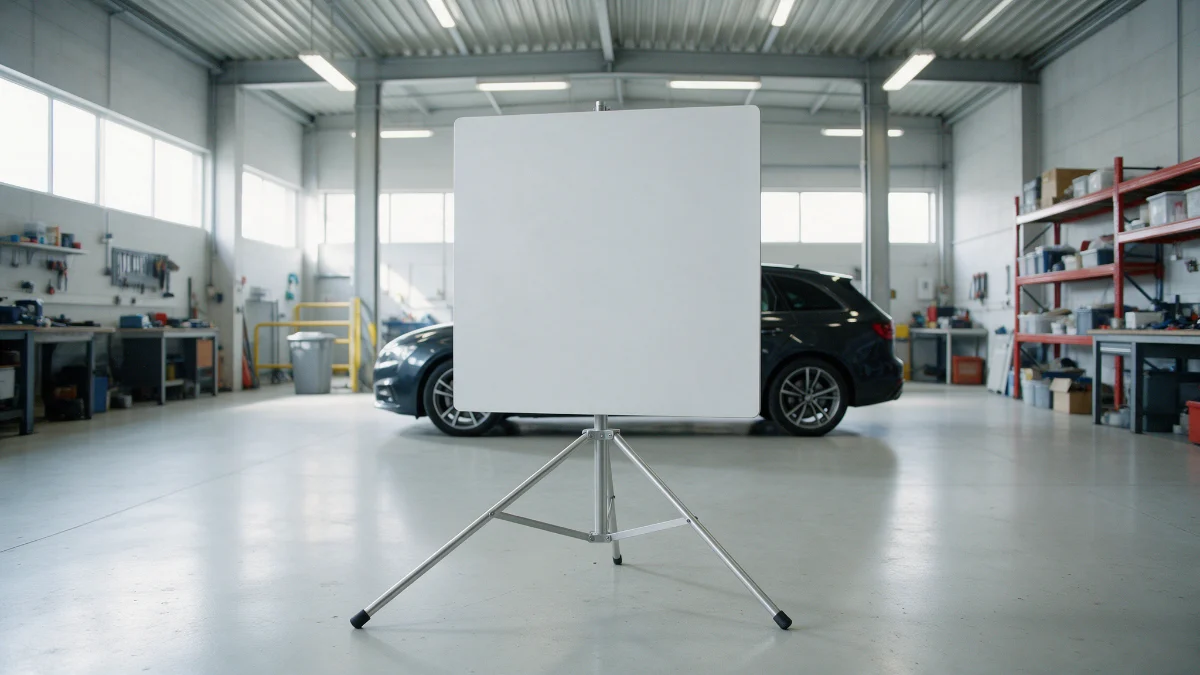
Static calibration is done indoors against a measured target board, and dynamic calibration is done by driving the car at a set speed on a clear road while the system learns. Some cars need one, some need the other, and plenty need both in sequence.
Static work is why a workshop needs floor space, level ground and controlled light. The target sits at a manufacturer specified distance and height from the centre line of the car, and the car itself has to be unloaded, with correct tyre pressures and a full set of known conditions. Get any of that wrong and the calibration completes and is still wrong.
Dynamic calibration needs a road with clear lane markings, a steady speed and often a minimum distance, which in practice means a dual carriageway rather than a lap of the industrial estate. Where a vehicle needs a manufacturer-specific procedure we arrange it rather than hand your car back uncalibrated.
What happens if the calibration is skipped
A skipped calibration leaves the systems live and wrong, which is worse than having them switched off, because you keep trusting them. Nothing on the dashboard tells you the aim is out.
The failure modes split two ways. A system that intervenes when it should not, which shows as phantom braking, a lane keep that tugs at the wheel on a straight road, or parking sensors reporting obstacles in an empty car park. And a system that does not intervene when it should, which you only discover at the moment you needed it.
The second one is the reason this is not an optional extra on the invoice. Autonomous emergency braking is measured and marketed on stopping distances, and all of that assumes the sensor is looking where the engineers put it. Your bumper refitted beautifully with a radar two degrees out is a car that looks repaired and is not, and no claim form will catch it.
How do you know it was actually done
Ask for the calibration report, which names the vehicle, the systems calibrated, the procedure used and the result, and keep it with the repair invoice. A repairer who calibrated your car can produce it in a minute.
That document does two jobs. It proves the work happened, which matters if a system later misbehaves and somebody asks when it was last set up. And it travels with the car, so a future buyer or an inspector can see that an accident repair was finished properly rather than stopped at the paint.
Ask one more question while you are at it: which systems were calibrated, not just that calibration was done. A car can need the forward camera, the front radar and both corner radars, and doing one of the four is not doing the job. We list them individually on the report that goes out with your invoice.
A repair you suspect skipped it is worth raising with the repairer first, and asking for the report in writing. No report usually means no calibration, whatever the conversation at the counter suggested. Where the work went through an insurer, raise it with them too, because calibration should have been authorised and paid for as part of the job, and an incomplete repair is their problem as much as yours. Bring the car to us and we will tell you what your vehicle needs and what state it is currently in, which is a short job and a useful thing to know either way.
Who pays for calibration on an insurance repair
Calibration is part of the repair, so on an insurance job it belongs in the estimate and the insurer pays for it along with everything else. Where it gets left off, it is usually because nobody listed the systems at the assessment stage.
Estimate time is when to raise it, because adding a line is easier than arguing about one afterwards. When you report the accident, say what driver assistance your car has. When the engineer assesses it, check calibration appears on the estimate. Both take a sentence.
Private customers should ask for calibration as a separate line on the quote, so you see it rather than discover it. And be wary of a quote noticeably cheaper than the others on a car with radar and a forward camera, because this is the line that usually explains the difference, not the excess you were comparing. How insurers authorise work is covered on insurance claim repairs.
What a calibration costs you in time and money
Calibration adds hours rather than days to a repair, and it is a labour and equipment line rather than a parts line, which is why it varies between shops more than most of a quote does. Ask for it as its own item and you can compare it properly.
Three things move it. How many systems your car has, since a forward camera, a front radar and two corner radars are four procedures rather than one. Whether the car needs a static procedure, a dynamic one or both, because a road drive takes time nobody can compress. And whether the manufacturer requires a specific procedure, which is arranged rather than approximated.
What it should never be is a surprise at collection. We put calibration on the job sheet at the point the strip down shows a sensor is involved, and you are told then rather than at the end. The same principle runs through every quote here, which is why you get a written one after the car has been opened up rather than a figure down the phone. What else moves a repair figure is on what drives a bodywork repair price.
Does calibration apply to older cars too
Cars without cameras or radar need no calibration, and the cut off is not a model year, it is what is fitted to your specific vehicle. Autonomous emergency braking became common across new cars during the late 2010s, and plenty of cars older than that have adaptive cruise or a forward camera as an option.
Check rather than assume. A camera housing behind the mirror, a radar badge or a plastic panel in the centre of the grille, and a lane departure or cruise control symbol on the dashboard are the quick tells. The handbook is definitive.
Cars with parking sensors and nothing else need no camera calibration, though those sensors still need refitting correctly and not painting over, which is a different failure with the same symptom. That is covered on bumper repair alongside the rest of the plastics work.
Get your car calibrated after a repair in Cardiff
We are at Unit 4 Wentloog Buildings, Wentloog Road, Rumney, Cardiff CF3 1TH, Monday to Saturday, 9am to 6pm, with six work bays and an on-site spray booth. Tell us which driver assistance systems your car has when you book, and the calibration goes on the job sheet from the start rather than being discovered at the end. Drivers come to us from across Cardiff and the towns nearby.
ADAS calibration questions we get asked
Does a windscreen replacement always need calibration?
A car with a forward facing camera behind the screen needs it every time. The camera is relocated onto new glass and its aim has to be reset against a target. A screen with no camera needs nothing.
How long does calibration take?
Usually under two hours for a static procedure, plus a road drive where a dynamic calibration is also required. It is scheduled as part of the repair rather than as a separate visit.
Will a warning light tell me if my sensors are out of aim?
No, and that is the problem. A sensor that is aimed wrongly still reports healthy, because the car checks that it is working rather than that it is pointing correctly. Only a calibration confirms the aim.
My repair shop refitted the bumper. Is that enough?
No. Refitting puts the radar back in its bracket. Calibration tells the car where that bracket is now pointing. They are two separate operations and the second one needs equipment.
Can I just turn the systems off instead?
On some cars you can disable individual features, and it is a poor substitute. Autonomous emergency braking in particular is a safety system rather than a convenience, and a car with it switched off is a car without it.
Does changing my wheels affect calibration?
It can. A different overall tyre diameter changes ride height, and a forward camera is aimed relative to the road. Mention a wheel change if your car is in for anything camera related.
Tell us which driver assistance systems your car has when you book, and ask for the calibration report with your invoice. Call 07400 454839 or use the contact form.