
Can I Choose My Own Bodyshop After an Accident?
Yes. Most drivers find out they had a choice after the car has already been collected by somebody else’s garage. Being pushed towards a repairer you did not choose, while your car sits off the road, is how most of these calls start. You choose who repairs your car, and your insurer pays the agreed cost of that repair. An insurer can recommend a repairer from its approved network, and it can attach conditions such as who provides a courtesy car, but it cannot stop you using the body shop you want. This guide covers what an insurer can and cannot restrict, the words to use on the call, and what to do if the handler keeps pushing back.
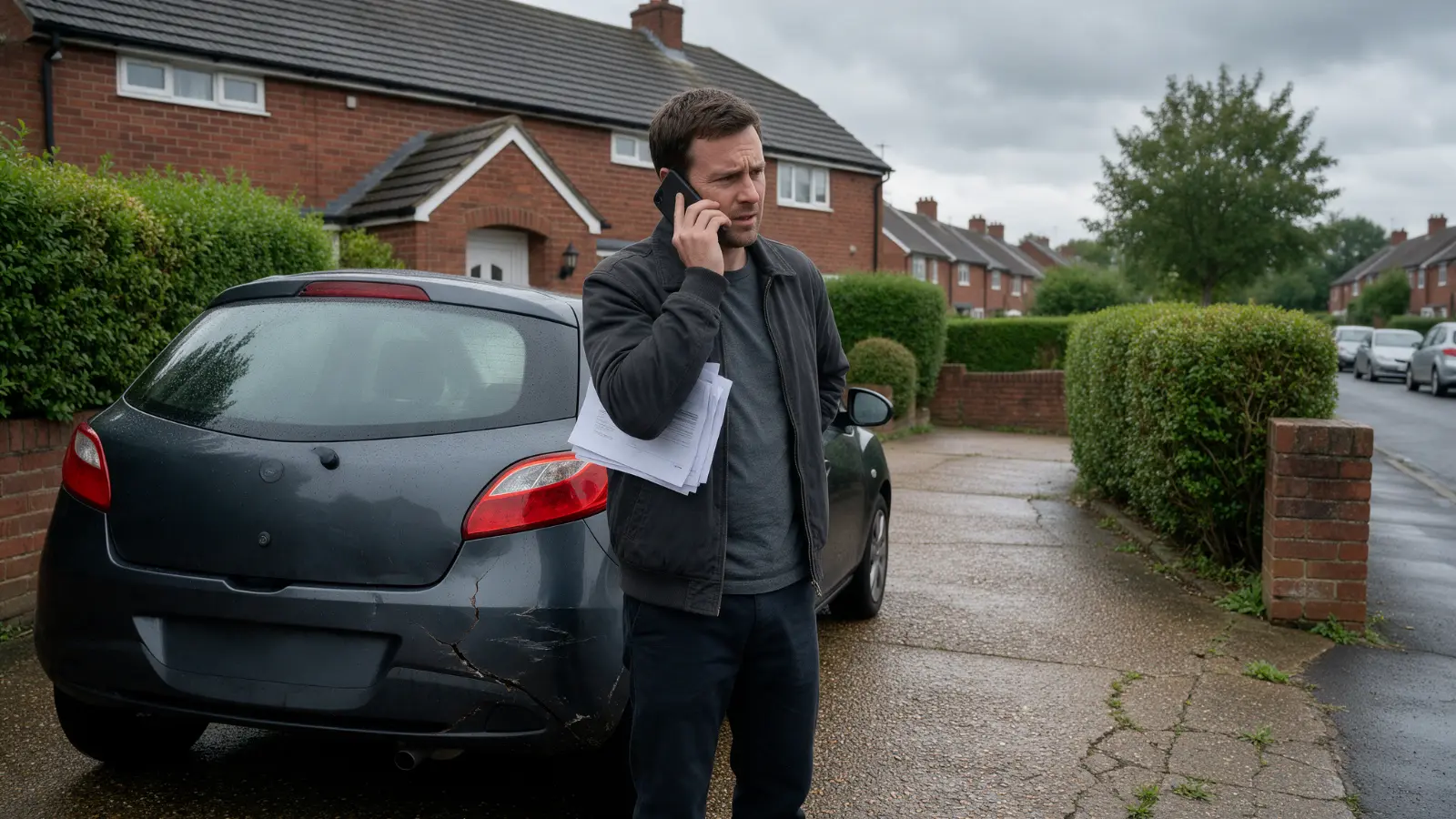
Can I choose my own bodyshop after an accident
You can. The repairer is your choice, whether you are claiming on your own policy or through the other driver’s insurer. Insurers maintain networks of approved repairers because they have negotiated rates and processes with them, and steering claims into that network keeps their costs predictable. That is a commercial arrangement between the insurer and those garages. It is not a rule that binds you. Ali Hindal will tell you on the phone what the repair involves, from the Rumney workshop at Unit 4 Wentloog Buildings, before you commit to anything.
Where drivers lose the choice is by accident rather than by argument. You report the claim, the handler says “we will book that in for you”, a courtesy car is offered in the same breath, and the car is collected the next morning. Nobody refused you anything. You were simply never asked.
So ask first. Before the handler moves on, say that you have a repairer and give the name and address. Everything after that is administration.
What can my insurer restrict if I use my own repairer
Three limits turn up regularly in policy wordings, and all three are conditions rather than refusals.
- The courtesy car. Many policies only provide one when you use an approved repairer. If you need a car throughout, check this before you decide, because it is the condition worth settling before you decide anything else.
- The repair guarantee. Insurers guarantee work done in their network, often for several years. A repair done elsewhere carries the repairer’s own guarantee and your statutory rights under the Consumer Rights Act 2015 instead.
- The rate. Some policies say the insurer will pay up to the amount it would have cost in its own network, and you cover any difference. In practice an independent’s rate is often at or below the network rate, so there is nothing to cover, but you should ask rather than assume.
Ask for these three in writing before you agree to anything. A handler reading from a script will tell you what the policy says when you ask them to point at it.
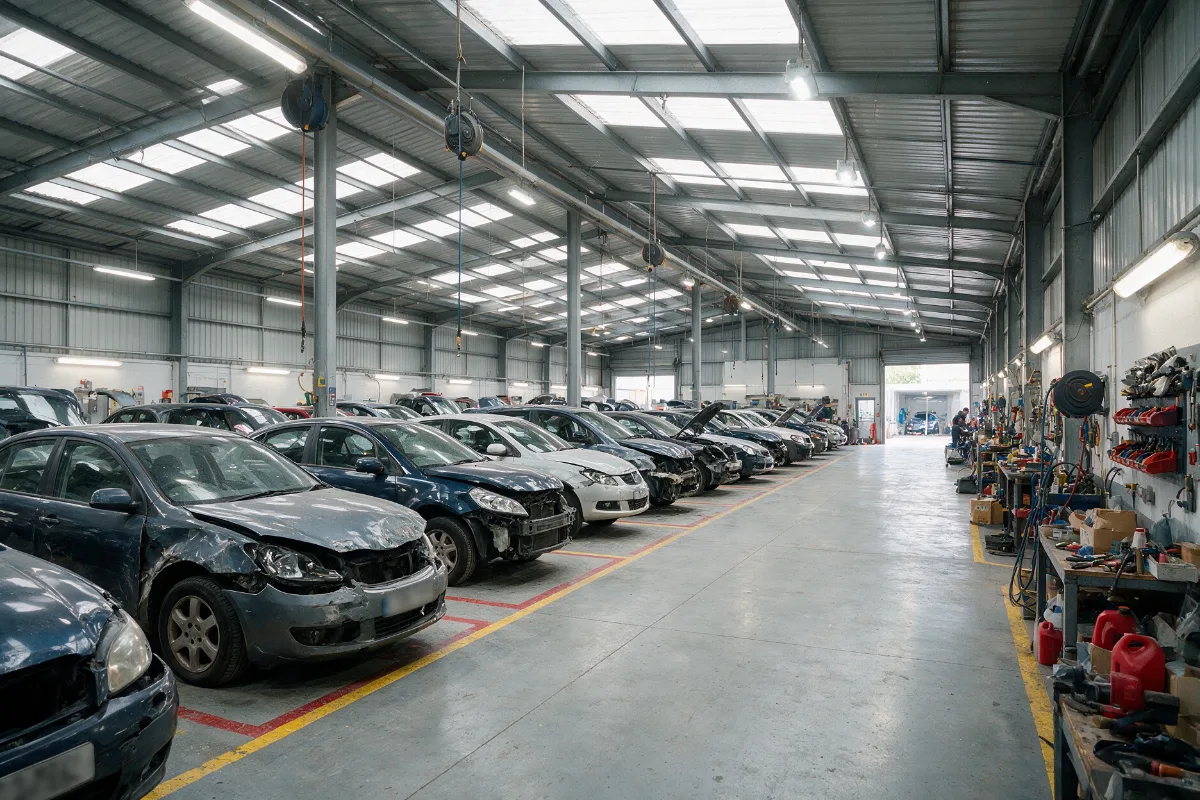
Approved repairer or independent body shop
| Insurer approved repairer | Independent body shop | |
|---|---|---|
| Who picks it | The insurer, from its network | You |
| Courtesy car | Usually included in the policy | Depends on the policy and the repairer |
| Guarantee | Insurer backed, often several years | The repairer’s own, plus your statutory rights |
| Who you speak to | A claims team, then a workshop | The person doing the work |
| Repair times | Set by network volume and scheduling | Set by parts and workshop capacity |
| Where the car goes | Sometimes to a hub some distance away | Where you dropped it off |
Neither column is automatically better. A network repairer with capacity and a courtesy car can be the right answer on a big claim. What matters is that the decision is made by you, with those differences in front of you, rather than assumed on your behalf during a two minute phone call. The same question comes up for electric and hybrid cars, and what a workshop needs to handle them is in repairing electric and hybrid cars after a crash.
What do I say to my insurer
Keep it short and say it early in the call, before the conversation reaches booking.
- Report the accident normally. Date, time, location, other vehicles, any injuries, any police reference.
- Name your repairer. “I am claiming, and I want the car repaired at my own choice of repairer. The details are Cardiff Accident Repair, Unit 4 Wentloog Buildings, Wentloog Road, Rumney, Cardiff CF3 1TH.”
- Ask for the claim number and the email address the repairer should send the estimate to.
- Ask the three questions about the courtesy car, the guarantee and the rate, and write the answers down with the handler’s name.
- Ask them to note the file that you have chosen your own repairer, so the next person you speak to starts from the same place.
From that point the repairer deals with the assessor directly, which is the part covered under insurance claim repairs.

Is it different if the accident was not my fault
Your right to choose is stronger, not weaker. On a non fault claim the cost is recovered from the other driver’s insurer, and the person whose car was damaged is entitled to have it repaired properly and to choose who does it.
The complication on non fault claims is not the repairer, it is everything bundled around it. You may be contacted quickly by an accident management company, sometimes passed on by your own insurer or broker, offering a hire car and a repair “at no cost to you”. Read what you sign. Credit hire agreements make you liable for the hire charges if the recovery from the other side fails or the daily rate is challenged, and those rates are high.
You can accept the repair and decline the hire, or use your own repairer and their hire arrangement, or claim directly against the other insurer. What you should not do is sign a bundle you have not read while standing next to a damaged car.
What if the insurer pushes back
Handlers push back for two reasons: the script, and the target. Neither changes your policy.
- Ask for the policy wording. “Please point me to the clause that says I must use an approved repairer.” There usually is not one.
- Ask for it in writing. A refusal that has to be typed is rarer than a refusal that can be said.
- Escalate to a complaint. Ask for the insurer’s formal complaints process. That starts a clock and moves the file to someone senior.
- Take it to the Financial Ombudsman Service. Once you have a final response, or after eight weeks without one, the Ombudsman will look at it. The service is free to you.
In most cases the argument ends at step one, because an insurer that sees a customer who knows the position stops steering. Be polite and be immovable: the two together work far better than either on its own.
Why insurers have approved networks at all
An approved network is a group of body shops that have agreed rates, methods and reporting with an insurer. The insurer gets predictable costs, a single point of contact and data on every job. The repairer gets a steady flow of work without advertising for it. Both sides gain something real, and neither of those gains is about your car specifically.
The trade off is volume. A network repairer is working to agreed times and agreed rates across hundreds of cars, which is efficient, and efficiency has a direction. Methods are standardised, schedules are tight, and the person who quoted your car is rarely the person holding the spray gun.
An independent workshop works the other way round: fewer cars, longer conversations, and the same pair of hands from quote to collection. Whether that suits you depends on the job and on how much you want to speak to the person doing it.
When the network is the better answer
Taking the insurer’s repairer is the sensible choice in some cases, and pretending otherwise would be dishonest.
- You need a car every day and your policy only provides one through the network. The cost of hiring privately for a fortnight usually outweighs the difference in repair quality on a straightforward job.
- The damage is severe and the car is a total loss candidate. Much of the process is valuation and settlement rather than repair.
- You are a long way from any independent you trust. A car that has to travel is a car that collects damage on a transporter.
Outside those cases, the choice is yours to make on merit.
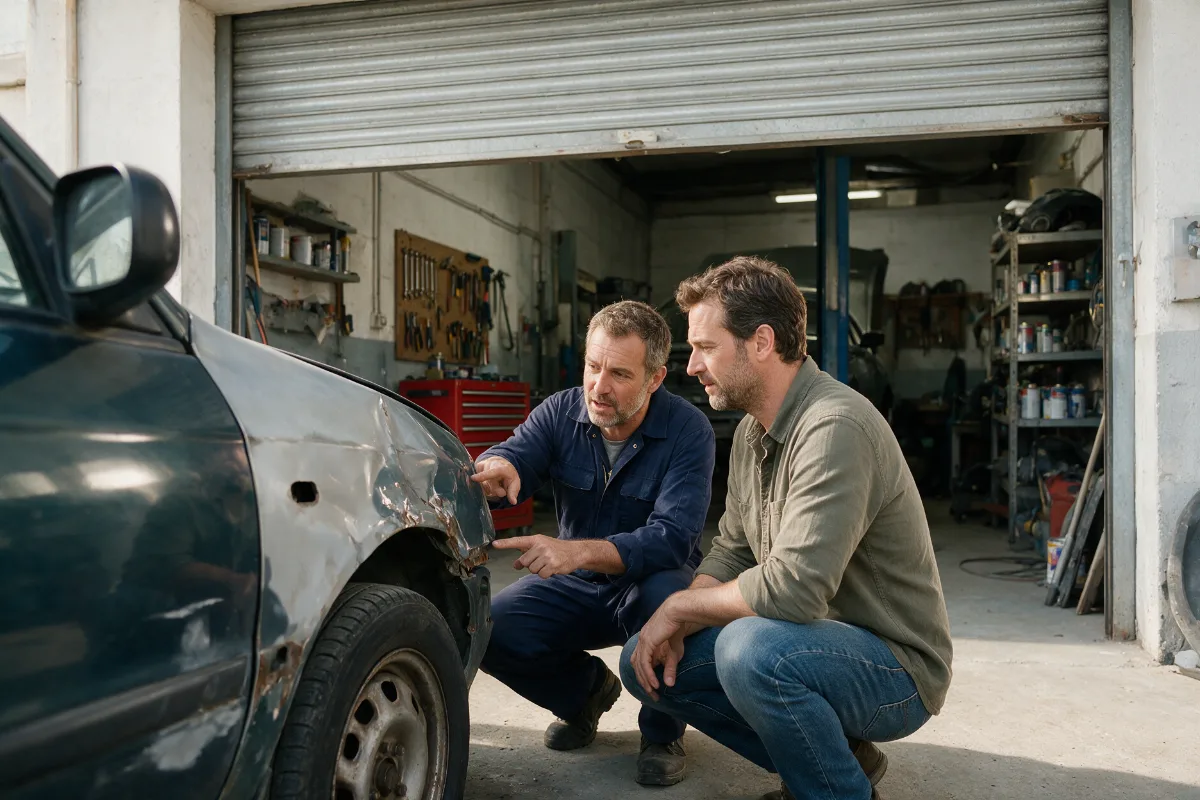
What to check before you accept any repairer
Whichever way you go, five questions separate a good body shop from a busy one.
- Where will the car actually be repaired? Some networks collect locally and repair at a regional hub.
- Who will I speak to about my car? A name is better than a department.
- Will the colour be blended into the next panel? This is the single biggest difference between a repair that disappears and one you can find in daylight.
- What is the guarantee, and is it in writing on the quote?
- What happens if more damage is found? The answer should involve showing you photographs before any extra work starts.
Any repairer who is comfortable with those five questions is comfortable with the job. One thing worth asking is whether they can calibrate driver assistance cameras and radar, which is explained in ADAS calibration after accident repair.
What the law and the regulator actually say
No statute names your repairer for you. What governs the situation is your policy, which is a contract, and the regulator’s expectations about how insurers treat customers.
Your policy sets out what the insurer will pay for and on what conditions. Read the claims section and the repairs section; between them they answer every question on this page for your specific cover. Insurers must also handle claims fairly and promptly and must not mislead you about your options, which is why a flat statement that you have no choice, when the policy says otherwise, is worth challenging rather than accepting.
The Financial Ombudsman Service considers complaints about insurers once the insurer’s own complaints process has run its course or eight weeks have passed. The service is free for consumers and its decisions bind the insurer when you accept them. Most disputes never get there, because asking for the clause in writing tends to end them.
Getting your car assessed in Cardiff
Send photographs first, or bring the car to the workshop in Rumney. We give you an itemised estimate, deal with the assessor, and tell you plainly if the damage is more than the photographs showed. What the strip down looks for is described under accident repair in Cardiff.
Claiming and want to choose the repairer?
Give your insurer our name and address, then send us photographs of the damage. Unit 4, Wentloog Buildings, Wentloog Road, Rumney, Cardiff CF3 1TH. Monday to Saturday, 9am to 6pm. Ring the workshop, or send the photographs, and we will tell you what your car needs.
Questions about choosing your own repairer
Will choosing my own repairer slow the claim down?
It adds the assessment step, which is usually two to five working days. Network repairs can be slower when the network is busy, so the difference is smaller than handlers suggest.
Can my insurer charge me extra for using my own body shop?
Only if your policy says the insurer pays up to its network rate and the repairer charges more. Ask both sides for the figures and compare them before you commit.
What if I have already agreed to their repairer?
You can change it by ringing back, as long as work has not started. Once the car is stripped, moving it becomes messy and expensive.
Do I lose the insurer’s guarantee?
You lose the insurer backed guarantee and gain the repairer’s own, together with your rights under the Consumer Rights Act 2015. Ask for the repairer’s guarantee in writing on the quote.
Does it cost me more to use my own body shop?
Not in most cases. Independent labour rates are often at or below the rate an insurer pays its network, and the excess you pay is set by your policy rather than by the repairer you pick.
Can the other driver’s insurer insist on their repairer?
No. If you are the innocent party, you are entitled to have your car repaired properly and to choose who repairs it. Offers of hire cars and managed repairs can be accepted or declined separately.
Does using my own repairer affect my no claims discount?
No. The discount is affected by the claim itself, not by who carries out the repair.
Can I choose my own repairer on a non fault claim?
Yes, and it is your choice rather than the other driver’s insurer’s. Be careful about what else is bundled with the offer.
Name your repairer on the first call, then ring us with the claim number. We will take it from there. Call 07400 454839 or use the contact form.