
Car Park Damage: Who Pays When Your Car Is Hit While Parked?
The driver who hit your car pays, if they can be identified. If they cannot, the damage falls to your own policy or your own pocket, and that is the situation most drivers actually face when they come back to a dented door in a supermarket car park. Coming back to fresh damage and an empty space beside you is the version almost everybody gets. The car is driveable, so it ends up blocking the drive looking wrong for weeks while you decide what to do. The car park operator is rarely liable. This guide covers who pays in each scenario, how to get CCTV, whether to involve the police, and how to decide between claiming and paying.
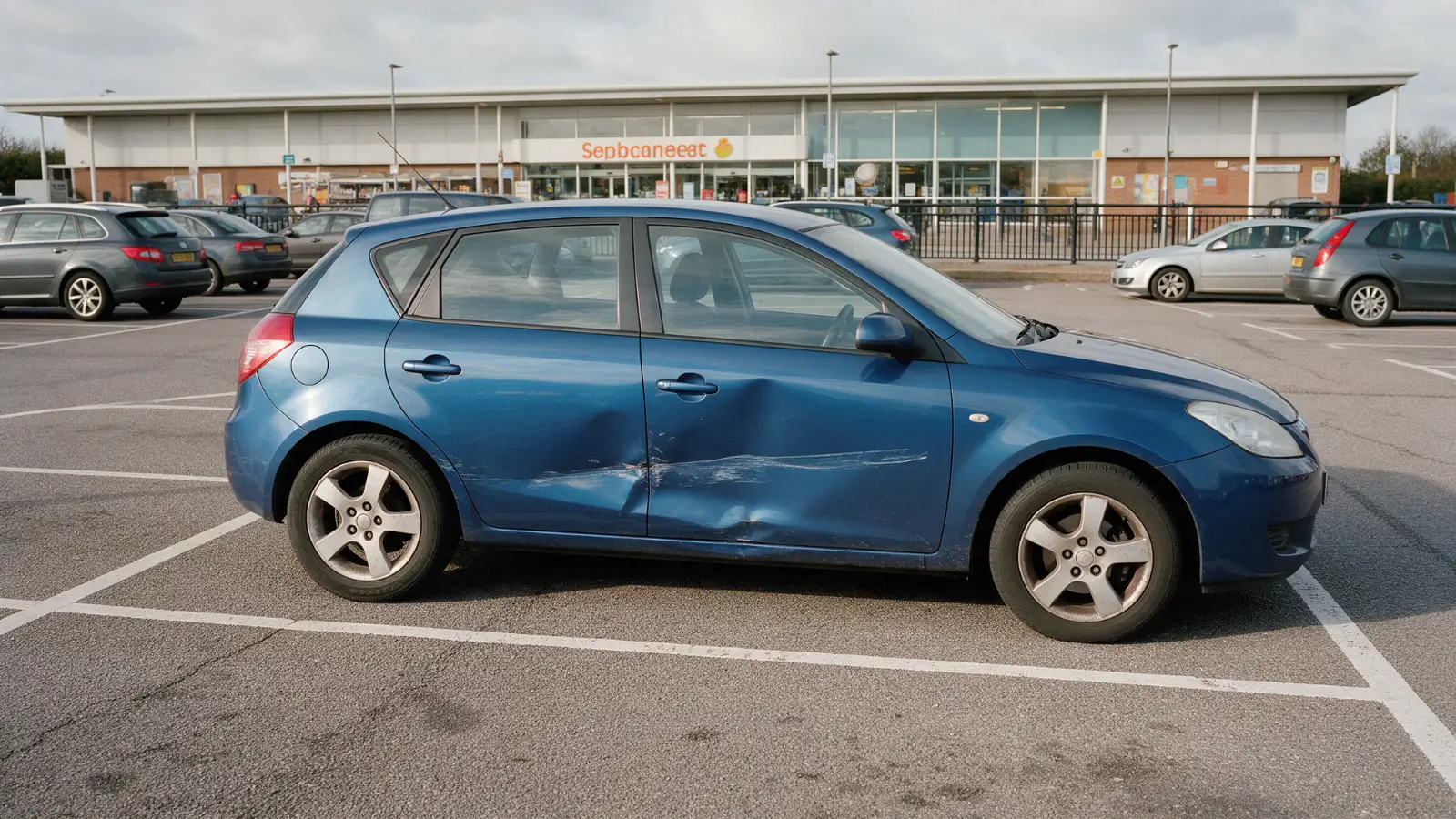
Who pays for car park damage
Liability sits with the driver who caused the damage, and recovering from them depends entirely on identification. Where the driver is known, their insurer pays and you claim as a non-fault party. Where they are not, the cost is yours, either through your own policy or directly. Ali Hindal repairs car park damage constantly at the Rumney workshop, Unit 4 Wentloog Buildings, CF3 1TH, where six work bays and an on-site spray booth handle it, and most of it never involves another insurer at all.
Four situations cover almost everything that happens in a car park.
| What happened | Who pays | What to do first |
|---|---|---|
| Another driver hit you and left details | Their insurer | Claim as a non-fault party, keep their details and photographs |
| Another driver hit you and left | Your policy, or you | Find witnesses and CCTV fast, report to the police |
| A trolley, a gate or falling debris | Possibly the operator | Report it to the operator on site, in writing, the same day |
| You misjudged a pillar or a post | You | Get a written figure and compare it with your excess |
The second row is the common one and the worst one, because a hit and run in a car park is legally an offence and practically very hard to pursue. The damage is genuinely not your fault and you may still end up paying for it, which is a situation that feels wrong and is completely normal.
Is the car park owner liable
Rarely. A car park operator is not responsible for what one customer does to another customer’s car. Most operators display signs stating that vehicles are left at the owner’s risk, and while signage alone does not decide liability, the underlying position is that the operator did not cause the damage.
Liability can arise where the damage came from the car park itself rather than from another driver. A barrier that closed on a vehicle, a gate that failed, loose masonry, a trolley bay that was not maintained, or a pothole causing wheel damage are all situations where the operator may have failed in its duty to take reasonable care of visitors.
Proving it needs the same discipline as any other claim. Report it to staff before you leave, get an incident reference, photograph the defect as well as the damage, and follow up in writing the same day. A complaint made a fortnight later, after the barrier has been repaired, has very little behind it.
The operator’s only real role, where another driver caused the damage rather than the premises, is CCTV and whether it releases the footage.
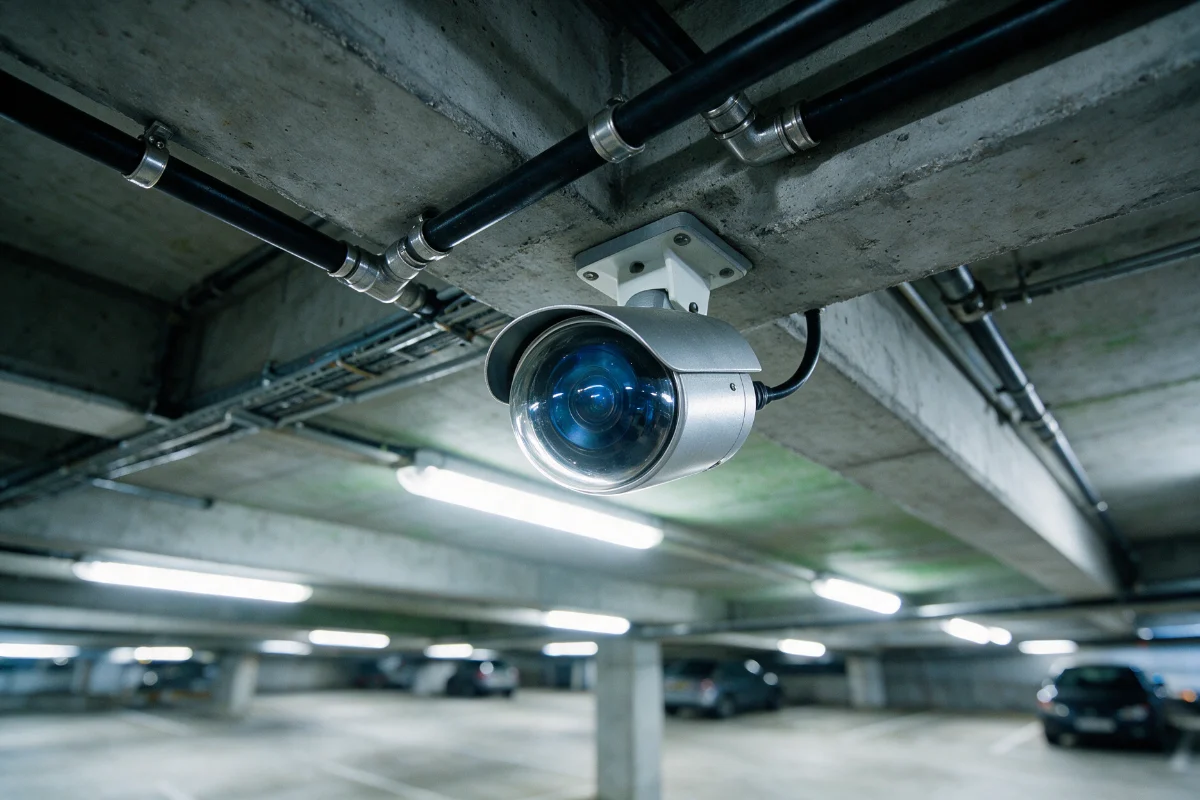
How do I get CCTV footage
You almost certainly cannot get it yourself, and that surprises people. Most operators and councils will not release footage to a private individual, because it contains images of other identifiable people and releasing it raises data protection problems they will not take on.
What works is the indirect route, and it has to start immediately.
- Ask on site, the same day. Find the duty manager, report the incident, and ask them to preserve the footage for the time and bay. Preservation is the request that matters, not release.
- Get an incident reference number and the name of the person you spoke to.
- Report it to the police on 101 or online. Police can request footage directly, and a crime reference number is what unlocks most of these requests.
- Tell your insurer and give them the location, time, bay number and the operator’s details. Insurers request footage routinely, and many operators will only deal with an insurer or the police.
- Make a subject access request if you need to see footage of yourself. You are entitled to images of you as the data subject, though other people and vehicles are normally obscured, which can limit how useful it is.
Speed is the whole game. Retention periods are commonly somewhere between two and four weeks, and some smaller systems overwrite in days. A request made three weeks later frequently finds that nothing survives. Whatever else you do, ask for preservation on day one.
Do I report it to the police
Yes, where another vehicle hit yours and the driver did not leave details. Failing to stop and failing to report are offences, so a driver who hits a parked car and drives off has committed one, whether or not anyone will ever find them.
Report it through 101 or your force’s online reporting. You will normally get a reference number, and that number does more work than the investigation is likely to. It supports an insurance claim, it is what most CCTV holders need before they release anything, and it establishes the incident happened when you say it did.
Be realistic about the outcome. Unless you have the registration, a witness or usable footage, the police will not usually pursue a car park scrape. Reporting it is still worth the ten minutes, because the reference number is the key to everything else.
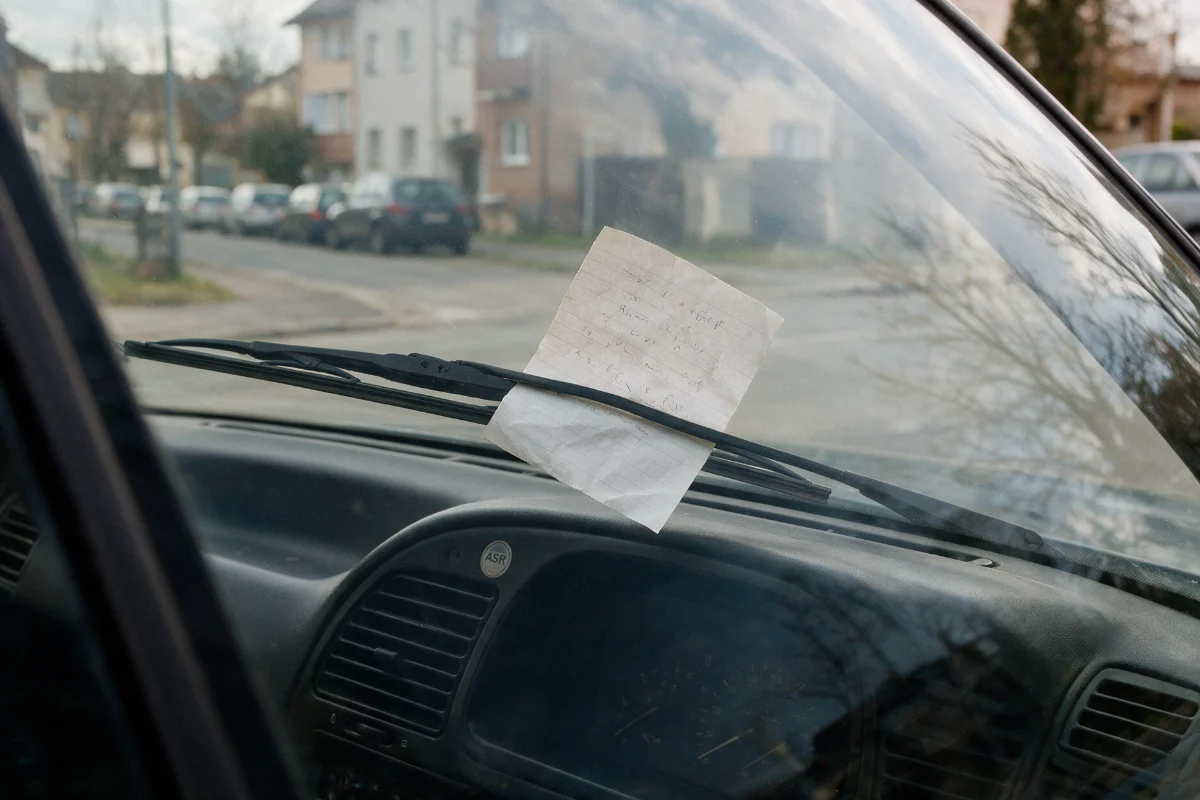
Leave a note on a car you hit yourself, every time. Leaving your details is the legal requirement and the decent thing, and the exchange process is covered in our guide on what to do after a car accident.
Claim or pay for car park dents
Car park damage is usually cosmetic, and usually better paid for privately. A door ding, a scuffed bumper corner or a shallow dent with the paint intact frequently comes in near the excess, and claiming for it costs you the discount as well as the excess.
The arithmetic is worse when the other driver cannot be found. Your insurer cannot recover the money from anybody, so the claim is recorded as a fault claim even though you were not present. Fault, in insurance terms, means unrecovered rather than blameworthy, and a parked car hit by an unknown driver is the textbook example of a non-fault event recorded as a fault claim.
That single fact changes the decision for most people. Get a written figure, compare it with your total excess, and weigh the recovery against several years of higher renewals. The full comparison is worked through in claim on insurance or pay for car damage yourself.
Claim anyway when the damage is more than cosmetic, when a door will not close properly, when a sensor or camera is involved, or when the figure is high enough that the discount is the smaller loss. Most car park damage is dent and scratch work rather than structural, which is what keeps the private price low enough to make the decision a real one.
What car park damage actually costs to put right
Car park damage divides into four jobs, and they are not equally priced.
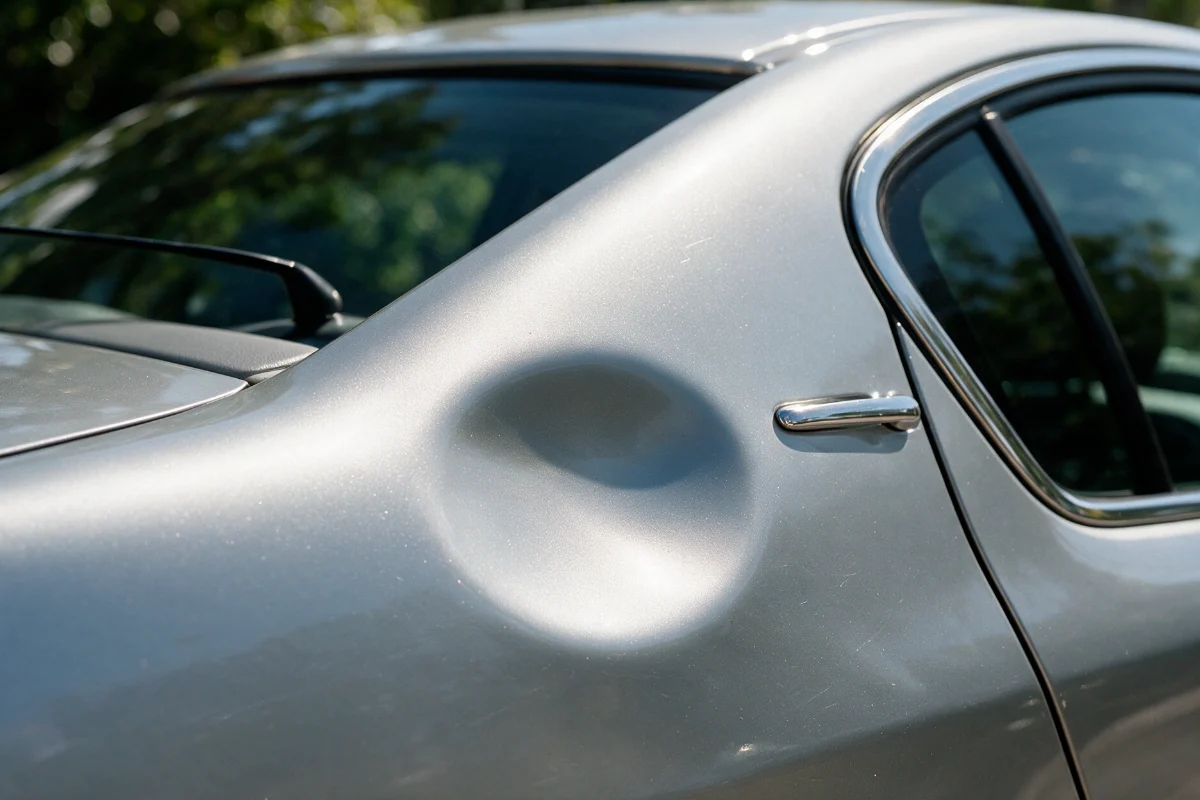
A door ding with the paint unbroken is the cheapest repair in the trade. The metal is pushed and worked back and nothing is refinished, so there is no paint, no cure time and no blending.
A scuff through the lacquer needs the panel prepared and refinished, and the colour blended into the neighbouring panel so the repair disappears. That is a two day job rather than an afternoon.
A creased door or wing is where the price steps up, because a crease through a pressed line often means the panel is replaced rather than repaired. Why that decision goes the way it does is explained in panel beating or panel replacement.
A bumper corner depends almost entirely on what is behind it. The skin may be a straightforward repair while the brackets and clips underneath are snapped, and on a bumper carrying parking sensors the strip, refit and check add time at the end.
Send a photograph before you assume any of them. The difference between the first job and the third is large, and it is not always obvious standing in a car park. Bumper corners take the worst of it in tight bays, and what that repair involves is on bumper repair in Cardiff.
Getting a car park dent repaired in Cardiff
Send photographs and we will price it before you decide anything about insurers. Daylight, one wide shot of the whole panel and two close ones from different angles, with something for scale.
For dents specifically, the shot that matters is taken from the end of the car looking down the side, so the reflection runs along the panel. A dent that is invisible face on shows immediately in that reflection, and it tells us whether the metal has creased or simply moved.
The workshop takes this work from across Cardiff and the surrounding towns, and the drive times are on the areas we cover page. Most car park repairs are one or two days once the car is in.
Come back to a dent you did not put there?
Send a photograph and we will tell you what it takes to put right and whether it is worth claiming. Unit 4, Wentloog Buildings, Wentloog Road, Rumney, Cardiff CF3 1TH, Monday to Saturday, 9am to 6pm. Ring the workshop, or send the photographs, and we will tell you what your car needs.
Car park damage questions we get asked
Can I claim without knowing who hit me?
Yes, on your own policy. It will normally be recorded as a fault claim because the cost cannot be recovered from anyone, which affects your discount.
Will the supermarket pay for the damage?
Not for what another driver did. An operator may be liable where the car park itself caused the damage, such as a barrier or failing masonry.
How long is CCTV kept?
Commonly two to four weeks, and less on some smaller systems. Ask for it to be preserved on the day you find the damage.
Is it worth reporting to the police?
Yes, for the reference number. It supports an insurance claim and is usually needed before anyone will release footage.
Does a car park dent affect my car’s value?
Unrepaired damage does. A properly repaired dent with matched paint and even gaps does not, which is why the quality of the repair matters more than the fact of it.
Can you repair a dent without repainting?
Often, where the paint is unbroken and the panel can be reached from behind. Once the paint is cracked or the metal creased, the panel needs refinishing.
Ask the car park to preserve the footage today, report it for the reference number, then get a written figure before you ring your insurer. Call 07400 454839 or use the contact form.