
How Long Does Accident Repair Take? Realistic Timelines by Damage
Accident repairs take between two days and two weeks in the workshop, depending on how many panels are involved and whether parts have to come in. Being without the car is the part that actually hurts, and the answer most drivers get is a shrug and a promise to ring back. A car off the road is the part that actually hurts, whether it is blocking the drive or costing you a day’s work. On an insurance claim, add two to five working days at the start for the assessment and authorisation. This guide gives the ranges by damage level, shows which stages actually eat the time, and explains what to do when a repair is running long.
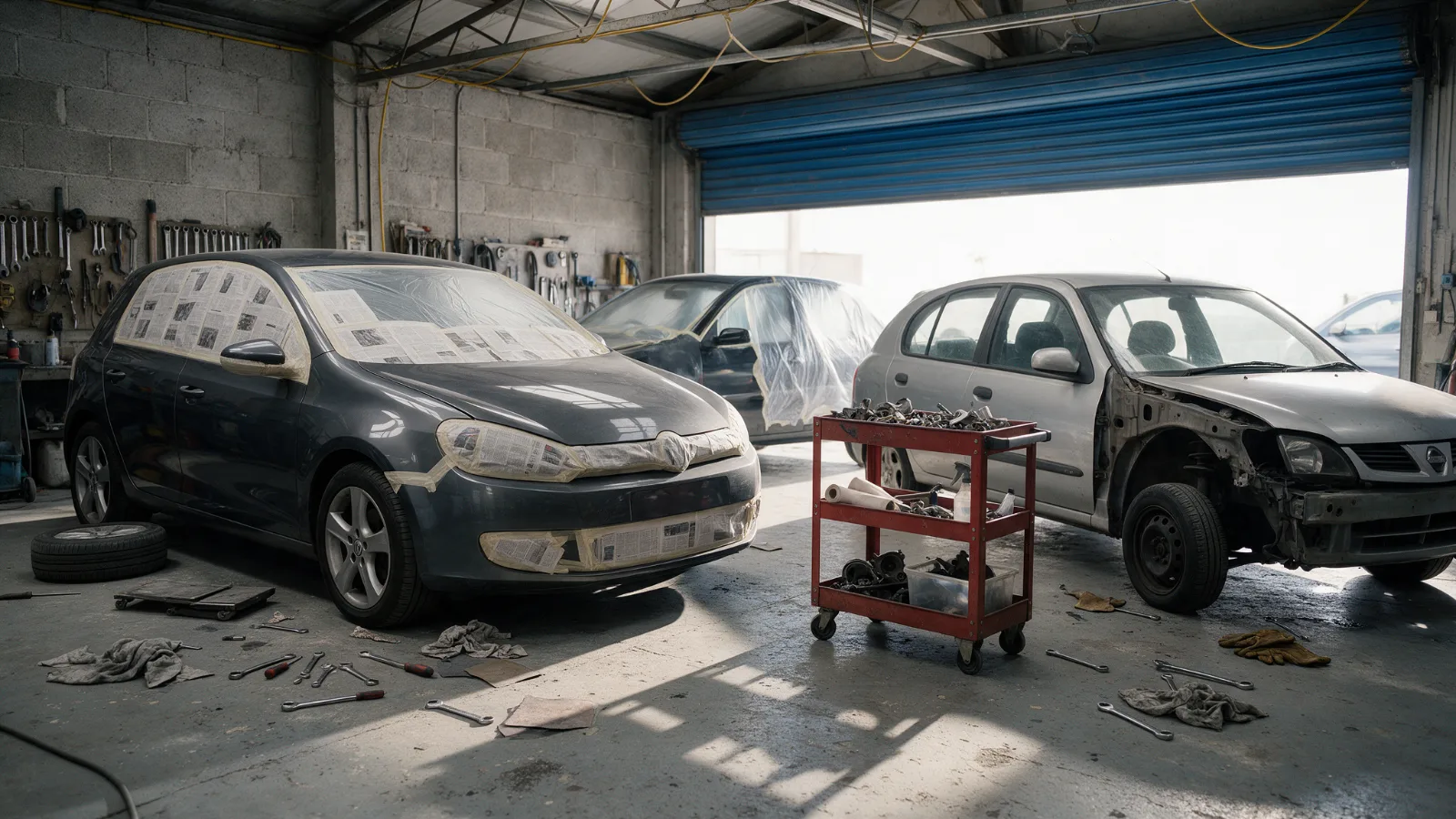
How long does accident repair take
Counting from the day the car and its parts are both in the workshop, these are typical working day ranges for this class of work. The six work bays and the on-site spray booth at the Rumney workshop mean a car does not queue for a booth somewhere else.
| Damage | Typical time | What decides where it lands |
|---|---|---|
| Scuff or scratch, one panel refinished | 2 days | Paint type and cure time |
| Bumper repaired and refinished | 2 to 3 days | Plastic welding, broken tabs, sensors |
| One panel replaced and painted | 3 to 5 days | Parts lead time, blending into the next panel |
| Two or three panels, one replaced | 4 to 6 days | Paint stages, how much comes off the car |
| Corner rebuild with structural work | 1 to 2 weeks | Panel availability, alignment, sensor work |
| Welded sill or arch section | 3 to 6 days | How far the corrosion spreads once opened up |
Those are workshop days, not calendar days. A job that takes four working days and starts on a Thursday comes back the following Tuesday.
Which stages take the time
Paint is one of the shortest stages in the job. Preparation is the longest.
- Strip and assess, half a day to a day. Panels, trim, lights and liners come off so the damage can be seen properly.
- Parts, zero to two weeks. Nothing else moves until they arrive. This is the single biggest variable in the whole job.
- Metalwork, half a day to three days. The panel is pulled, shaped and welded, and the gaps around it are set.
- Preparation, half a day to a day per panel. Filling thinly, flatting, priming and flatting again. The stage that decides whether the repair is still invisible in two years.
- Paint and cure, a day. Booth time is short. Cure time is not optional, and paint handled early marks.
- Reassembly, check and road test, half a day. Trim goes back on, the gaps are checked in daylight and the car is driven.
Add those up and a single panel is two to three days of real work. Anything quoted at a few hours is either a smart repair on a small area or a job that is skipping a stage. Paint is usually the longest single stage, and why that is comes down to the process described on paint and spray work.
What causes delays
- Parts. Common models are quick. Facelift models, imports, new shapes and anything needing a colour coded part from the manufacturer are not.
- Insurer authorisation. No insurer pays for work approved after the fact, so the car waits until the engineer has agreed the method and the figure.
- Hidden damage. It turns up at strip down, and on a claim it needs a supplementary estimate, which restarts a smaller version of the authorisation wait.
- Paint type. Pearl and tri coat finishes take longer to match and longer to lay down.
- Sensors and cameras. Systems that need checking after refitting add time at the end, not the beginning.
- Weather and workload. A cold snap slows cure times, and everybody’s car comes in after the first frost and the first storm.
Only one of those is inside a body shop’s control. A workshop that promises a date before it knows the parts situation is guessing. Electric and hybrid cars add their own waiting points, which are set out in electric and hybrid accident repair.
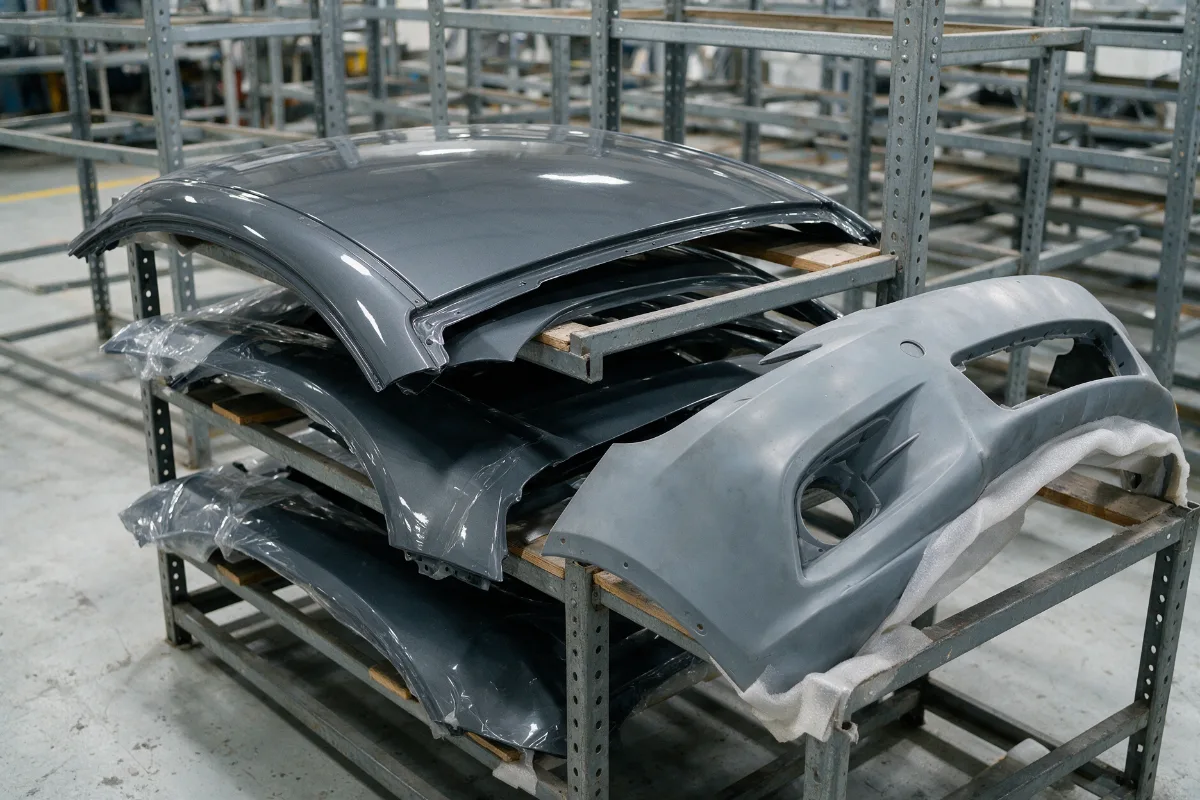
Private repair against an insurance claim
| Stage | Paying privately | On a claim |
|---|---|---|
| Quote to start | Same day to a few days | 2 to 5 working days for assessment and authorisation |
| Extra damage found | You approve it, work continues | Supplementary estimate, then authorisation again |
| Parts choice | Manufacturer, matching quality or reconditioned | Whatever the insurer authorises |
| Typical total for one panel | 2 to 4 working days | 1 to 2 weeks door to door |
The repair work itself takes the same time either way. What a claim adds is waiting for decisions. If the damage is small and the figure is close to your excess, paying directly is often faster as well as cheaper, and the comparison is set out under insurance claim repairs.
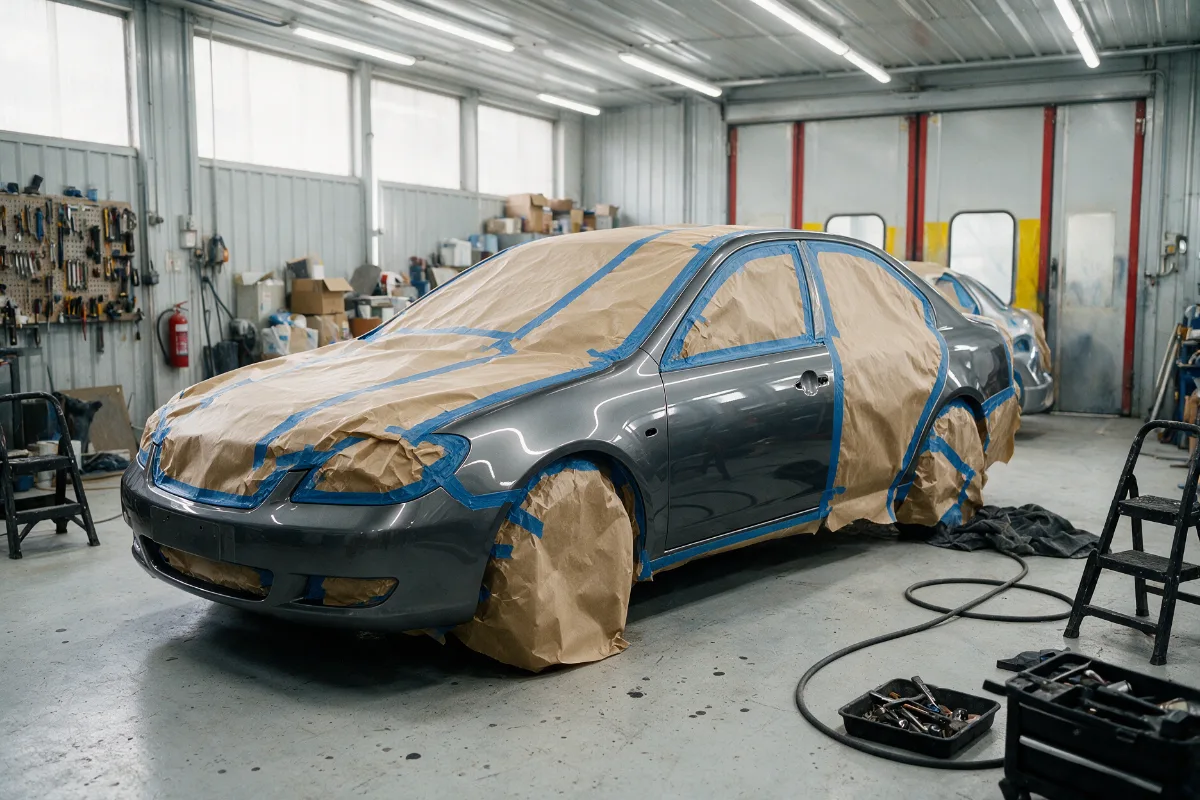
What a week in the workshop actually looks like
Take a common job: a rear bumper and a rear quarter panel after a car park shunt, paid for privately, on a metallic silver hatchback. This is how the week runs.
- Monday. Car in first thing. Bumper, light cluster and trim off. The quarter panel has a crease through the swage line and the bumper has two broken mounting tabs. Photographs taken, quote confirmed, parts ordered by lunchtime.
- Tuesday. Bumper tabs welded and reinforced. Quarter panel pulled and worked back, then left. Parts due Wednesday.
- Wednesday. Parts arrive. Preparation on both panels: thin filler, flatted by hand, primed, flatted again. This is the longest day of the job and nothing about it looks dramatic.
- Thursday. Both panels in the booth. Colour matched to the car, sprayed, blended into the door, lacquered and baked. Left to harden overnight.
- Friday. Reassembly, sensors refitted and checked, gaps set, finish checked in daylight, road test. Car collected Friday afternoon.
Five days, of which one is paint and two are preparation. Move the parts to the following Tuesday and the same job becomes a nine day job without anybody working slower.
What makes a repair take longer on your car specifically
Three things about the car itself, before anything about the damage.
Age and availability. A five year old mainstream hatchback has panels on shelves across the country. A twelve year old model in a colour that ran for two seasons may need a used panel sourced and prepared, which adds days. Newer is not always faster either: a model launched last year can have parts on allocation.
Paint. Solid white and solid red are quick. Silver and grey metallics are routine. Pearl finishes, three stage whites and the deep reds that shift colour in daylight take longer to match and longer to lay down, and they are the finishes where blending into the next panel stops being optional.
Technology in the panels. Parking sensors, blind spot radar in the rear quarters, cameras in the wing mirrors and grille. Each one has to come off, go back and be checked afterwards, and any that needs a calibration adds a step at the end of the job rather than the beginning.
None of these change the quality of the repair. They change the calendar, and it is better to hear them at the quote than on the day you expected the car back. Driver assistance cameras and radar add a calibration stage that cannot be rushed, explained in ADAS calibration after a repair.
Why two body shops quote different times
Three reasons, and only one of them is speed of work.
The first is what is included. A quote that blends the colour into the neighbouring panel takes longer than one that does not, and it is the difference between a repair that disappears and one you can see. Compare the method, not the days.
The second is the queue. A body shop with a full floor gives you a start date rather than a finish date, and the honest ones say which they are quoting.
The third is parts assumptions. A shop that assumes a part is in stock will quote three days; a shop that has checked will quote eight because the part is coming from a hub. The second quote is longer and more likely to be true.
Ask all three questions when you compare. What that time buys you on the panel itself is covered in panel beating or panel replacement.
What can I do if my repair is taking too long
- Ask what stage the car is at, not when it will be ready. Stage tells you the truth; a date can be invented.
- Ask what is being waited on. A part, an authorisation, or paint time. Each has a different fix.
- If it is a part, ask for the order reference and the supplier’s date. That converts a vague wait into a fact.
- If it is authorisation, ring your insurer yourself. A policyholder chasing moves a file faster than a repairer chasing.
- If nothing moves, put it in writing to the repairer and to the insurer, and ask for the complaints process. On a claim, the Financial Ombudsman Service is available once the insurer’s complaint process is exhausted or eight weeks have passed.
Delays are usually real. What makes them intolerable is silence, not time.
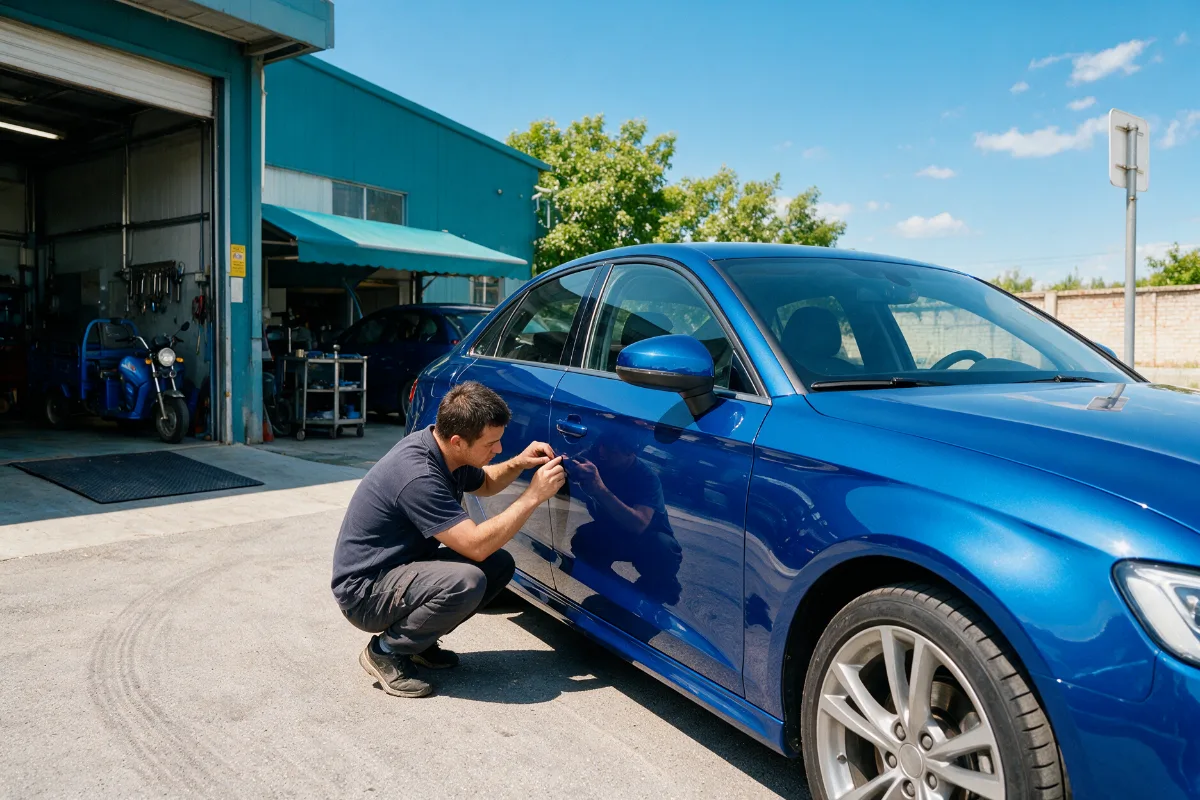
How we keep you updated
You get the stage, the reason and the next date, and you get it without having to ring for it. When parts are late, we say so and give the supplier’s date. When the strip down finds more damage, you get photographs of what we found before any extra work starts. When the car is ready, it has already been checked and driven, not booked in for a check after you arrive.
What we will not do is promise a date before the parts are confirmed. It is the easiest promise in this trade to make and the one that turns a normal wait into a complaint. The stages behind those dates are described under accident repair in Cardiff.
Need to know what your repair will take?
Send photographs with the registration and we will tell you the likely time as well as the likely cost. Unit 4, Wentloog Buildings, Wentloog Road, Rumney, Cardiff CF3 1TH. Monday to Saturday, 9am to 6pm. Ring the workshop, or send the photographs, and we will tell you what your car needs.
Questions about repair timelines
Can you do it in a day?
Only a dent repair with the paint intact. Anything needing paint needs cure time, which puts the job into a second day at least.
Why does the paint need so long?
Fresh paint is soft. Handled or assembled too early it marks, and the panel has to be redone, which costs far more time than waiting.
Will you keep my car while we wait for parts?
Only if it is not safe to drive or the damage will get worse. Otherwise we order the parts, ring you when they land and book the car in then, so it sits on your drive rather than ours.
Does a courtesy car depend on how long it takes?
It depends on your policy rather than the repair time. Check whether yours provides one when you use your own repairer before you commit to a route.
Is a quick repair a bad repair?
Not always, but the stages have fixed minimums. If a quoted time is well under the ranges above, ask which stage is being shortened.
What if the insurer takes weeks to authorise?
Call the insurer directly, quote the claim number and ask for the engineer’s decision date. Authorisation delays are the commonest cause of a car sitting untouched.
Ask us what stage your car is at, any day it is with us. You will get the stage, the reason and the next date. Call 07400 454839 or use the contact form.