
Car Bodywork and Panel Repairs in Cardiff
Car bodywork repair at Cardiff Accident Repair covers panel beating, dent and crease removal, MIG welding, panel replacement and refinishing in the Rumney spray booth. The worry is nearly always the same: will the repair show, and will it still look right in two years. Ali Hindal decides whether each damaged section is reshaped or replaced, and tells you why before the work starts. The workshop takes kerb damage, car park knocks, corrosion and collision damage on cars and vans.
What is car bodywork repair
Car bodywork repair restores the shape, the strength and the finish of a car’s outer panels. It covers the parts you can touch from outside, so wings, doors, bonnets, sills, bumpers and quarter panels, and the paint that protects them. Ali Hindal runs the work at the Rumney workshop, Unit 4 Wentloog Buildings, with six work bays and an on-site spray booth.
It is not the same job as structural repair, though the two meet on accident work. Structural repair deals with the shell under the skin, the parts that carry load in a crash. Bodywork repair deals with the skin itself. It is also nothing to do with mechanical work: a body shop does not fix the way a car runs, it fixes the way it sits, seals and looks.
Everyday damage rather than crash damage makes up most of what comes through the doors in Rumney, and much of it is repairable without a single new panel. The full range of work is listed under all bodywork services.
What does a panel beater do
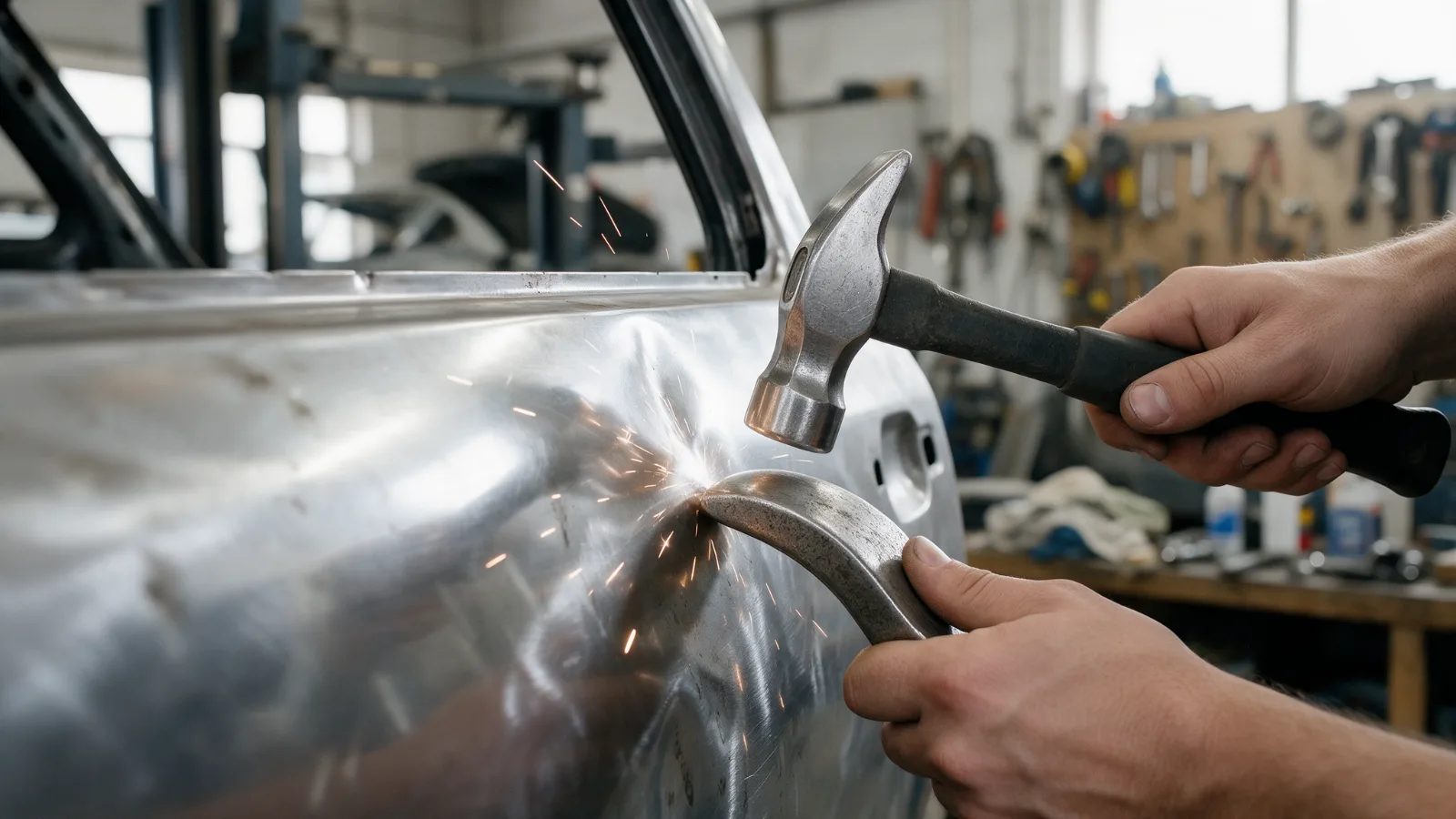
A panel beater reshapes damaged metal back to its factory profile, working the panel rather than covering the damage. The tools are simple and the skill is in reading how the metal moved.
A hammer and dolly work the panel from both sides at once, the dolly held behind the dent as the hammer taps the face. A stud welder pulls dents out where there is no access from behind, which is most modern doors and rear quarters. Shrinking takes the stretch out of metal that has been pushed beyond its original area, because a stretched panel that is simply pushed back will always oil can, springing in and out under light pressure. For the smaller end of that work, see dent and scratch repair.
Filler has a place, and that place is thin. It fills the last fraction of a millimetre once the metal is already in shape. A repair carrying filler thick enough to be doing the shaping will crack, and on a car being sold it will show up in a paint depth reading. The difference between the two approaches is invisible on collection day and obvious two winters later, which is the point of the panel beating or panel replacement comparison.
Should a damaged panel be repaired or replaced
Repair keeps the car’s original panel and its factory seams. Replacement is faster and sometimes the only honest option. The decision is made on the material, the location of the damage and how far the metal has moved, not on which is quicker to invoice.
| Damage and material | Verdict | Why |
|---|---|---|
| Shallow dent, steel panel, paint intact | Repair | Metal returns to profile with dolly work or pulling; paint may only need blending |
| Crease across a swage line, steel | Usually replace | The pressed line is what gives the panel its shape; once it is folded, the line rarely comes back straight |
| Stretched metal over a wide area | Replace, or shrink and repair | Stretched steel has more surface than the space it sits in, so it flexes unless it is shrunk properly |
| Aluminium panel, any dent | Specialist repair or replace | Aluminium work hardens and cracks rather than stretching back, and needs separate tools to avoid contaminating steel |
| Cracked plastic bumper | Repair | Plastic welding and reinforcement restore the panel at a fraction of the cost of a painted new skin |
| Rust through on a sill or arch | Cut out and weld a repair section | Rust under paint keeps spreading; only removing the affected metal stops it |
| Panel with damage across two thirds of its area | Replace | Labour to repair exceeds the cost of the panel, and the finish is better on new metal |
One rule sits behind every row: the repair has to be good enough that the panel behaves like the one that left the factory. Anything that only looks right on the day fails that test.
How does a proper panel repair work
Six stages, and the preparation takes longer than the paint.
- Assessment. The panel is cleaned and checked from both sides, with paint depth measured where a previous repair is suspected.
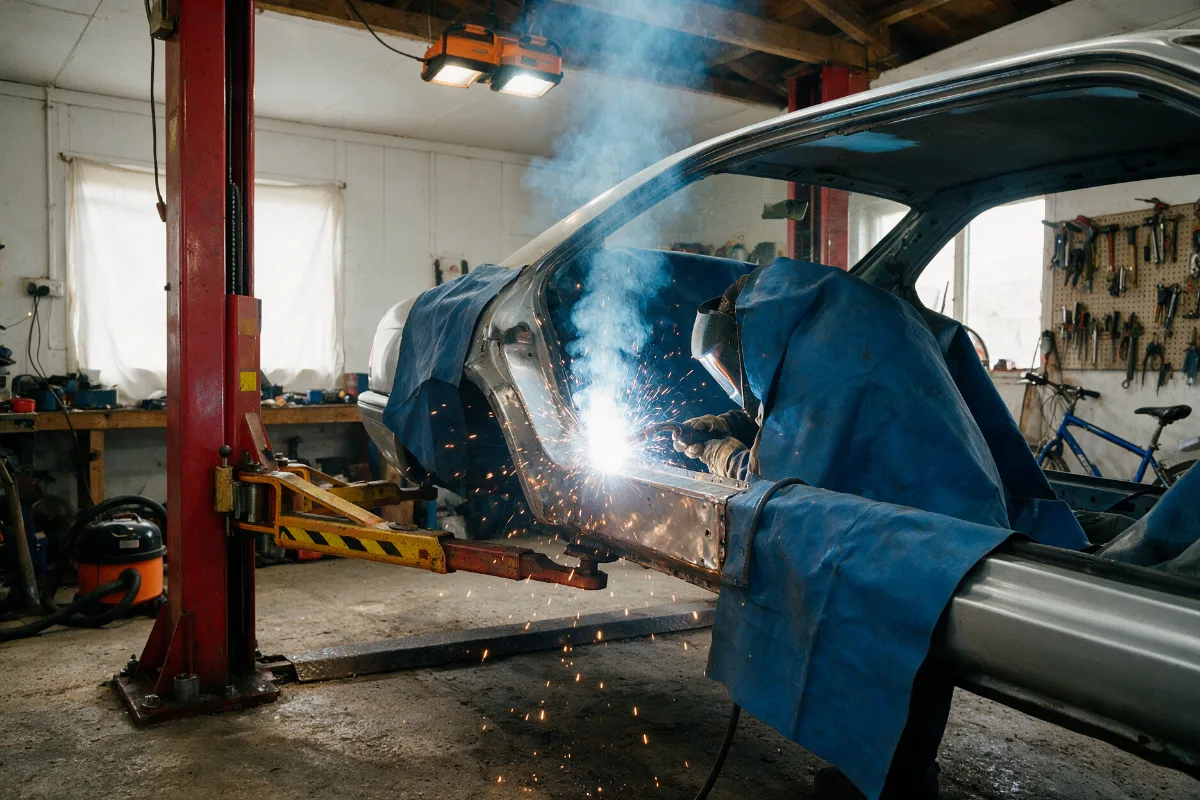
- Metalwork. The panel is pulled, tapped and shrunk back to profile, or the damaged section is cut out and a repair section is welded in.
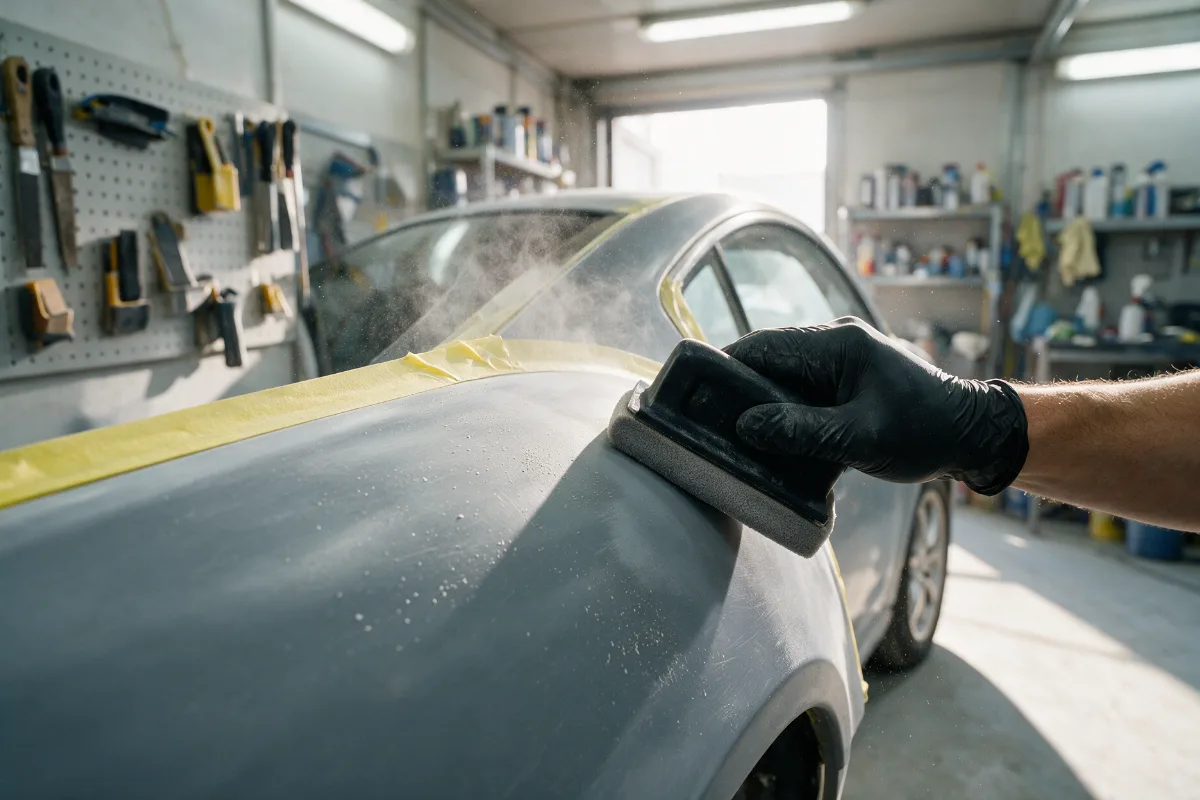
- Preparation. Bare metal is treated, a thin skim of filler levels the surface, and the area is flatted back by hand. This is where a repair is won or lost.
- Primer. Primer seals the repair and gives the colour something consistent to sit on. It is flatted again before colour goes near it.
- Basecoat and clear coat. Colour is matched to the car as it is today, sprayed in the booth, then blended into the adjacent panel so the eye cannot find the edge. Clear coat gives the depth and the protection.
- Cure, reassembly and check. The paint is baked, trim and fittings go back, and the panel gaps and finish are checked in daylight.
Cure time is not padding in the schedule. Paint handled before it has hardened marks, and a fingerprint in fresh clear coat means starting a panel again. How that adds up across a whole job is set out in how long accident repair takes.
What bodywork damage do Cardiff drivers bring in most
Four kinds of damage account for most of the work, and none of them involve a crash.
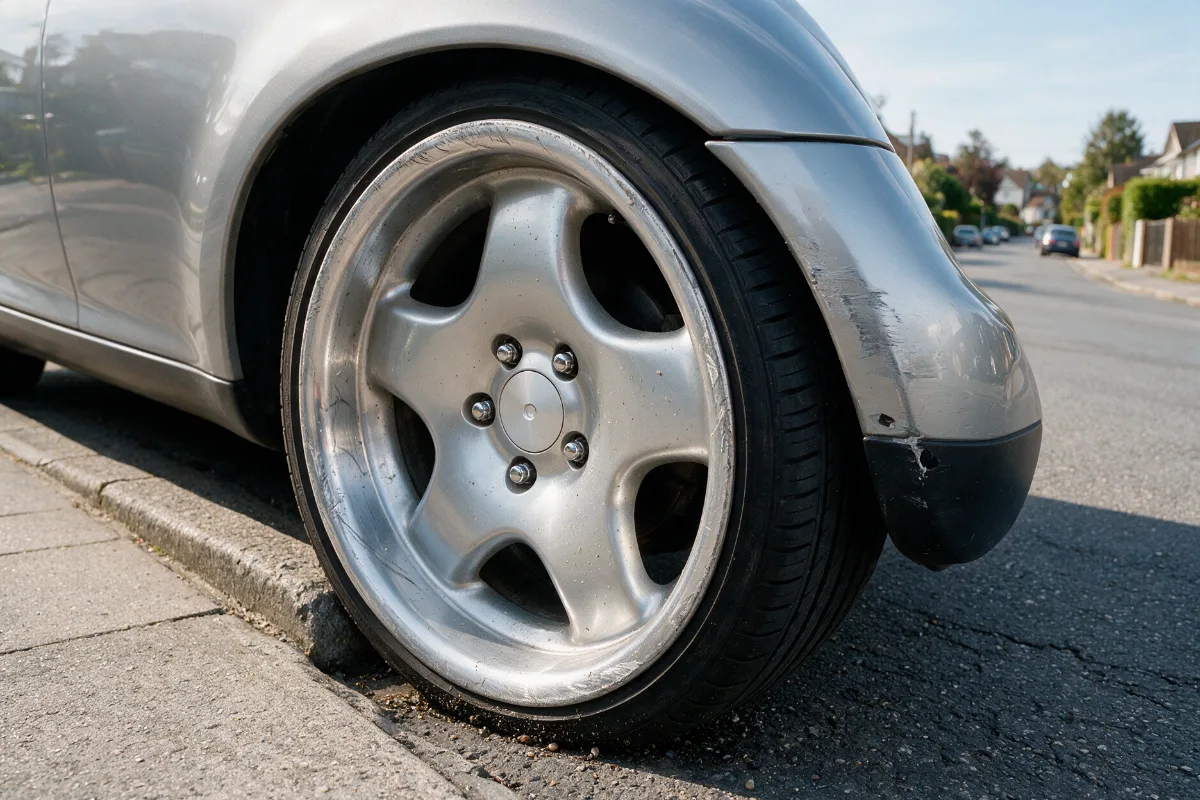
- Kerb and alloy damage. Narrow terraced streets and tight parking take the edge off wheels and the corners off bumpers.
- Car park dents and door dings. Shallow, annoying, and usually repairable without touching the paint edge.
- Low speed knocks. Bumper corners, wing edges and mirrors, often with broken clips and brackets behind them that cost more than the visible damage.
- Corrosion on sills, arches and door bottoms. Salt from winter roads and coastal air does this to any car that is more than a few years old, and it starts under the paint where you cannot see it.
Sill and arch corrosion is the one that changes a car’s future rather than its appearance, because it is also an MOT failure once the structure is affected. Catching it at the bubble stage is the difference between a small welded section and a rebuilt sill.
How to tell a good repair from a cheap one
You can check most of it yourself, in daylight, before you pay.
- Look down the side of the car, not at it. Reflections bend where a panel is not flat. A straight line of reflection down the door means the metal is right.
- Check the gaps. The space around a door, bonnet or boot should be even from end to end and match the same gap on the other side of the car.
- Look at the edges of the repair. Overspray on rubber seals, a hard line where new paint meets old, or a slightly different texture all point to work done at speed.
- Open the door and look at the shuts. Colour should carry into the door frame. Paint that stops at the visible edge is a repair done to be sold, not to last.
- Run a hand along the underside of the arch. It should feel sealed and even, not rough with bare filler or crusty with old sealer.
Those five checks catch almost everything that goes wrong in this trade, and they work on a used car you are thinking of buying just as well as on a repair you have paid for. Kerbed wheels come in alongside it often enough to be a job of their own, handled through wheel refurbishment.
Do you weld and replace panels
Yes. The workshop MIG welds repair sections and replaces full panels where the damage justifies it, which is the same skill set the welding side of the business is built on.
A repair section is a piece of new metal cut to replace only the part that has gone, seam welded in, dressed back and sealed. It is the standard approach for a rusted sill bottom or an arch lip, because it keeps the rest of the original panel. A full panel replacement removes the old panel at its factory joints and fits a new one, which is the right answer when the damage runs across most of the panel or through a swage line.
Seam sealer and cavity protection go back on afterwards. A weld that is left unsealed will rust from the inside, and it usually surfaces about two years later, several inches from where anyone was looking. Welding on a structural member is a different matter from a panel, and the measuring behind it is in chassis and structural repair.
How long does a bodywork repair take
Bodywork jobs are measured in days rather than weeks. These are typical working day ranges for this workshop’s class of work, counted from the day the car and the parts are both here.
| Job | Typical time | What stretches it |
|---|---|---|
| Single dent, paint intact | 1 day | Access behind the panel |
| Scratch or scuff, one panel refinished | 2 days | Colour match on metallic and pearl finishes |
| Bumper repair and refinish | 2 to 3 days | Plastic welding, broken brackets and clips |
| Panel replacement and paint | 3 to 5 days | Parts lead time, blending into the next panel |
| Welded sill or arch section | 3 to 6 days | How far the corrosion has spread once it is opened up |
Cure time sets the floor on every row in that table, and it is why a two panel job cannot be squeezed into an afternoon however keen everyone is.
When is bodywork repair not worth it
Bodywork repair stops being worth it when the cost of doing it properly gets close to what the car is worth, or when the structure underneath has gone. Both happen on older cars, and neither is a comfortable conversation.
The test is not emotional. Get the itemised figure, find what the car is realistically worth in its current condition, and compare. A car worth a thousand pounds with fifteen hundred pounds of corrosion repair needed is a car to sell or scrap, not to save, unless you have a reason to keep it that has nothing to do with money. Structural rust is the clearer case: once a sill or a chassis rail has lost its strength across a wide area, the repair becomes fabrication, and the bill follows.
We will tell you when a car is in that position. A body shop that takes the job anyway gets paid once; a body shop that says so gets the next three cars from the same family. The figures behind these decisions are in the what bodywork repair costs guide.
Send a photograph, get a straight answer
Message a picture of the damage and we will tell you whether it is a repair or a replacement before the car leaves your drive. Unit 4, Wentloog Buildings, Wentloog Road, Rumney, Cardiff CF3 1TH. Monday to Saturday, 9am to 6pm. Ring the workshop, or send the photographs, and we will tell you what your car needs.
Bodywork repair questions we get asked
Will the repaired panel match the rest of the car?
Yes. Colour is matched to the car in its current condition, including any fade, then blended into the neighbouring panel so there is no hard edge between old and new paint.
Can you repair a dent without repainting?
Often, when the paint surface is unbroken and the dent is accessible from behind. Once the paint is cracked or the metal is creased, the panel needs refinishing.
Do you repair plastic bumpers or only replace them?
We repair them. Cracks and splits are plastic welded and reinforced, which costs considerably less than a new painted bumper skin.
Does a bodywork repair affect what my car is worth?
A properly documented repair on a car with accident history affects value far less than visible damage or a repair that shows. Poor filler work, mismatched paint and uneven gaps are what buyers price down.
Can you do the work through my insurance?
Yes, on a claim or privately. The claim process is set out on the insurance claim repairs page.
Do you work on vans as well as cars?
Yes. Van panels, sliding door damage and sill corrosion are regular work, and the same repair or replace test applies.
Send a photograph of the panel and we will tell you whether it is a repair or a replacement, and why. Call 07400 454839 or use the contact form.
Not all of this work starts with an impact. Road salt off the A48 and the M4 takes sills and arches apart from the inside, and that is metal work rather than panel work. See rust repair and sill welding for how a corroded panel is cut out, let in and sealed.