
A full respray is the answer when paint is failing across the whole car, a partial respray when sound paint has been damaged in one area, and a wrap only when the paint underneath is sound and you want a different colour. Your car looks tired, flat or the wrong colour, and three different jobs are offered as alternatives. They are not. Each suits a different state of paint and metal, and the wrong choice means paying twice. This guide sets out what each route involves and which one is yours.
Which of the three your car needs
The state of your paint decides this, not the look you are after. Paint sound everywhere except one damaged area is a partial respray. Paint failing in more than one place is a full respray. Paint that is sound and the wrong colour is the only case for a wrap.
- Sound paint, damage in one place. A kerbed bumper corner, a scraped door, a car park knock on a wing. The panel is refinished and the colour blended into the next panel along. How far the mark has gone through decides whether it needs spraying at all, which is how deep is my car scratch.
- Paint failing in several places. Lacquer lifting on the roof and bonnet, a chalky boot lid, bubbling along a sill or an arch. Patching one area there leaves one good panel and a tired car.
- Sound paint, wrong colour. No lifting lacquer, no corrosion, and a colour you have stopped liking. Vinyl changes it and comes off again.
They sit in that order because each assumes the condition before it has been checked. Skip the check and the paint gets paid for twice.
What a partial respray actually involves
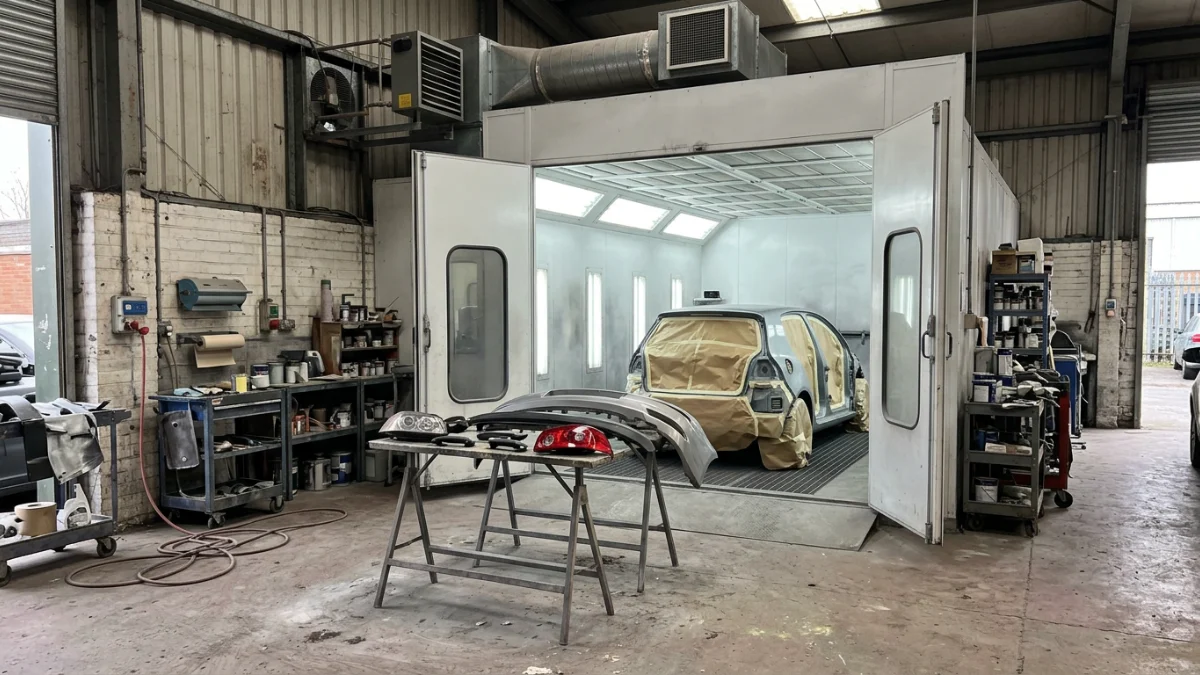
A partial respray refinishes one panel or one area. The damage is flatted back, bare metal gets etch primer, filler is skimmed where the metal needed it, primer is blocked flat, then base coat and lacquer go on in the booth.
Colour catches people out. Every car carries a colour code, and the code only gets the mixing room close. The mix is sprayed onto a test card, held against the panel under workshop light and in daylight, then tinted by eye until it disappears into the car.
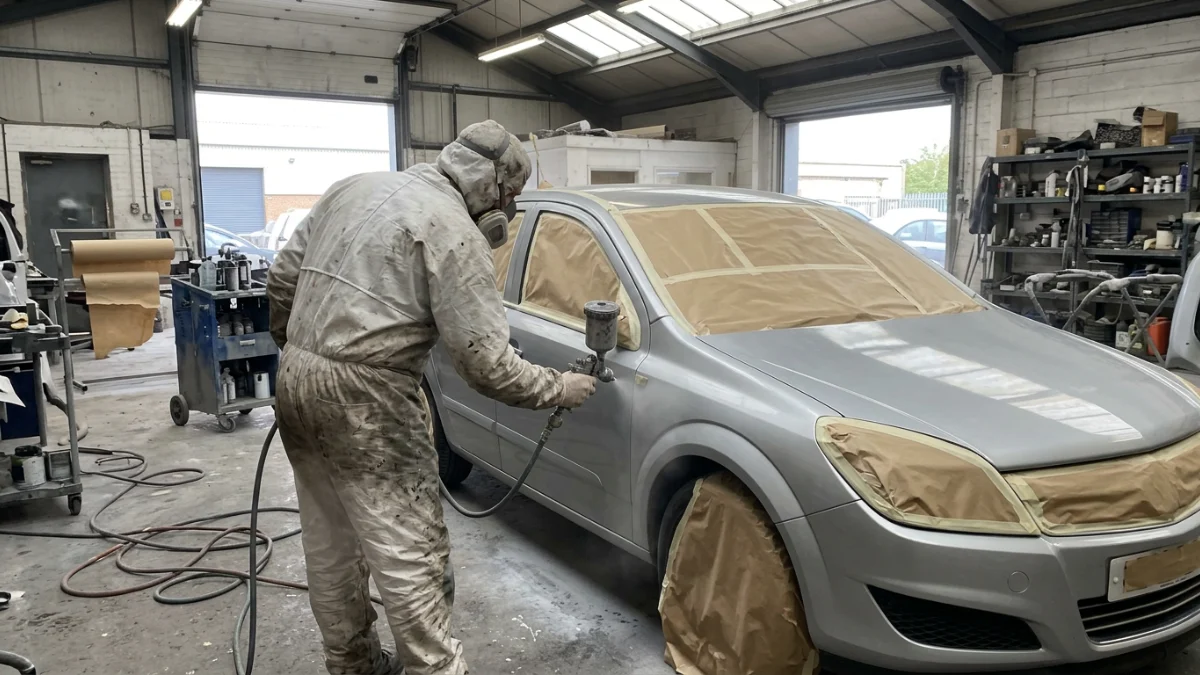
Blending makes that match hold. Base coat is faded across the edge of the repaired panel into the neighbouring panel, and both are lacquered together. That is why a single panel is rarely sprayed in isolation: a hard edge of new colour against old paint shows from several metres in flat Cardiff daylight.
What a partial respray does not do is bring the rest of the car back. Fresh lacquer beside oxidised lacquer reads as fresh lacquer. Where the damage is local and the paint around it sound, this is the right job, set out on our dent and scratch repair page.
What a full respray actually involves
A full respray refinishes every painted surface. The work that decides the result happens before colour is mixed. The car is stripped: handles, mirrors, lamps, badges, trim, bumpers and the rubber glass seals. Whatever stays on is masked, and the standard of that masking decides the whole job.
Strip or mask is the honest line between two jobs sold under one name. A masked car carries an edge wherever the tape sat, and under the trim it still wears the old colour.
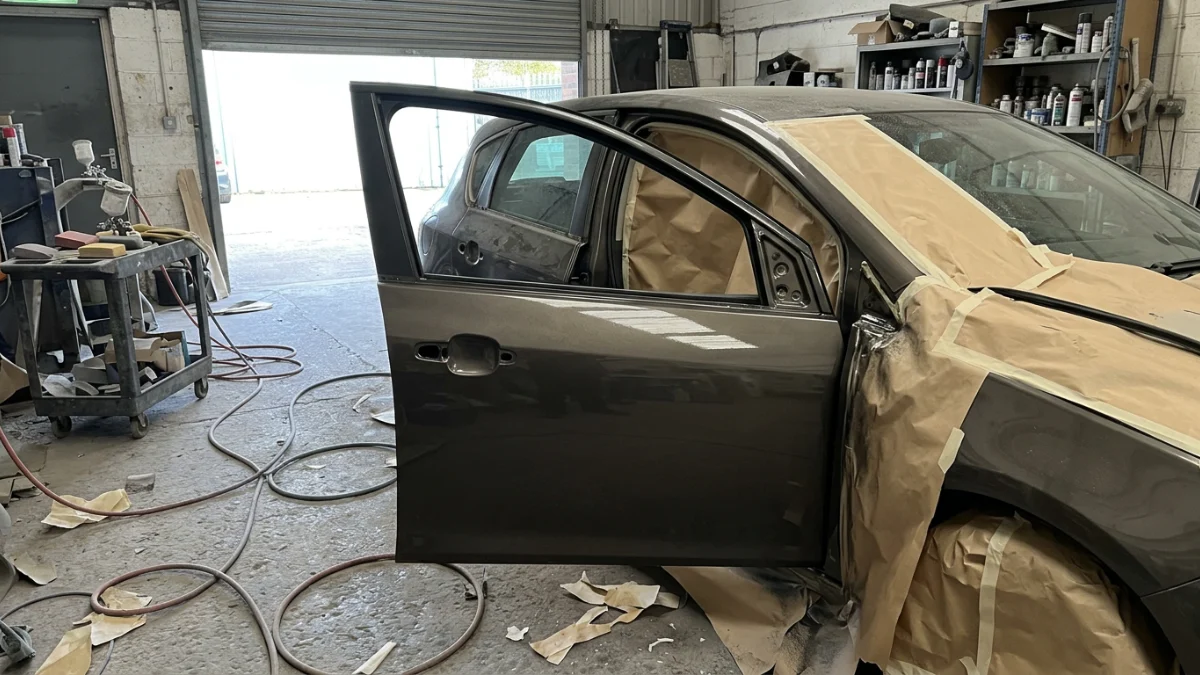
Jambs and shuts decide whether it looks like a respray or a repaint. The door shuts, the boot aperture and the bonnet lip are visible the moment the car is opened. A finish that stops at the outer faces leaves old colour in all of them.
After the strip, the car is flatted, sealed, sprayed in base coat and lacquer, baked, then flatted again and machine polished. What it does not do is fix metal. Rot in a sill or an arch is cut out, a repair panel let in with MIG welds, the seam sealed with fresh seam sealer, and only then does primer go near it. That is bodywork repair, and it comes first.
What a wrap involves, and what it cannot do
A wrap is vinyl film laid over the existing paint. The car is washed and decontaminated, the film heated and stretched over each panel, cut at the edges and tucked into the shuts. The paint underneath is untouched.
A wrap hides nothing. Vinyl is thin and follows what is under it, so a stone chip, a ripple in a filled panel or a lifting edge of lacquer shows through as a shadow.
A wrap is not a repair. Film laid over failing lacquer lifts, because it is bonded to a layer that is itself letting go of the paint below. Over rust it is worse: the corrosion carries on under the vinyl with the moisture held against the metal. Peeling lacquer and clear coat failure is settled in paint first.
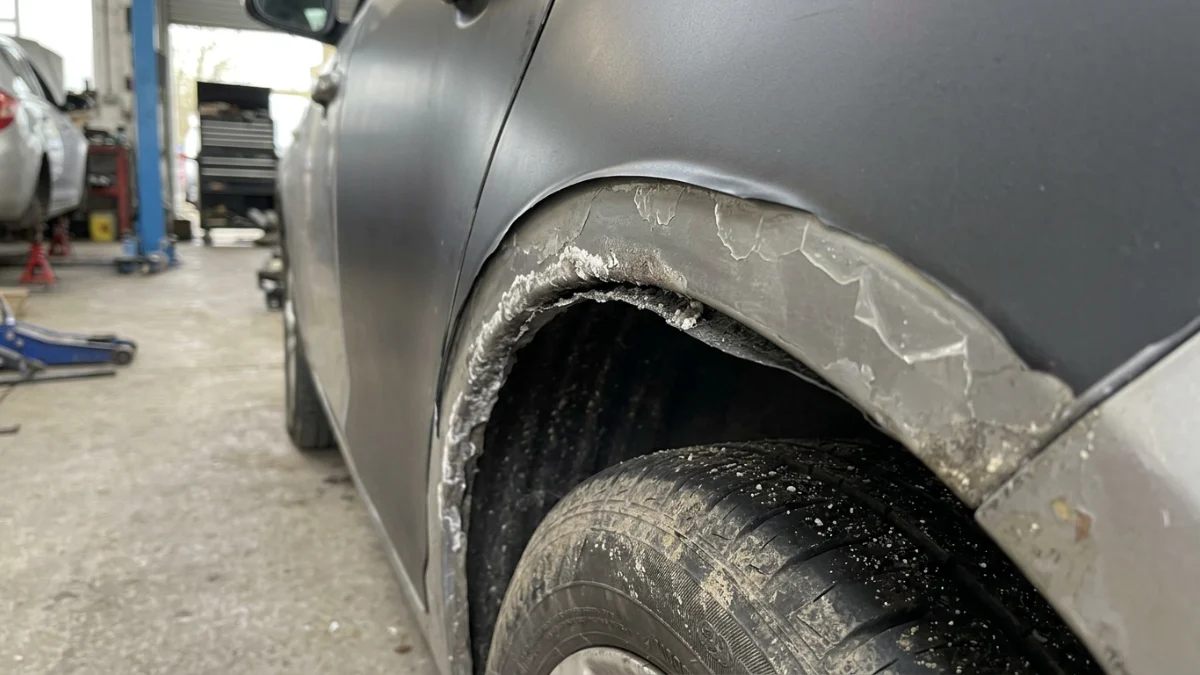
Edges are where a wrap is judged. Film is cut and tucked at the arch lips, the sill edges and the shuts, and the tucks are the first places it lets go. On a car driven on the A48 and the M4, that is where the salt and grit land.
Vinyl does protect. Sound paint under good film takes no stone chips, and the film comes off again.
Check the paint before you commit to a wrap
Send photographs of an arch lip, a sill edge and the roof, and Ali Hindal will tell you whether the paint is sound enough to hold it. Unit 4, Wentloog Buildings, Rumney, Cardiff CF3 1TH. Monday to Saturday, 9am to 6pm.
The three routes side by side
The three jobs answer different questions.
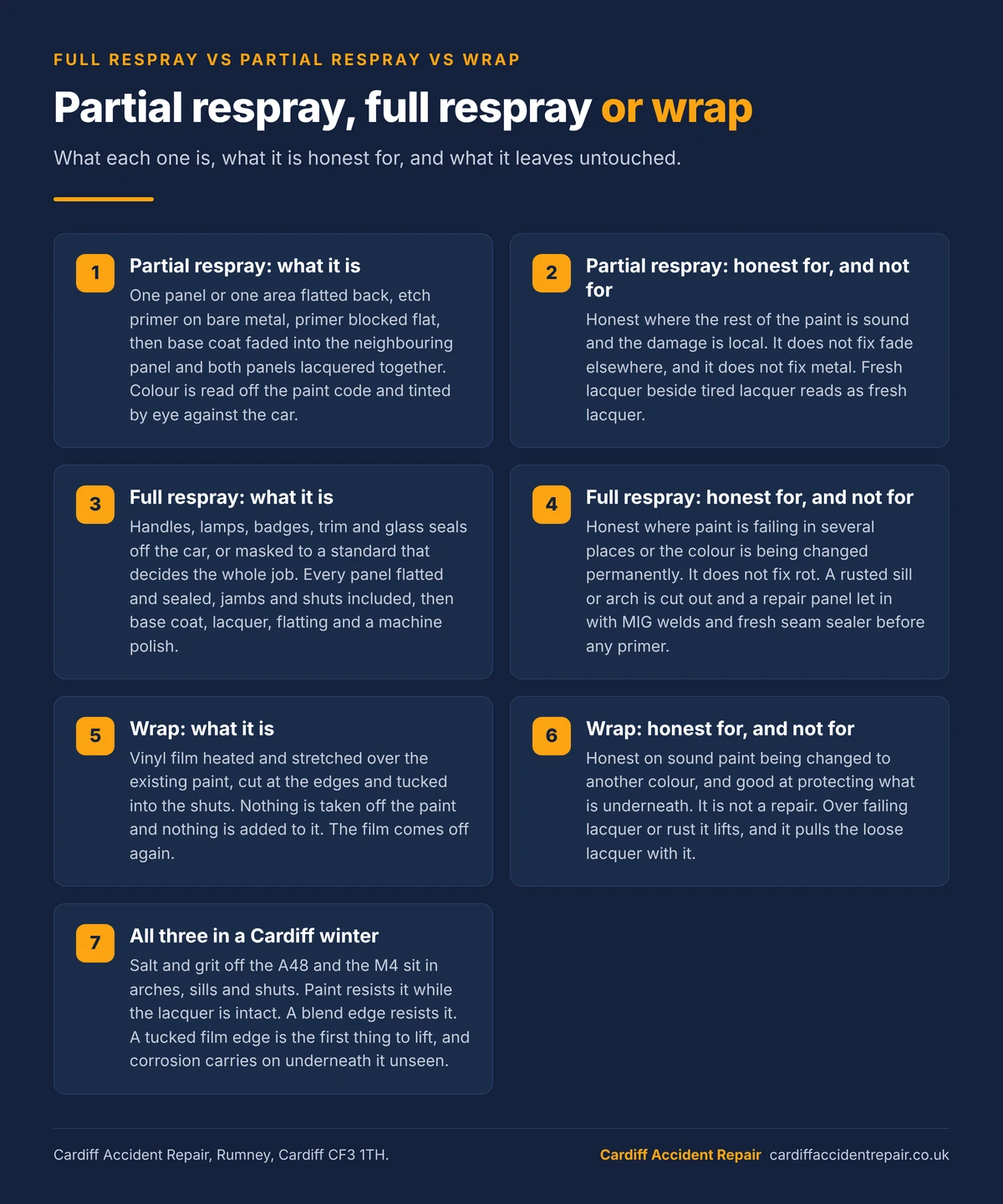
| Partial respray | Full respray | Wrap | |
|---|---|---|---|
| What it is | One panel refinished, blended into the next | Every surface refinished, car stripped or masked | Vinyl film over the paint, tucked into the shuts |
| Honest for | Local damage, sound paint elsewhere | Paint failing in several places, or a colour change | Sound paint, new colour, protection |
| Does not fix | Fade on the other panels | Rot, which is welded first | Nothing, it is not a repair |
| Edges and shuts | Blend edge inside the next panel | Jambs and shuts included | Tucked edges, the weak point |
| Cardiff winter | Holds while the lacquer round it holds | Best protection, metal dealt with | Lifts where the salt sits |
None of those rows gets settled from a photograph of a bonnet. The paint and the metal are assessed on the car at strip down, and the quote follows the assessment. What each route covers sits on the paint and spray repairs page.
How long each route lasts
Paint outlasts film, and the gap is not close. A sprayed panel carries base coat under lacquer, and the lacquer takes the weather, the sun and the washing. Vinyl takes the same punishment with nothing over it.
What shortens each is different. Paint fails from the sun on horizontal surfaces first, which is why lacquer goes on a roof and a bonnet while the doors are sound. Film fails from its edges and from heat cycling, so it goes at the arch lips and the shut lines.
A partial respray lasts as long as the paint it was blended into. A panel refinished on a car whose lacquer is already thin looks right for a season, then becomes the only sound paint on the car.
Wheels follow their own rules, because the lacquer on an alloy sits over a machined face and takes kerb damage as well as salt. They are refinished separately, as alloy wheel refurbishment.
What happens at the edges and the shuts
Edges are where all three routes are read, and we look there first on any car brought in for a second opinion.
- A partial respray is judged on its blend edge. Done properly it sits inside the neighbouring panel and cannot be found. Done badly it stops at the panel gap, and a step in colour appears when light rakes down the car.
- A full respray is judged in the shuts. Look at the striker face, the hinge area and the bottom of the aperture. Old colour there means only the outer faces were sprayed.
- A wrap is judged on its tucks. Run a thumbnail along the arch lip and the sill edge. Film cut short and not tucked is already lifting, and salt sits behind it by spring.
Panel gaps belong on that list. A gap wide at the top and tight at the bottom was never set right, and no finish corrects it. The gap is set before the paint, which is why the panel repair or replacement decision is made with the panel on the car.
What each route does to a later repair, and at resale
Each route changes the next job on the car.
A partial respray leaves a colour that is no longer exactly the factory colour. The next repairer reads the code, sprays a card and finds the car has been tinted. The match is then made against the panel, and the blend carried further.
A full respray gives the whole car one consistent colour, so a match is a match everywhere. That colour is not the code colour, so the mixing room starts from a spray out card rather than a database entry.
A wrap has to come off before anything can be done to the panel underneath, and the film over that panel does not go back on. A new section rarely matches film that has weathered for years.
At resale, a car on original paint carries the least explaining. A full respray in the original colour, jambs and shuts included, reads as maintenance. A colour change in paint or vinyl narrows the buyers. What moves the figure is set out in what moves a bodywork repair price.
Telling the DVLA about a change of colour
A change of vehicle colour has to be reported to the DVLA, and that applies to a wrap exactly as it applies to paint. The DVLA records the colour on the V5C registration certificate, and that record has to match the colour anyone looking at the car would describe.
A wrap is not an exception. The car presents to the DVLA, to the police and to an insurer as whatever colour it is wearing. Report it when the film goes on, and again if the film comes off.
Tell your insurer at the same time, because a colour change is a change to the vehicle.
Why this is a winter decision in Cardiff
Winter is when paintwork looks its worst and when it is doing its worst. Low light and wet panels show every patch of fade and every lifting edge of lacquer. The salt and grit laid on the A48, the M4 and Newport Road sits in the arches and along the sills, and salt in a chip holds the metal wet instead of letting it dry.
A car with failing paint takes more harm between November and March than across the rest of the year. A chip that is only a chip in September is a rust spot with a lifted edge by spring. Vinyl over it hides that until the film lifts.
Winter is also when a body shop has capacity for planned paintwork. Spray booths are heated and controlled, so the weather outside has no bearing on the finish. Drivers across east Cardiff, Rumney and the CF3 postcode book in for that reason, as do drivers from the towns on our areas we cover list.
The question is not whether to wait for better weather. It is whether the paint on your car can take another wet Cardiff winter as it is. Bring it to the Rumney workshop, or to the accident repair work we do in Newport, and the answer comes off the car.
Get the paint sorted before the salt does more
Tell us the registration and what the car looks like now, and we will tell you which route is yours. The damage is assessed on the car, and the quote follows the assessment.
Questions about resprays and wraps
Can a car be wrapped over peeling lacquer?
No. Vinyl bonds to the lacquer, so film over lacquer that is already letting go is bonded to a layer on its way off the car. The wrap lifts and takes that lacquer with it. Failing lacquer is stripped and resprayed first.
Does a partial respray always mean spraying the next panel as well?
Almost always on a metallic or a pearl. Base coat is faded into the neighbouring panel and both are lacquered together, because a hard edge of new colour against old paint shows in daylight. A solid colour on an older car is occasionally sprayed to the gap.
Do I have to tell the DVLA if I wrap my car a different colour?
Yes. A change of vehicle colour has to be reported to the DVLA, and the DVLA treats a wrap the same as paint, because the colour on the V5C has to match what the car looks like. Report it again if the film comes off.
Will a respray match the rest of my car exactly?
A blended repair matches because it is tinted against your panel rather than mixed to the code alone. The code gets the mixing room close, then a card is sprayed, checked in workshop light and in daylight, and tinted by eye until it disappears into the car.
Is a wrap a cheaper way of dealing with bad paint?
A wrap is not a way of dealing with bad paint at any figure. It is a colour change and a protective layer for sound paint. On a car with lifting lacquer or corrosion, the metal keeps getting worse out of sight under the film.
Can a wrap be taken off without damaging the paint?
Film comes off sound original paint cleanly, and that paint is often in better condition than panels never covered. Film over thin lacquer or over paint already failing is different, because the adhesive has more grip than the coating has on the metal.
Is winter a bad time of year to have a car sprayed?
Winter suits it. Spray booths are heated, filtered and controlled, so the air in the booth is the same in January as in July, and a car prepared indoors is unaffected by the weather outside. The car has to arrive dry enough to assess properly.
Send photographs of the roof, an arch and a sill, and we will tell you whether your car needs a panel, a respray or a machine polish. Unit 4, Wentloog Buildings, Wentloog Road, Rumney, Cardiff CF3 1TH, Monday to Saturday, 9am to 6pm. Call 07400 454839 or use the contact form.