
Betterment in Car Insurance Repairs: Why You May Be Asked to Pay
Betterment is a contribution an insurer asks you for when a repair leaves part of your car in better condition than it was immediately before the accident. It usually appears on the authorisation without warning, in the middle of a claim you thought was fully covered, and it is the one charge nobody mentions at the start. The car is off the road, the claim is agreed, and then a bill appears for a part you did not damage. Betterment exists because insurance restores you to your previous position rather than improving on it, and it attaches to wearing parts rather than to bodywork. This guide explains which parts attract it, how the figure is worked out, and how to challenge one you think is wrong.
What is betterment
Betterment is a deduction or contribution applied when an insurance repair improves your car beyond its pre-accident condition. If a part that was half worn out is replaced with a new one, you have gained something the accident did not take from you, and the insurer asks you to pay for that gain. Ali Hindal will flag anything likely to attract it before the work starts at the Rumney workshop, Unit 4 Wentloog Buildings, CF3 1TH, where six work bays and an on-site spray booth keep the whole job in one building.
The principle underneath is indemnity. Insurance puts you back in the position you were in immediately before the loss, not in a better one. That is the entire basis of how motor claims are settled, and betterment is simply that principle applied to a single component rather than to the car as a whole.
Two things are commonly confused with it. Betterment is not your excess, which you pay on every claim regardless of what is fitted. And it is not a charge for good workmanship. A well repaired panel is not betterment, because restoring a panel to its correct shape is exactly what indemnity requires.
It also is not standard on ordinary accident damage. Most bodywork claims never attract it at all, which is why it comes as a surprise when it does.
Which parts attract betterment
Betterment attaches to parts that wear out and have a finite life. If a component was going to need replacing anyway, a new one fitted on a claim has handed you value.
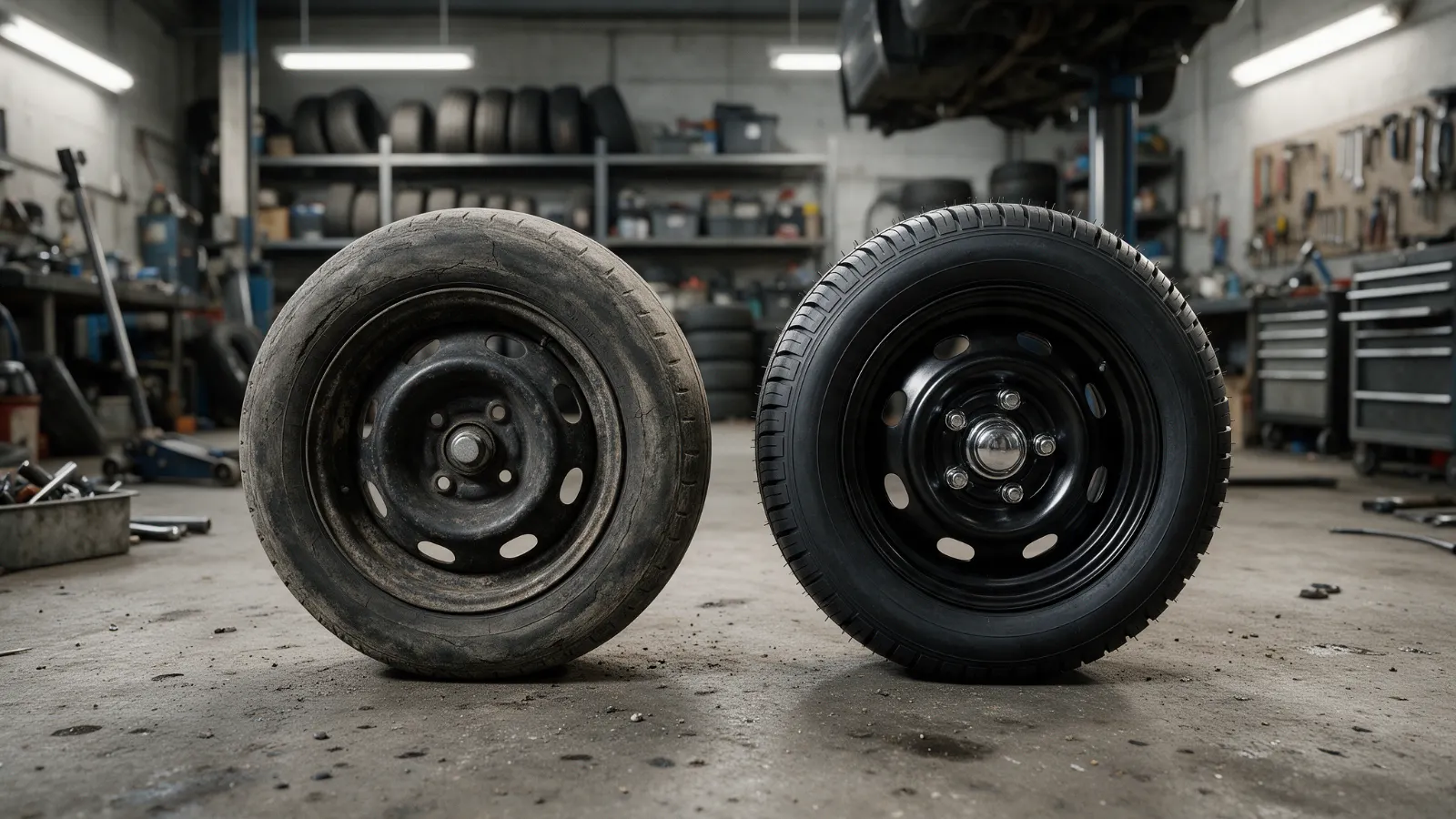
- Tyres. The most common by far. A tyre with three millimetres of tread destroyed in an accident is replaced with a new one carrying eight, and the difference is quantifiable.
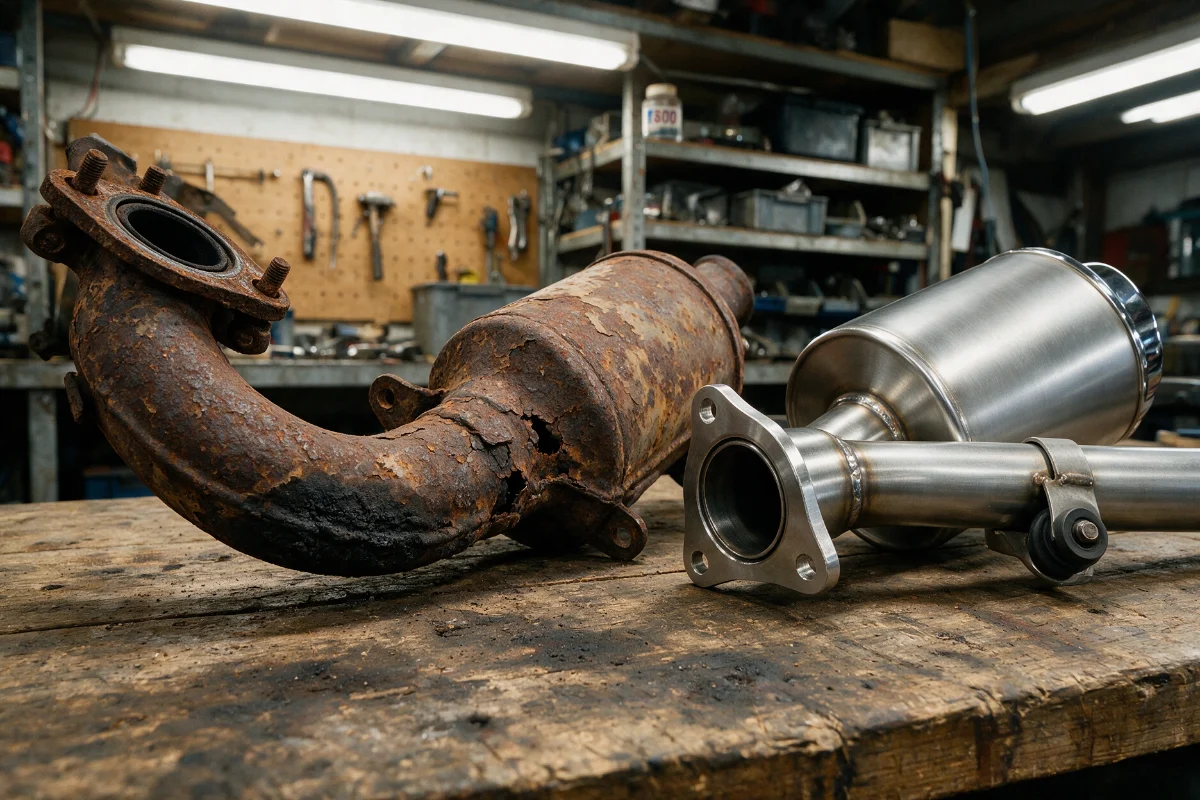
- Exhaust systems and sections. Corroded parts replaced with new ones, particularly on older cars.
- Batteries. A battery near the end of its life replaced with a new one.
- Brake discs and pads. Where they were already worn and are replaced as part of the repair.
- Soft tops and convertible roofs. An aged fabric roof replaced with a new one is a clear improvement.
- Corroded or previously damaged panels. A rusty wing replaced with new metal removes a problem the accident did not cause.
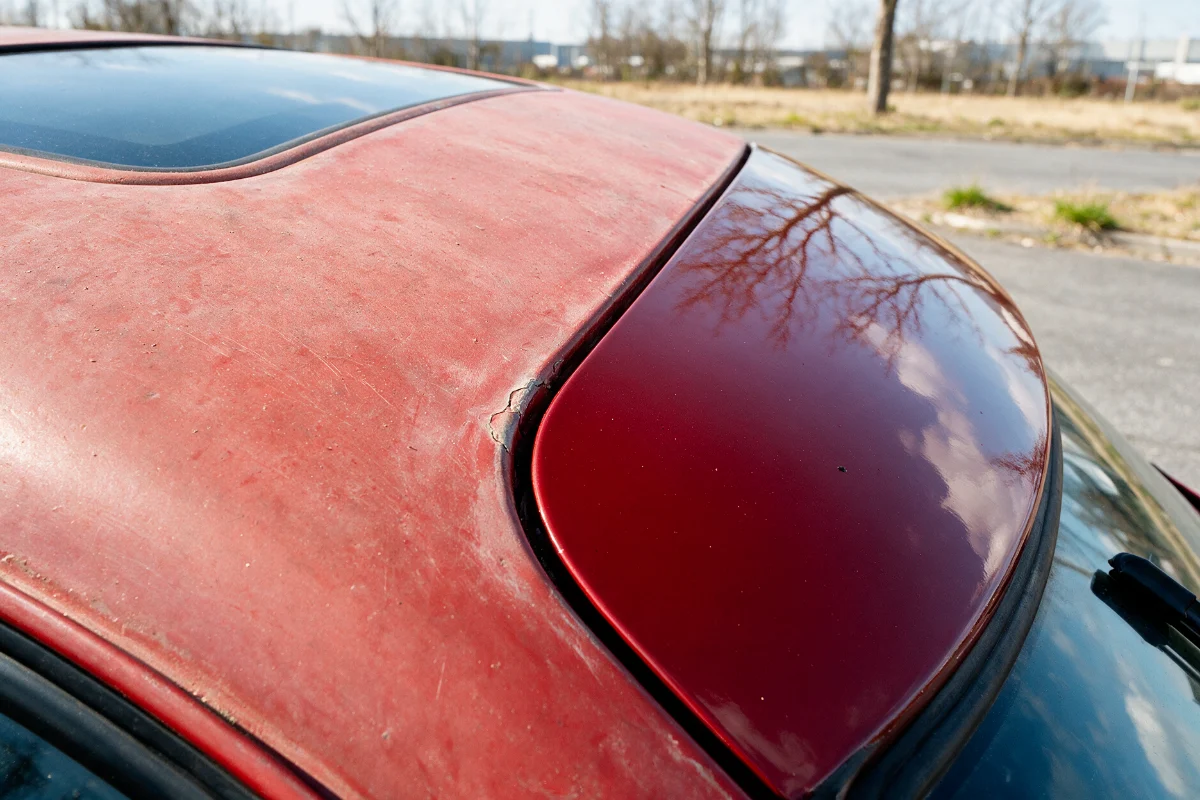
- Paint on a faded car. Occasionally raised where a whole panel is refinished on paintwork that had already deteriorated.
- Suspension and steering components. Where worn items are replaced alongside genuinely accident damaged ones.
What is not on that list is as important as what is. Structural metal, the bodyshell, most panels, glass and airbags do not deteriorate on a schedule, so replacing them restores rather than improves. An insurer proposing betterment on a new wing fitted to a sound car is making an argument that needs supporting, not stating a rule. Wheels are a common one, and what refurbishment actually involves is on alloy wheel refurbishment.
How is betterment calculated
The figure is worked out from how much life the old part had left compared with the new one. It is a proportion, not a flat fee, and it should be capable of being shown to you as a calculation rather than asserted as a number.
Tyres illustrate it best because the measurement is objective. A new tyre has around eight millimetres of tread and the legal minimum is 1.6 millimetres, so the usable tread is roughly 6.4 millimetres. A tyre worn to three millimetres has used a little over two thirds of its life. Replace it with a new one and you have gained about two thirds of a tyre, and that proportion of the tyre price is the betterment.
Other components are messier. Exhausts, batteries and soft tops have no tread depth to measure, so the assessment falls back on age and condition against an expected service life, which is a judgement rather than a measurement. That is precisely where these charges become arguable.
Three things make a betterment figure defensible. The part is genuinely a wearing item. The calculation is shown, with the basis stated. And the charge is proportionate to the remaining life, not to the full price of the part. A demand that fails any of those is worth questioning. The wider question of what makes up a repair bill is covered under what moves a bodywork repair price.
Betterment against excess
These are the two amounts you can be asked for on a claim, and they work entirely differently.
| Excess | Betterment | |
|---|---|---|
| When it applies | Every claim on your own policy | Only when a worn part is replaced with a new one |
| How it is set | Fixed in your policy schedule before the accident | Calculated after the event, per part |
| Known in advance | Yes | No, it appears during the claim |
| Negotiable | No | Yes, if the basis is wrong or unsupported |
| On a non-fault claim | Recovered once liability is settled | Can be pursued from the other driver as an uninsured loss |
| Paid to | The repairer, at collection | The repairer or the insurer, depending on the arrangement |
The row that matters most is the negotiable one. Your excess is a contractual term you agreed to and there is no arguing with it. Betterment is an assessment somebody made about your car, and assessments can be wrong.
How do I challenge a betterment charge
Challenge it in writing, politely, with specifics. Most contested betterment charges are resolved by asking two questions that the insurer then has to answer properly.
- Ask for the basis in writing. Which part, why it is treated as a wearing item, and what condition it was assessed to be in before the accident.
- Ask for the calculation. The measured or assumed remaining life, the expected total life, the part price and how the proportion was reached.
- Check your policy wording. Betterment should be referenced in the policy. If the wording does not provide for it, say so and ask which term the insurer is relying on.
- Produce your own evidence. Photographs taken before the accident, recent invoices, an MOT certificate recording tread depths, or a service record showing the part was newly fitted.
- Put it through the formal complaints process if the answers do not stand up, and ask for a final response.
- Take it to the Financial Ombudsman Service once you have that final response or eight weeks have passed. The service is free to consumers.
Evidence in step four is what wins these. A recent invoice for four new tyres, or an MOT certificate from two months ago recording seven millimetres of tread, ends the discussion immediately. This is a good reason to keep the paperwork when you replace wearing parts, and a good reason to photograph your car occasionally when it is undamaged.

Does betterment apply on non-fault claims
The same indemnity principle applies, and you have a further route that does not exist on a fault claim. If the other driver caused the damage, any betterment you are asked to bear is a loss you have suffered because of their negligence, and it can be pursued from them as an uninsured loss.
An uninsured loss is any cost arising from the accident that your own policy does not cover: your excess, the betterment contribution, loss of earnings, taxi fares, a replacement child seat. Those are recoverable from the at-fault party alongside the repair itself.
Two ways to pursue it. If you have legal expenses cover on your policy, that is usually what it is for, and it is worth checking whether you bought it. If you do not, you can claim the amounts directly from the other driver’s insurer, keeping receipts for everything.
Betterment is less likely to arise at all when you claim directly against the other insurer rather than through your own, because you are not claiming under a policy carrying those terms. The trade-off between the two routes is set out under non-fault accident repairs.
How we handle it at the workshop
We tell you before the work starts if anything on your car is likely to attract a contribution. A tyre that has to be replaced and is already close to the legal limit, a corroded exhaust section in the damaged area, a soft top with years on it: these are visible at strip down, and you should hear about them then rather than at collection.
We will also tell you when we think a proposed charge is wrong, and we will say why in terms the engineer has to engage with. A betterment demand on a sound panel is not the same thing as one on a worn tyre, and the difference is arguable with evidence.
What we will not do is add anything to your bill that was not discussed. Any contribution appears on the authorisation from the insurer, and you see it at the same time we do. How the rest of a claim repair runs is on the insurance claim repairs page.
Been asked to pay betterment?
Send us the authorisation and we will tell you whether the charge is reasonable for the part involved, and what evidence would challenge it. Unit 4, Wentloog Buildings, Wentloog Road, Rumney, Cardiff CF3 1TH, Monday to Saturday, 9am to 6pm. Ring the workshop, or send the photographs, and we will tell you what your car needs. It comes up more often on electric and hybrid cars because of their high voltage components, which is covered in repairing electric and hybrid cars.
Betterment questions we get asked
Is betterment legal?
Yes, where the policy provides for it. It follows from the principle that insurance restores your previous position rather than improving on it.
Can I refuse to pay it?
You can dispute it, and you should if the basis looks wrong. Refusing outright without challenging it usually just stalls the repair.
Does betterment apply to paintwork?
Rarely. It is occasionally raised where a panel is refinished on a car whose paint had already deteriorated, and it is much harder to justify than on a tyre.
Will you tell me before the work starts?
Yes. Anything likely to attract a contribution is flagged at strip down, with photographs, before it is fitted.
Can I supply my own part to avoid it?
Sometimes, with the insurer’s agreement, though it affects the guarantee position on that part. Ask before ordering anything.
Does it apply if the car is written off?
No. A total loss is settled on the car’s pre-accident market value, which already reflects its age and condition, so betterment has nothing to attach to.
Ask for the basis and the calculation in writing. Most betterment disputes end at that question. Call 07400 454839 or use the contact form.