
How to Photograph Car Damage for an Accurate Repair Quote
Six photographs get you a firm quote for cosmetic damage: one of the whole car, one of the whole panel, two close shots of the damage from different angles, one showing the scale, and one of anything broken behind the panel. Sending a blurry picture and being told to bring the car in wastes an afternoon you did not have spare. Nobody wants to drive a damaged car across the city to be told it will show anyway. Take them in daylight, not in a garage, and keep your shadow out of the shot. This guide covers the six shots, what insurers want, and what a photograph cannot tell anyone.

Which photographs should I take
- The whole car. One shot from the corner nearest the damage, so the make, model and colour are obvious and the damaged area is in context.
- The whole panel. Stand back far enough to get the complete door, wing or bumper in frame, straight on. This shows how far the damage spreads.
- Close, straight on. A metre or so from the damage, square to the panel. This shows the length and the paint condition.
- Close, at an angle. The same damage from about 45 degrees, with light raking across it. This is the shot that shows depth, and it is the one most often left out.
- Scale. Put something ordinary next to the damage: a bank card, a phone or a coin. Now the size is fact rather than guesswork.
- Behind the panel. Open the door, lift the boot, look into the arch. Photograph any broken clips, brackets, torn liners or gaps between panels.
Six photographs take about two minutes, and they are the difference between being told the car needs looking at and being given a figure you can plan around. Ali Hindal prices the work himself at the Rumney workshop, Unit 4 Wentloog Buildings, so the answer you get is from the person who will do the job.
How do I show the size and depth of damage
Depth is what a photograph loses, and there are three ways to put it back.
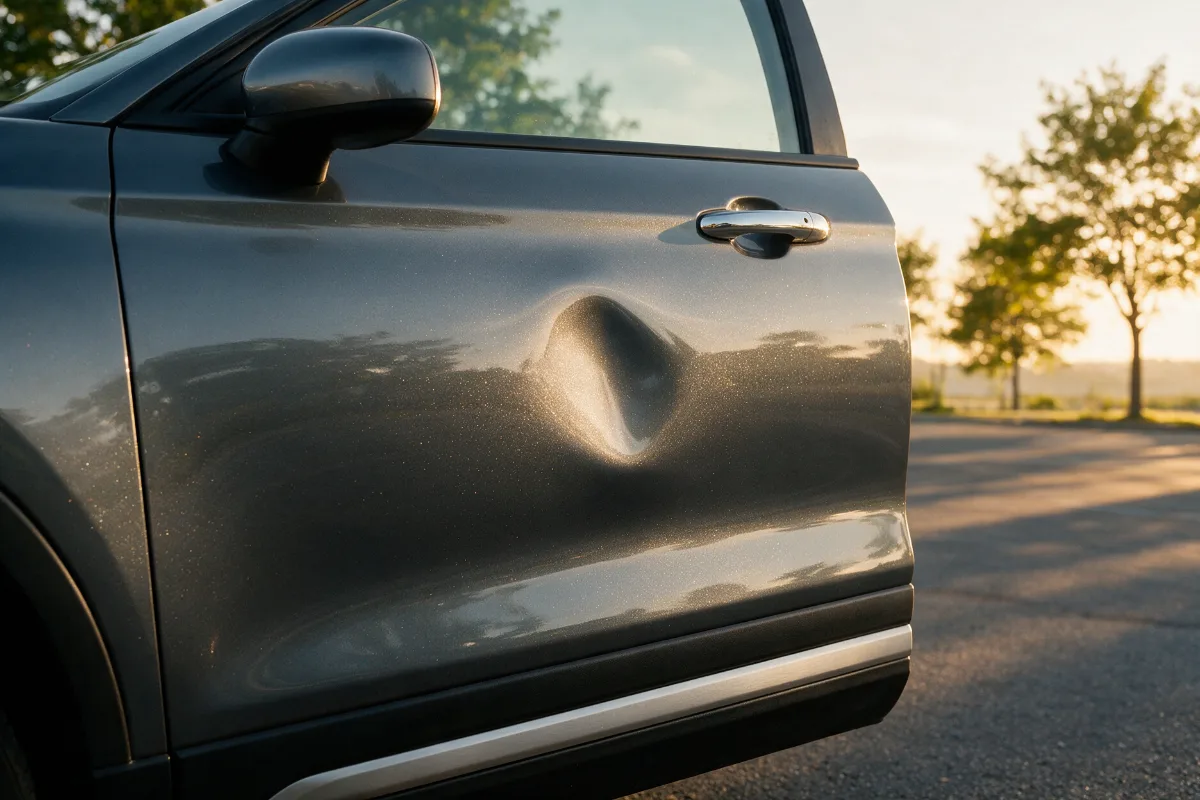
- Use raking light. Stand so the light crosses the panel rather than hitting it face on. A dent that vanishes in flat light shows as a shadow the moment the light comes from the side.
- Use the reflection. Photograph a straight edge reflected in the panel, a roofline, a fence, a lamp post. Where the reflection bends, the panel is bent. This works better than any close up.
- Put something next to it. A bank card is 85mm long and everyone has one. Laid beside a scratch or a dent, it tells us the size without a tape measure.
Two things to avoid. Do not photograph a wet car, because water fills scratches and hides them, and do not use flash, which flattens everything and bounces off the paint.
What photographs do insurers want
Insurers and their engineers work from photographs on most claims now, and they want more than the damage itself.
- All four corners of the car, so the pre existing condition is recorded
- The damage, close and wide
- The registration plate, clearly readable
- The odometer reading, photographed through the windscreen or from the driver’s seat
- The VIN plate, usually at the base of the windscreen or in the door shut
- Any damage the accident did not cause, so it is not attributed to the claim later
Take those at the same time as your six and you will not be asked twice. The claim itself is covered under insurance claim repairs.

The five mistakes that make a photograph useless
Almost every photograph we cannot quote from has one of these problems.
- Too close. A photograph filling the frame with a scratch has no context. We cannot tell which panel it is on or how far it runs.
- Shadow across the damage. Usually the photographer’s own. Move so the light comes past you rather than from behind you.
- Taken in a garage or at night. Artificial light hides depth and lies about colour. Push the car out or wait for the morning.
- Wet paint. Rain and wash water fill scratches and make damaged lacquer look sound. It will look different when it dries and the quote will change.
- Screenshots and messages of messages. Every forward compresses the image further. Send the original photograph.
How photographs change what the repair costs
A good set of photographs does three things for your quote, and all three save you money.
It gets the method right first time. Seeing whether a scratch has gone through the lacquer or only into it decides between a polish, a panel refinish and a repaint, and those are very different jobs.
It gets the parts ordered early. A photograph showing a broken bumper tab or a cracked light lens means the part is on order before the car arrives, which takes days off the time the car is with us.
It stops surprises on both sides. You know the range before you commit, and we know what we are taking on before the car is on the ramp. Neither of us is then having an awkward conversation on day two. Depth is the whole question on scratches, as dent and scratch repair pricing explains.
What photographs cannot show
A photograph shows the skin. It does not show what the impact did behind it, and that is where the cost of a collision job sits.
Bumper skins are designed to spring back, so a car can photograph almost straight while the crash bar behind is bent and the impact absorbers have crushed. Sensor brackets snap without marking the panel. Alignment goes out without leaving a trace anybody can see standing up. None of that appears in any photograph taken from outside the car. Most of what a camera misses sits behind the panel, which is the subject of damage you cannot see in a photograph.
That is why we quote cosmetic damage firm from photographs and impact damage as a range, then confirm it once the panel is off. A firm price for collision damage sight unseen is a figure that can only move one way, and the news always arrives after the car is stripped. What the strip down looks for is on the accident repair in Cardiff page.
Photographing specific kinds of damage
Different damage needs a different angle, and getting it right first time is the difference between a quote and a conversation.
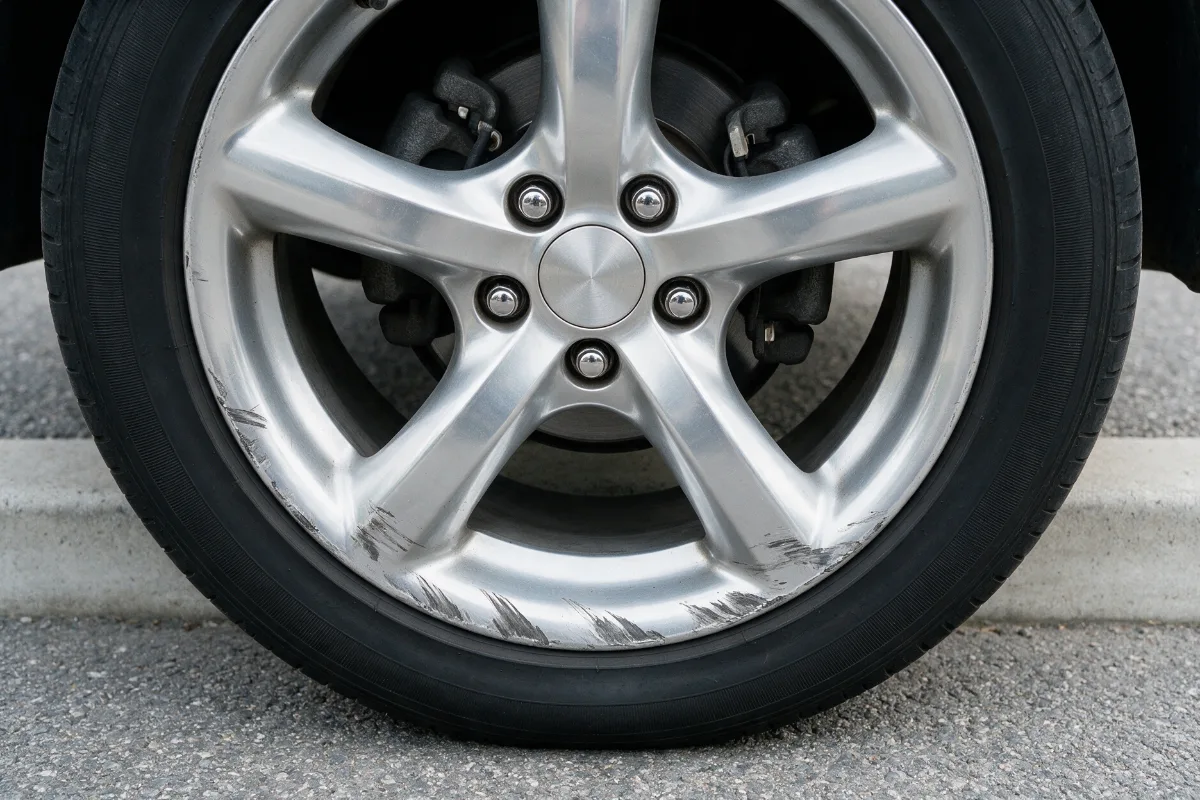
Kerbed alloy wheels. Turn the steering so the damaged face is pointing out at you, then photograph square to the wheel and again along the rim edge. Include all four wheels in one shot if you want them priced as a set, because a set costs less per wheel than one on its own.
Cracked bumpers. Photograph the crack from the face, then get low and photograph the underside where the tabs and brackets are. Nearly every bumper decision turns on what has happened behind, and nobody photographs it unprompted.
Dents in doors. Stand at the front or rear of the car and shoot down the side, so the reflection runs along the panel. A dent that is invisible face on jumps out in that shot.
Rust and bubbling. Photograph the bubble, then the same area from underneath if you can, and tell us how long it has been there. Rust is usually larger under the paint than on it, so the photographs set the starting point rather than the size of the job.
Scratches along more than one panel. One shot of the whole side of the car showing the line, then close shots at each panel. Keying and gatepost scrapes are priced per panel, so the wide shot tells us how many are involved. Wheels are worth a photograph each, straight on and at an angle, because the finish decides the method used in alloy wheel refurbishment.
Photographs at the scene of an accident
Photographs taken in the first few minutes after a collision with another vehicle are worth more than anything taken later. Take them before the cars are moved, if it is safe to stand there.
- Both vehicles where they came to rest, from far enough back to show the road
- The other vehicle’s registration plate
- Damage to both cars, close and wide
- The road itself: skid marks, debris, the junction, the road markings
- Any road signs or traffic lights that matter
- Conditions: wet road, low sun, mud, poor lighting
Those shots settle liability arguments that would otherwise be one driver’s word against another’s, and they tell a repairer the direction the impact came from, which is where we start looking. The order to do everything else in is in our guide to what to do after a car accident.
How to send them to us
- Take the six shots in daylight, with the car dry and reasonably clean.
- Send them as photographs, not screenshots. A screenshot of a photograph loses most of the detail that matters.
- Include the registration, make and model so we know the exact paint on the car.
- Say how it happened and whether it is a claim or a private job.
- Tell us when you need the car back, if that matters. It changes how we order the parts.
Send them to the workshop on 07400 454839 or through the contact form. We reply with a figure for cosmetic damage, or a range and what we need to see for impact damage. If the photographs show something that changes the job, such as a broken bracket behind a bumper, we tell you at that point rather than after the car is booked in.
Take six photographs, get a real answer
Message them to the workshop with the registration and we will price the work before the car leaves your drive. Unit 4, Wentloog Buildings, Wentloog Road, Rumney, Cardiff CF3 1TH. Monday to Saturday, 9am to 6pm. Ring the workshop, or send the photographs, and we will tell you what your car needs.
Questions about photo quotes
Is a photo quote binding?
It is firm for cosmetic damage where everything relevant is visible. For impact damage it is a range until the panel comes off, and we say which you are getting.
Should I clean the car first?
Wipe the area, yes. Wash it, no. A wet panel hides scratches and a dirty one hides paint condition, so dry and reasonably clean is ideal.
Do I need a special camera?
No. Any phone from the last several years is more than enough. Light and angle matter far more than the camera.
Can you quote from photographs my insurer already has?
Usually. Forward them with the claim number and we will tell you if anything else is needed.
What if I cannot get to the car?
Ask whoever can to take the six shots, or ring us and describe the damage. We can usually tell you what to expect and what to check.
What if the damage is on a black or dark car?
Dark paint hides scratches in flat light and exaggerates them in direct sun. Photograph a dark car on an overcast day or in open shade, with the light coming from behind you at an angle, and take one extra shot from further back so we can see how the panel reflects along its length.
Can I send a video instead?
A short video walking around the damage is useful alongside the photographs, not instead of them. Video frames are softer than stills, so the detail we need for paint condition is usually lost.
Will you keep my photographs?
They are kept with your quote so that the job can be tracked, and they are not used anywhere else without asking you first.
Take the six shots, send them with your registration, and you will have a figure without leaving the house. Call 07400 454839 or use the contact form.