
Hidden Damage After a Minor Car Accident
Hidden damage is everything behind the bumper cover that absorbed the impact while the outside sprang back, and on a low speed shunt it routinely costs more than the panel you can see. Modern bumpers are built to deform and recover, which is good for the car and bad for your judgement of it. The other driver tapped you, you both looked at a scuff, and you drove away thinking you had got away with it. A fortnight later your car is off the road for a radiator. Bring it to the Rumney workshop and let Ali Hindal take the cover off, because a written quote after the strip down is the only quote worth having.
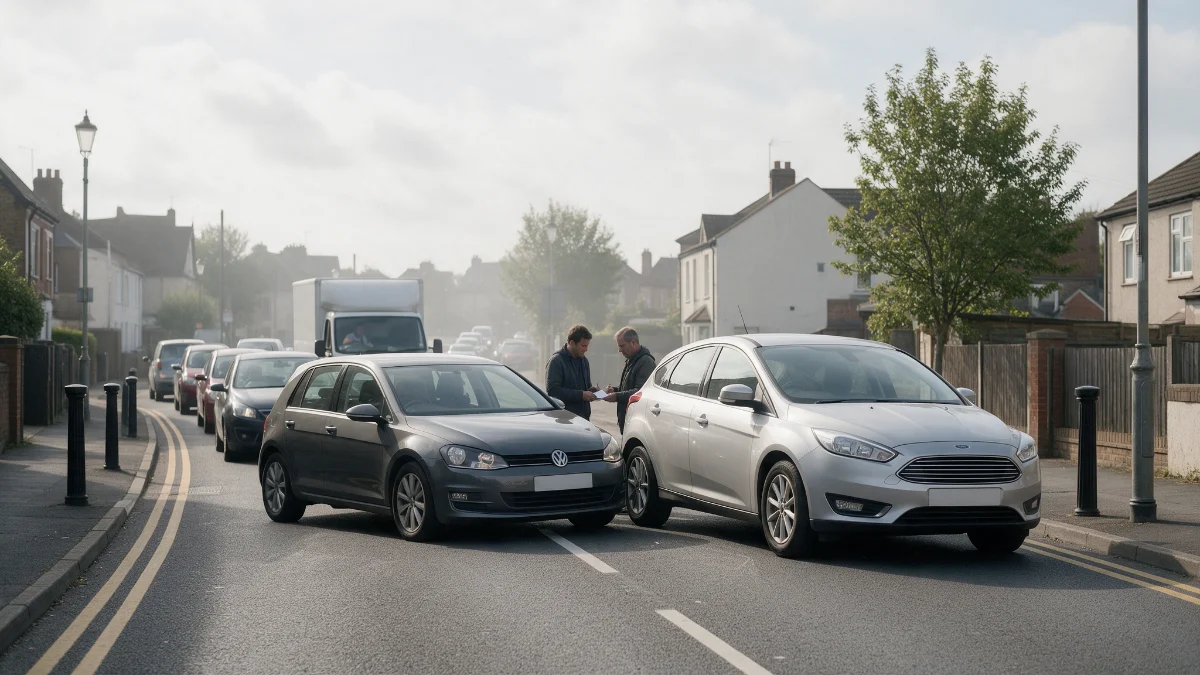
Why does a small impact hide big damage
A bumper cover is a flexible skin over a crash structure, so it is designed to take a knock and return to shape while the parts behind it absorb the energy by deforming permanently. The cover doing its job is exactly what hides the cost from you.
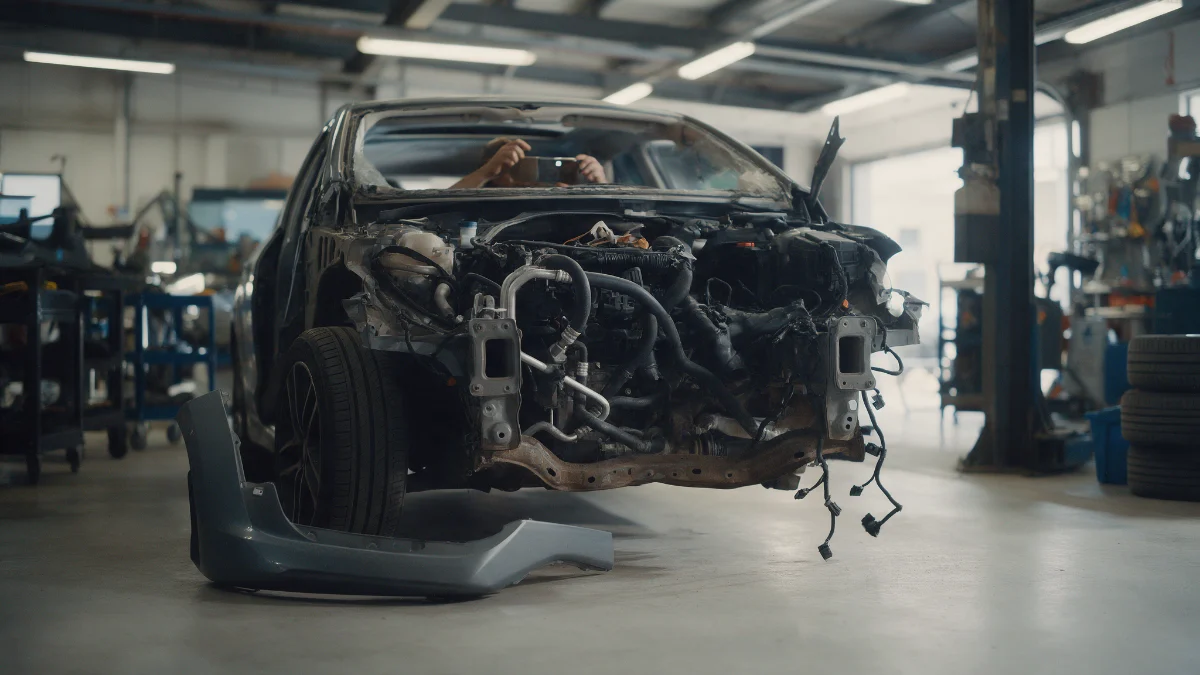
Behind that skin sits a foam or honeycomb absorber, then a steel or aluminium crash bar, then on most cars a pair of crash cans that crush deliberately, then the chassis legs. Each layer is meant to give way in order, and you see none of it. Once a crash can has crushed, it has spent itself, and it does not spring back with the cover.
A car can look untouched and still carry a shortened crumple zone. The structure that was meant to protect you in the next accident has already been partly used. What the cover itself can and cannot survive is covered on bumper repair.
What gets damaged that you cannot see
Five systems take hidden damage in a low speed impact: the crash structure, the cooling pack, the electronics, the suspension geometry and the mounting points that hold panels square. Each has its own tell, and you will see none of them from the pavement.
The crash structure is the one with safety consequences. A crushed absorber or a deformed crash bar has to be replaced rather than straightened, because both are engineered to fail at a known load and a repaired one no longer does. The cooling pack is the one with cost consequences: a radiator or condenser pushed into the fan loses coolant or refrigerant slowly enough that you blame the weather.
Electronics are where modern cars differ from older ones. Parking sensors in the cover, radar behind the grille, a forward camera on the screen, and wiring that runs across the slam panel, all of it can be knocked out of aim or chafed without a single warning light on day one. That is why a bumper job on a car with driver assistance is not just a plastics job, as set out on accident and crash repair in Cardiff.
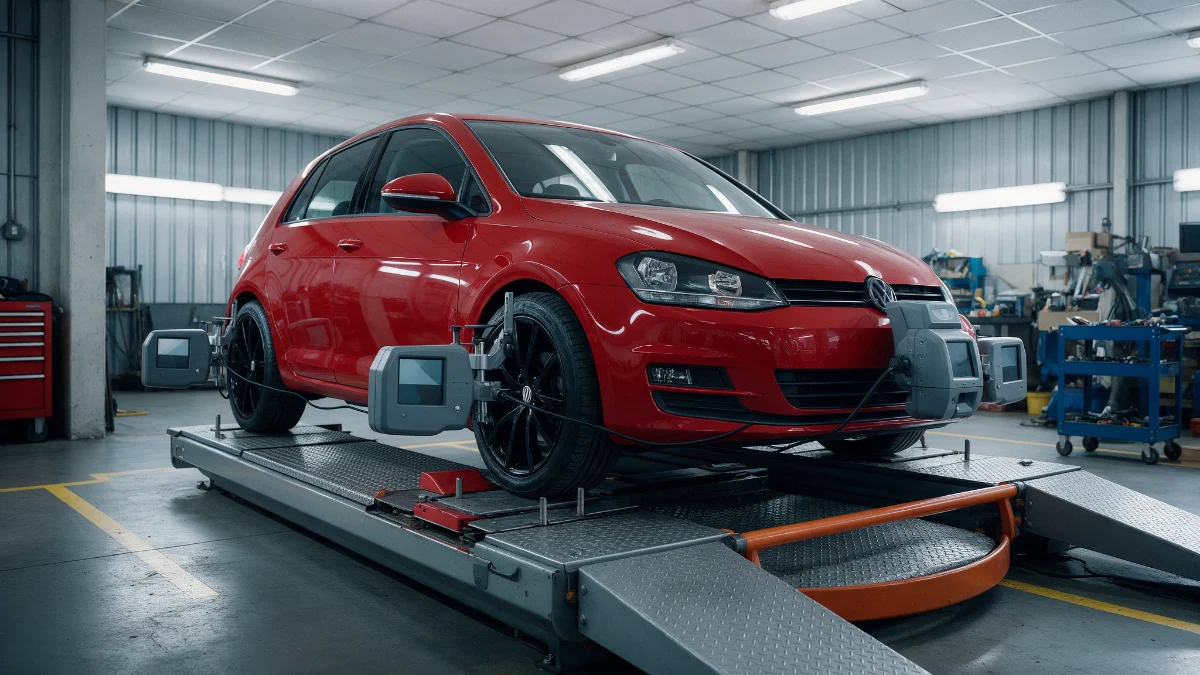
The last two are the quiet ones. Suspension geometry moves a fraction of a degree in a corner impact, which you feel as a pull and your tyres show as wear on one edge within a few thousand miles. And the mounting points that hold your panels square can shift without the panels themselves being marked, which is why a bonnet or boot that no longer sits level is worth taking seriously even when the metal looks perfect. Both are measured on a rig rather than judged by eye.

What are the warning signs in the days afterwards
Watch for six things in the fortnight after any knock: a pull on the steering, a new noise, a panel gap that has changed, a warning light, fluid on the drive, and a tyre wearing on one edge. Any one of those is a reason to have the car looked at.
- The steering pulls or the wheel sits off centre. Geometry has moved. This gets expensive in tyres long before it gets dangerous.
- A knock, creak or rattle that was not there. Usually a bracket, a mount or an undertray clip. Cheap now, worse later.
- A panel gap you can see from across the car. Bonnet, boot or door no longer sitting square means a mounting point has moved.
- Any warning light, especially airbag, ABS or engine management. Impact can disturb a sensor connector without breaking it outright.
- A patch on the drive where the car sits. Coolant, oil or air conditioning refrigerant oil. Photograph it and do not drive far.
- Air conditioning blowing warm. A condenser sits ahead of the radiator and takes the hit first. It often fails silently.
None of those prove serious damage on their own. All of them are worth an hour on a lift. Timelines for what happens next are in how long an accident repair takes.
Why will nobody quote properly from a photograph
A photograph shows the cover and nothing behind it, so any figure based on one is a guess about the cheapest possible outcome. That is why you will not get a number from us down the phone, and why you should be wary of any shop that gives you one.
A quote from a photograph is useful for one thing: telling you roughly whether you are in excess territory. It is not useful for deciding whether to claim, because the gap between the photograph price and the strip down price on a front end knock is routinely the size of the whole visible repair.
Your strip down is an hour or two of work that turns a guess into a list of parts. On an insurance job it is also what produces the supplementary estimate, which is the mechanism insurers use when the first assessment misses what was underneath. How that assessment works is explained on the insurance engineer assessment.
What happens when the insurer already assessed it
An insurer assessment carried out before the strip down is an opening position, not a final figure, and the repairer raises a supplementary estimate when the car comes apart and shows more. This is routine and it is not a dispute.
The sequence matters to you because it decides how long your car sits here. Strip down, photographs of what was found, supplementary submitted, insurer authorises, parts ordered, work proceeds. Each handover adds days, and the delay is in the authorisation rather than the workshop.
Two things speed it up. Photographs taken at the strip down that show the damaged part in place rather than on a bench, and a repairer who defends the method rather than accepting a cheaper one that will not hold. We do both, and the right to pick who does the work is yours rather than your insurer’s, as set out in choosing your own body shop.
What should you do in the first week
Book a strip down check, keep your own written note of the accident, and tell your insurer even if you do not intend to claim. Those three take an afternoon between them and they protect everything that follows.
Write your note the same day while the detail is accurate: time, place, speed, direction, weather, what you felt through the seat and the wheel. You will be asked some of that months later and your memory will have smoothed it.
Tell your insurer regardless of your intentions. Not notifying an accident is a policy breach in its own right, separate from any claim, and it is the kind of thing that surfaces at the worst possible moment. Notifying is not claiming, and you can say so on the call.
Then book the car in. If the other driver was at fault, get your inspection done before you agree to anything about repairs or a replacement vehicle, because the terms of a hire car can cost you more than the damage did. The two are not the same thing, as courtesy car against credit hire sets out.
Does hidden damage affect value or safety
Unrepaired hidden damage affects both: a shortened crumple zone is a safety matter, and an undisclosed repair history is a value matter. The second is the one that bites at sale, long after the inconvenience is forgotten.
On safety, the crash structure only works once. Your car can carry a crushed absorber and a deformed crash bar, drive perfectly, and protect you less in the next impact, and nothing on your dashboard tells you so. It is the clearest argument for having a knock looked at even when you intend to pay for nothing.
On value, a documented repair is an asset and an undocumented one is a liability. Keep your invoice, your parts list and the strip down photographs. A buyer who can see what was done and how stops worrying, and a buyer who cannot assumes the worst. Damage heavy enough to put the car in front of a total loss decision is a different conversation, and the categories are explained in Cat S and Cat N write-offs.
Should you claim when the visible damage is minor
Decide after the strip down, not before, because the visible damage on a low speed impact is a poor guide to the total. Plenty of drivers decide to pay privately on a scuff and then find themselves funding a radiator out of their own pocket.
The arithmetic is the same as always: compulsory excess plus voluntary excess against the written quote, then the effect of a claim on your premium over the following years. What changes here is the confidence level of the quote you are comparing against.
Another driver at fault changes the question again, because the cost should come off their insurance and leave your excess and discount alone. Get their details and photograph the scene even when it was only a tap in traffic, because you will not get a second chance. Both routes are worked through in claim on insurance or pay for the damage yourself.
Get a knock checked properly in Cardiff
We are at Unit 4 Wentloog Buildings, Wentloog Road, Rumney, Cardiff CF3 1TH, Monday to Saturday, 9am to 6pm, with six work bays and an on-site spray booth. Bring the car in after any impact that felt harder than it looked, and we will take the cover off and show you what is behind it before anything is agreed. Drivers come to us from right across Cardiff and the towns nearby.
Hidden damage questions we get asked
My bumper sprang back to shape. Is the car fine?
Not necessarily. The cover is designed to spring back and the absorber and crash bar behind it are designed to crush and stay crushed. Only taking the cover off answers it.
How fast does an impact have to be to cause hidden damage?
Lower than most people assume. Car park speeds are enough to crush an absorber and push a condenser into a fan. Judge it by what the strip down finds rather than by the speed you remember.
My airbags did not deploy. Does that mean there is no structural damage?
No. Airbags fire above a deceleration threshold that a low speed shunt sits below, while the crash structure still deforms. The two are not the same test.
How long does a strip down check take?
An hour or two for a front or rear end, and you get a written quote and photographs at the end of it. It is the fastest way to turn a guess into a decision.
Will the insurer pay for a strip down that finds nothing?
Policies vary, so ask before you book. Where another driver is at fault, the inspection is part of the claim. Where you are paying privately, we will tell you the cost of the check up front.
The accident was weeks ago. Is it too late to look?
No. Hidden damage does not heal, and a late check is better than none. Report it to your insurer now though, because leaving it longer makes the link to the accident harder to argue.
Book the car in if the knock felt harder than it looked, and let us take the cover off before you decide anything. Call 07400 454839 or use the contact form.