
The Insurance Engineer’s Assessment: What Happens to Your Car
An insurance engineer decides two things about your car: the method used to repair each damaged part, and the price the insurer will pay for it. Your car is off the road, nothing is happening, and nobody has told you that the hold up is one person you have never spoken to. Most assessments now happen from photographs rather than in person, which is faster and sees less. This guide explains who the engineer is, what they look at, why a supplementary estimate appears after the car is stripped, and what happens when the body shop and the engineer disagree.
What is an insurance engineer
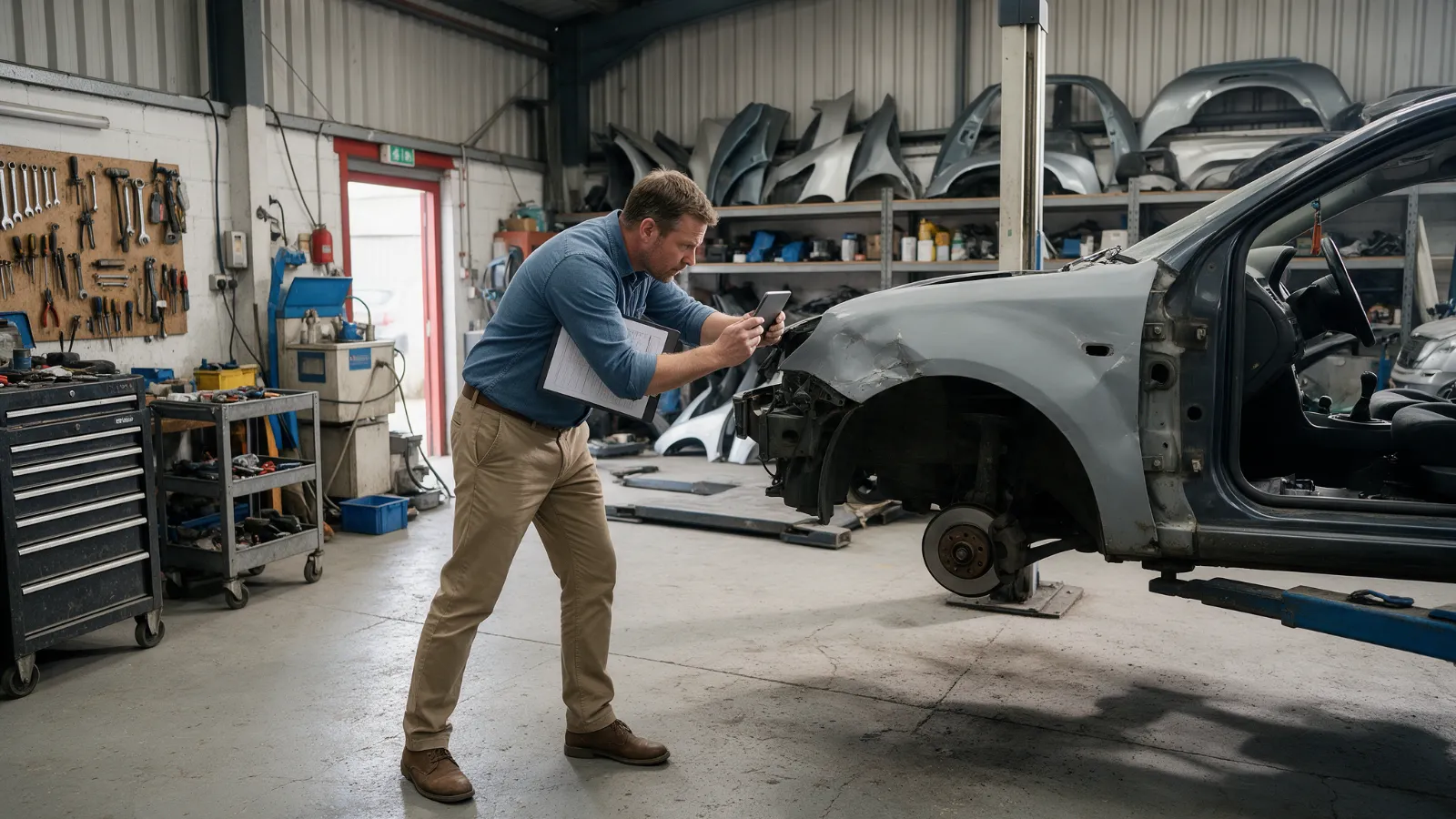
An insurance engineer, also called a motor assessor or claims engineer, is the technical specialist who agrees what a damaged vehicle needs and what the insurer will pay for it. They work for the insurer or for an engineering firm the insurer instructs, and their decision is what releases the repair. Ali Hindal deals with them directly from the Rumney workshop, Unit 4 Wentloog Buildings, CF3 1TH, where six work bays and an on-site spray booth mean your car is not waiting on a booth somewhere else.
They are not loss adjusters, and the distinction matters. A loss adjuster investigates whether a claim should be paid at all. An engineer takes it as read that the claim is valid and rules on the vehicle: repairable or not, repair or replace each panel, how many hours, which parts, and whether the figure in front of them is right.
You will not usually speak to them, and they are not your repairer’s opponent by default. A good engineer and a good body shop agree on most jobs in minutes, because both are applying the same repair methods to your damage. The friction appears in the cases where the photographs do not show what the metal actually did.
Desktop assessment against physical inspection
Assessments split into two kinds, and which one your car gets changes both the speed and the accuracy of the outcome.
| Desktop assessment | Physical inspection | |
|---|---|---|
| How it works | Engineer reviews photographs and the repairer’s estimate remotely | Engineer attends the workshop and examines the car |
| Typical turnaround | Faster, often within a few working days | Slower, scheduled around the engineer’s route |
| What it sees | Only what the images and the estimate show | The panel from both sides, the shuts, the gaps, the structure |
| Hidden damage | Missed until strip down, then handled as a supplement | Often caught at the visit |
| Best suited to | Cosmetic damage, single panels, clear photographs | Impact damage, structural concerns, high value vehicles, disputes |
| Common outcome | Authorisation, then a supplementary estimate later | One authorisation covering more of the job |
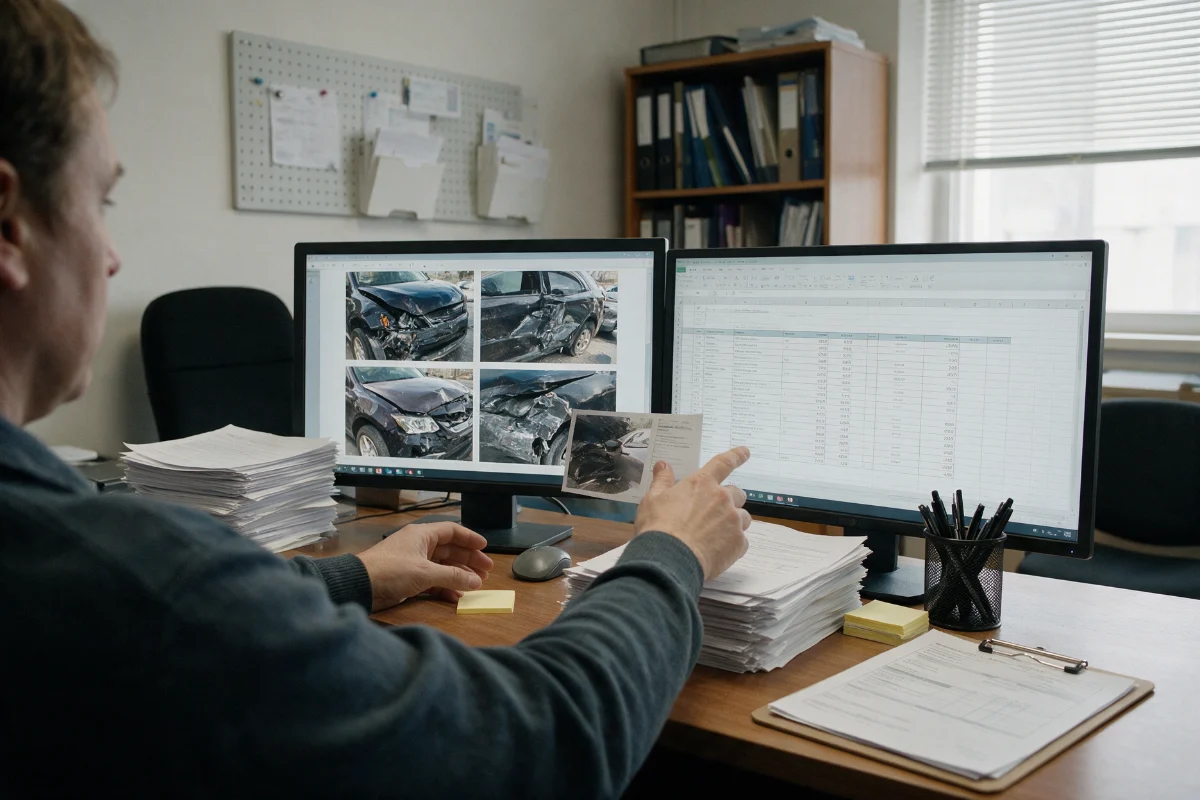
Desktop assessment is now the default across the industry because it is cheaper and quicker, and for a scuffed bumper it is entirely adequate. For collision damage it is a photograph of a skin making a decision about what is behind the skin, which is why a supplement so often follows. If your car has taken a real impact, a physical inspection is worth asking for, and the reasons are the same ones set out in photographing car damage for a quote.
What does the assessor look at
An engineer is checking a short list, and every item on it moves the figure.
- Repair or replace, panel by panel. The single biggest decision, because a replaced panel carries a part price and a repaired one carries labour.
- Labour hours against each operation. Compared to published times for that vehicle rather than accepted as offered.
- Paint operations. How many panels are refinished, and whether blending into adjacent panels has been included or padded.
- Parts type. Manufacturer, matching quality or reconditioned, and whether the choice suits the age and value of the car.
- Betterment. Whether a new part leaves the car better than it was, which can attract a contribution from you.
- Pre-existing damage. Marks and dents that were there before the accident and are not the insurer’s to pay for.
- Structural and safety items. Whether the shell, suspension or restraint systems are involved, which changes the job entirely.
- Total loss arithmetic. The repair cost against the car’s pre-accident value, and therefore whether it is written off.
The repair or replace decision is where engineers and body shops most often see things differently, because stretched metal does not photograph. What that judgement actually rests on is set out in panel beating or panel replacement.
What is a supplementary estimate
A supplementary estimate is a second estimate raised after the car is stripped, covering damage that could not be seen when the first one was written. It goes back to the engineer for a further authorisation, and the repair pauses until that comes through.
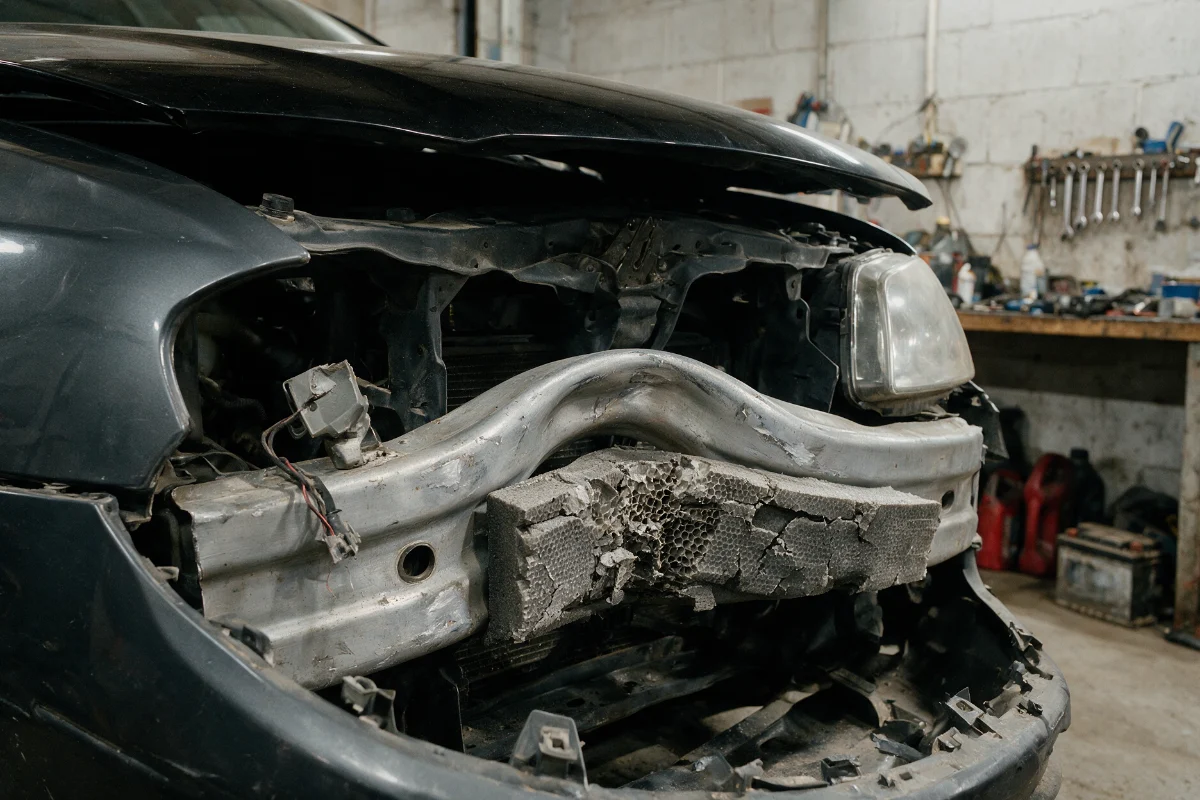
You should not read a supplement as bad news about your repairer. Supplements are normal rather than suspicious. A bumper skin springs back after an impact and hides a bent crash bar, crushed absorbers, snapped sensor brackets and broken mountings behind it. None of that appears in a photograph taken from two metres away, so the first estimate covers the skin and the supplement covers what was underneath.
What makes a supplement legitimate is evidence. Photographs of the stripped area, taken before anything is replaced, with the damaged parts identified. Any body shop raising a supplement should be able to show you exactly what it found, at the same time it shows the insurer. A supplement with no photographs attached is a request rather than a finding. Nearly every supplementary estimate comes from something found during strip down, which is covered in hidden damage found during strip down.
A workshop that never raises supplements is not necessarily virtuous. It is either seeing unusually straightforward damage, or quietly absorbing work it has not been paid for, and neither situation lasts. What the strip down is actually looking for is described under accident repair in Cardiff.
What if the body shop and assessor disagree
Disagreements are settled with evidence, and they are almost always about one of three things: repair against replacement, the number of paint or labour hours, or which parts get fitted.
The repair against replacement argument is the common one. An engineer working from three photographs may authorise a repair on a panel that the workshop can see is stretched beyond a proper repair. Stretch does not show in an image, so the body shop’s job is to demonstrate it: photographs with light raking across the panel, paint depth readings, and a plain explanation of why the panel will not hold its shape. Engineers revise decisions on that evidence routinely.
The parts argument runs the other way. An insurer may authorise a matching quality or reconditioned part where the workshop would fit a manufacturer part, particularly on an older car. That is a legitimate position for the insurer to take, and your policy usually permits it. If it matters to you, it is a conversation to have before the work rather than at collection.
You are not a spectator in any of this. It is your car and your policy, and you can ask the insurer directly why a method was chosen and ask for the engineer’s reasoning in writing. A policyholder chasing a decision moves a file faster than a repairer chasing the same decision, which is worth knowing when nothing has happened for a week. If the insurer will not move and you believe the repair is being compromised, use the formal complaints process, then the Financial Ombudsman Service once you have a final response or eight weeks have passed. The service is free to consumers.
What the engineer decides about a write-off
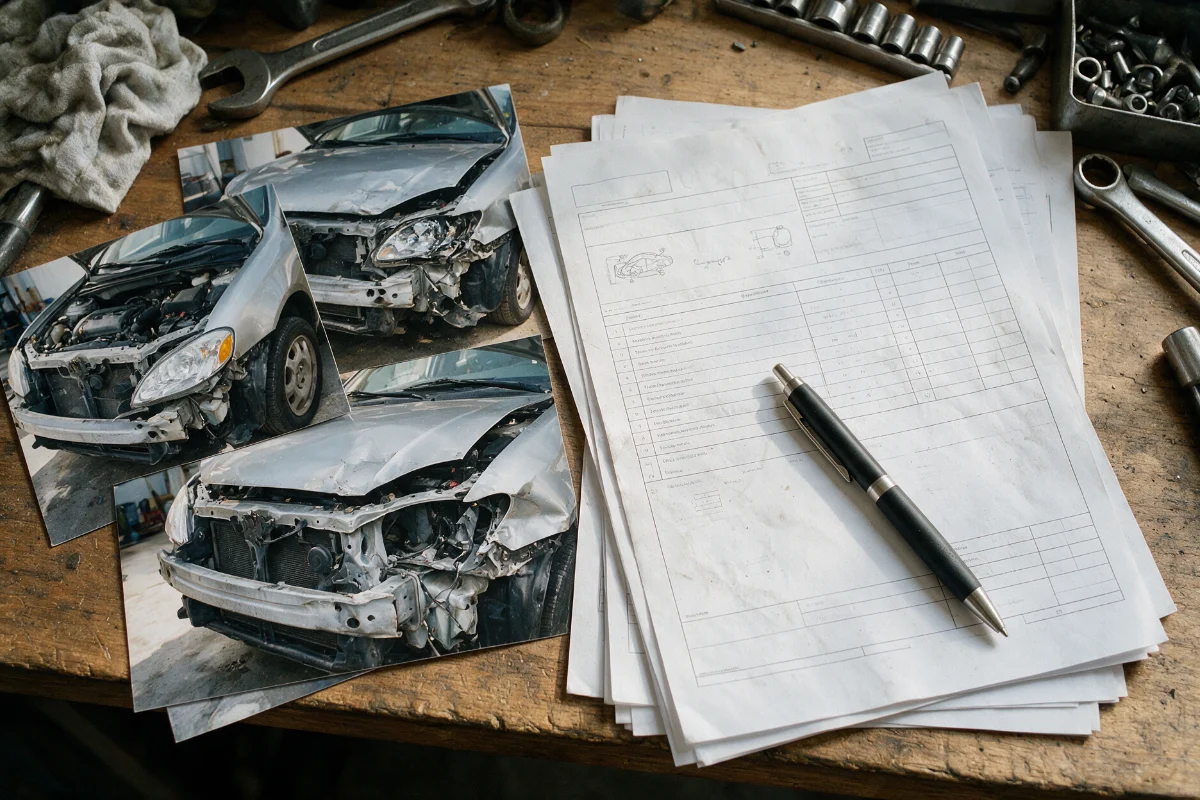
The engineer also decides whether repairing your car makes economic sense at all. They compare the repair cost with the vehicle’s pre-accident market value, and once the repair passes a proportion of that value the car is declared a total loss instead.
That threshold is not a fixed percentage across the industry, and it is not purely arithmetic either. Salvage value, the availability of parts and the extent of structural damage all feed into it. A common car with a modest value and a bent shell reaches the threshold far sooner than an unusual one with strong salvage demand. What the engineer is weighing on a structural car is explained in chassis damage and the write off decision.
Being written off is not the same as being beyond repair, and the settlement letter rarely makes that clear. Many total losses are perfectly repairable cars that were simply not worth the money against their value, and you often have the option to keep the car and take a reduced settlement. The categories that decide what happens next are explained in Cat S and Cat N write-offs.
How long does assessment take
Two to five working days is typical for a desktop assessment, counted from the estimate reaching the insurer. A physical inspection adds time, because it has to be scheduled around an engineer covering a region. A supplementary authorisation usually moves faster than the first one, because the claim is already open and the method already agreed.
Your claim will stall in one of three predictable places. A claim you open late on a Friday loses the weekend. An engineer who wants more photographs adds a round trip that could have been avoided by sending the right images first time. Your car attracts a physical inspection if it is high value or unusual, where a common hatchback would not.
Ask which of those three is happening when your repair has stalled, rather than asking when the car will be ready. Then ring the insurer yourself with the claim number and ask for the engineer’s decision date. Authorisation is the single most common reason a car sits untouched in a workshop, and where it fits in the overall schedule is set out in how long accident repair takes.
Waiting on an engineer?
Send us the claim number and photographs of the damage and we will prepare the itemised estimate and deal with the assessor directly. Unit 4, Wentloog Buildings, Wentloog Road, Rumney, Cardiff CF3 1TH, Monday to Saturday, 9am to 6pm. Ring the workshop, or send the photographs, and we will tell you what your car needs.
Assessment questions we get asked
Can I speak to the insurance engineer myself?
Usually not directly, but you can ask your insurer for the engineer’s reasoning in writing, and you are entitled to an explanation of why a method was chosen.
Does the engineer work for my insurer or for me?
For the insurer, or for a firm the insurer instructs. They are technically independent in their judgement, and they are not acting on your behalf.
Can I get my own independent engineer’s report?
Yes, at your own cost, and it carries weight in a dispute or a total loss valuation argument. It is worth considering when a settlement figure looks low.
Why has my repair been authorised twice?
Because a supplementary estimate was raised after strip down. The first authorisation covered the visible damage and the second covers what was behind it.
Will the engineer see my car in person?
Only on larger or unusual claims. Most assessments are now carried out from photographs and the repairer’s estimate.
What if the engineer values my car too low?
Challenge it with evidence: advertisements for the same model, age, mileage and condition, and a service history. Valuation disputes are among the most commonly overturned decisions.
Ask which stage your car is at, and ask the insurer for the engineer’s decision date. Those two questions move a stalled claim. Call 07400 454839 or use the contact form.