
Electric and Hybrid Car Accident Repair
Repairing an electric or hybrid car differs in three ways. The high voltage system is isolated and proved dead before anyone touches a panel, the battery pack is part of the structure rather than a box bolted under it, and the extra weight puts more energy into every impact. Your bodywork is still bodywork. Everything around it is not. Your car is off the road and you are being told fewer places can take it. We isolate to the manufacturer procedure at the Rumney workshop before any panel work starts, and Ali Hindal gives you a written quote after the strip down.
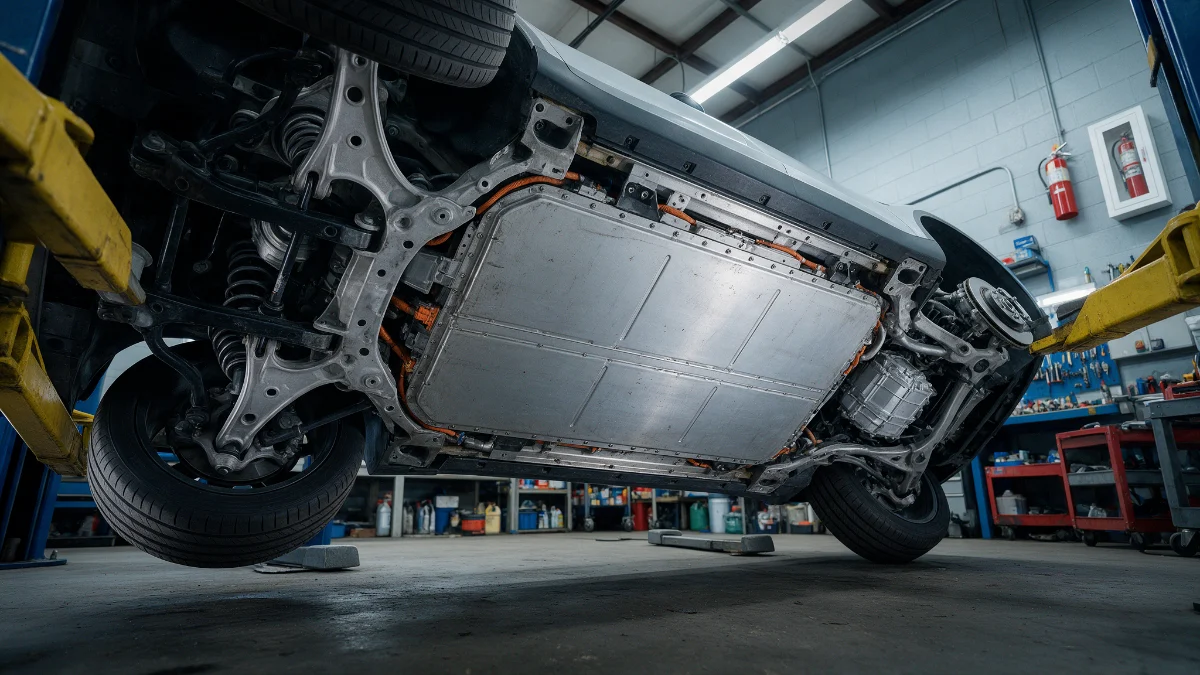
What is different about repairing an electric car
Three things change: the energy source, the structure and the mass. Everything else about a panel repair, a respray or a bumper job is the same work it has always been, which is worth saying to you because the subject attracts more mystique than it deserves.
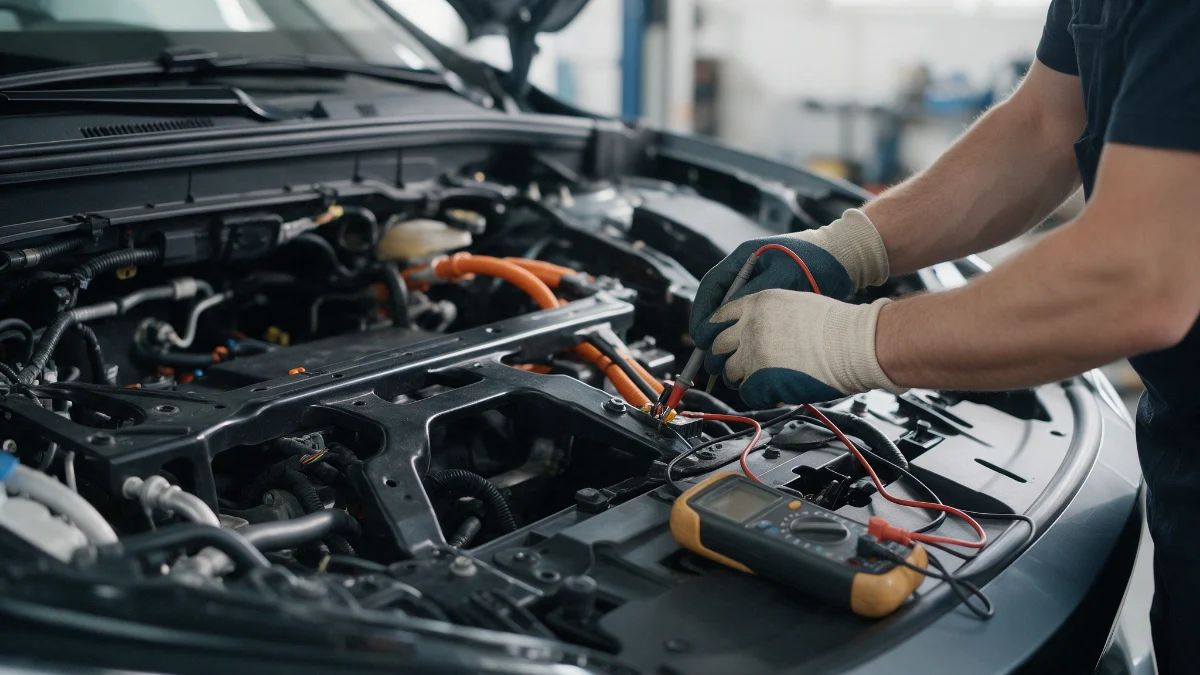
The energy source is the obvious one. Your traction battery holds hundreds of volts and it cannot be switched off like a radio. It has to be isolated through a defined procedure, left for a set period, then proved dead with a meter before anybody cuts, welds or drills anywhere near its cabling.
The structure is the less obvious one. On most electric cars the battery case is a stressed member, bolted into reinforced sills and crossmembers, so a shunt that would have been a sill repair on your old petrol car becomes a question about the pack mounting as well. The mass follows from that: an electric car typically carries several hundred kilograms more than its petrol equivalent, and that energy has to go somewhere in a collision. The structural side of that is covered on accident and crash repair in Cardiff.
How is the car made safe before work starts
The car is isolated, left for the manufacturer specified wait, then proved dead with a meter at defined test points, and only then does panel work begin. Those three steps happen in that order every time, including on a job that looks to you like a scuffed bumper or a dent in a door.
- Identify the vehicle and read the manufacturer procedure. Isolation points and wait times differ between makes, and guessing from the last car is not a method.
- Isolate the high voltage system. Service disconnect, service plug or a defined shutdown sequence, depending on the car.
- Wait the specified period. Capacitors in the inverter hold charge after shutdown. The wait exists for that reason and it is not negotiable.
- Prove dead at the test points. A meter reading, not an assumption. This is the step that separates a safe shop from a confident one.
- Label and barrier the car. So nobody else plugs it in, starts it or welds on it while it is apart.
- Keep the pack out of the work. No welding current through the structure near the pack, no drilling blind into the floor.
Only after all of that does your car become an ordinary bodywork job, and your quote can be written. The quote comes after the strip down, as it does on every car here, and what moves that figure is set out on what drives a bodywork repair price.
What happens if the battery pack was hit
Underbody or side impact over the pack is treated as a separate question from the bodywork, assessed before the car is moved around the workshop, and referred for specialist assessment rather than guessed at. A damaged pack is the one part of an electric car nobody should improvise with.
The warning signs are worth you knowing as an owner. A grounding or kerbing impact under the floor, a warning about reduced power or charging, a smell, unusual heat, or any noise from under the car. Any of those after an impact means stop, park away from buildings and other vehicles, and call rather than drive on.
The pack survives most impacts, because it is protected by exactly the structure designed to deform around it. The point is not that electric cars are fragile, it is that the assessment order changes: pack first, then everything else. Where damage is heavy enough to raise the write off question, the categories are explained in Cat S and Cat N write-offs.
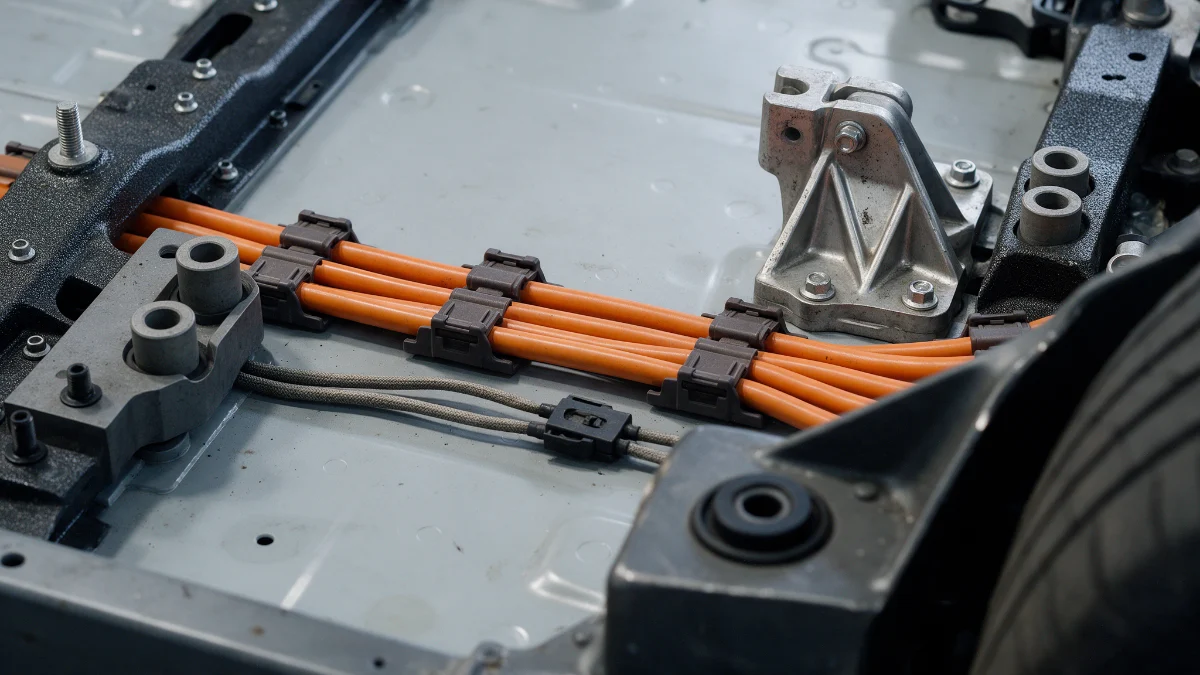
Does hybrid mean the same rules
Full hybrids and plug-in hybrids carry a high voltage system and the same isolation rules apply, while mild hybrids run a lower voltage system that is treated differently. Knowing which one you have changes what your repair involves and what you are quoted.
A full or plug-in hybrid has a traction battery, orange cabling and a motor generator, usually with the pack under the rear seat or boot floor rather than the whole floor, which is why a rear shunt matters more than a kerbed wheel. That changes where the risk sits in a rear end shunt, which is the most common way your hybrid gets hit in traffic.
A mild hybrid typically runs a 48 volt system supporting a conventional engine. It still needs respecting and it does not carry the same isolation requirement, so a dent or a respray on one is an ordinary quote. Tell us which yours is when you book it in, or just give us the model and we will work it out for you.
Why do electric cars get written off more easily
The write off decision compares repair cost against the car’s value, and on an electric car a pack that needs replacing can exceed that value on its own, which is why packs are assessed before anything else. Your bodywork is rarely what tips it.
Two other factors push the same way. Parts and procedures on newer electric models can carry longer lead times, and labour is higher where a job requires isolation, specialist assessment and recalibration on top of the panel work. None of that is unique to electric cars, it is just more of it at once.
It cuts the other way too. An electric car with undamaged structure and a sound pack repairs like any other car, and the absence of a radiator, exhaust and engine ancillaries removes a whole class of front end damage your old petrol car would have suffered, which keeps your claim smaller. Whether to claim at all is worked through in claim on insurance or pay for the damage yourself.
What about weight, tyres and alignment
An electric car carries several hundred kilograms more than its petrol equivalent and that weight sits low, so impacts load the suspension harder and alignment matters more afterwards. It is also why your tyres go faster than you expect.
Geometry gets measured rather than eyeballed after any impact to your car. A car with instant torque, extra mass and a low centre of gravity shows an alignment error as uneven tyre wear much faster than a lighter car does, and a kerbed wheel or a pothole counts as an impact for this purpose.
Check your tyre specification when replacements are needed too. Many electric cars run tyres with specific load and noise characteristics, and fitting an ordinary equivalent changes rolling resistance, range and sometimes the ride. That is not a repair issue, it is the thing people get wrong in the month after they collect the car.
What does an electric car repair cost compared with a petrol one
The panel and paint on your electric car is priced exactly as it would be on a petrol one, and the difference in a quote comes from the hours around it. Isolation, pack assessment and calibration are real labour, and on a newer model parts can take longer to arrive.
That cuts both ways and the saving is rarely mentioned. A front end shunt on a petrol car reaches a radiator, a condenser, an intercooler, cooling pipework and sometimes an exhaust. Your electric car has none of those in the same place, so the same impact can produce a shorter parts list even while the labour line is longer.
What you should insist on either way is a written quote after the strip down rather than a figure over the phone, because nobody can see a pack mounting or a chafed loom in a photograph. You get that here as standard, with calibration listed separately so you can see what you are paying for.
What should you ask a repairer before booking
Ask three questions: what their isolation procedure is, what happens if the pack is damaged, and whether calibration is included. The answers tell you more than any badge on a wall, and you can ask them over the phone.
A shop that answers the first with a specific sequence rather than a reassurance is a shop that has done it, and a shop that quotes before a strip down is one to avoid. A shop that answers the second by saying it refers pack damage for specialist assessment is giving you the right answer, because nobody should be improvising with a damaged traction battery. And the third matters because electric cars tend to be well equipped with driver assistance, so calibration is almost always part of the job.
Ask what happens to your car while it waits, too. An electric car with damage near the pack is parked with space around it rather than squeezed between two others, and a shop with six work bays can do that. Calibration is covered in ADAS calibration after accident repair.
One last question is worth asking: what happens to your car at the end. A road test and a charge before handover catches the faults that only appear under load, and a shop that hands an electric car straight back off the ramp has not tested the thing you are most likely to notice. Ask for it, and ask what paperwork you get, because the isolation record and the calibration report are both documents you want in the folder when you sell the car.
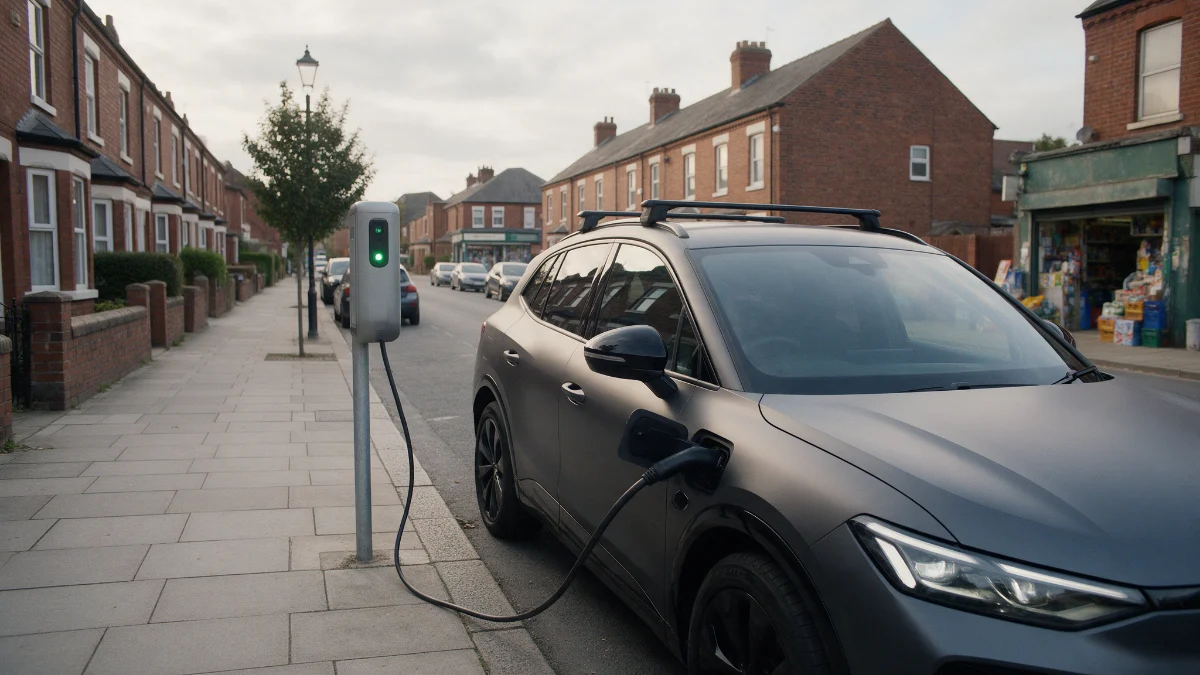
Electric and hybrid repairs in Cardiff
We are at Unit 4 Wentloog Buildings, Wentloog Road, Rumney, Cardiff CF3 1TH, Monday to Saturday, 9am to 6pm, with six work bays and an on-site spray booth. Tell us the make, model and year when you call, and whether the car has had any impact under the floor, because that decides how we handle it before it comes into a bay. Drivers reach us easily from across Cardiff and the surrounding towns.
Electric and hybrid repair questions we get asked
Is it safe to drive my electric car after a knock?
Usually yes for a cosmetic impact above the floor line. Stop driving and call if the impact was underneath, if you get a power or charging warning, or if there is heat, noise or a smell from under the car.
Does every electric car repair need the battery disconnected?
Any work near high voltage cabling or the pack does, and the procedure is followed rather than judged job by job. A rear quarter scuff on a car with the pack under the floor still gets assessed before a bay is allocated.
Can an electric car be resprayed normally?
Yes, with one caveat: oven temperatures and bake times are checked against the manufacturer limits, because a traction battery has a temperature ceiling. That is a scheduling detail rather than an obstacle.
Why are electric car repairs quoted higher?
Isolation, assessment and calibration are real hours on top of the panel work, and parts lead times on newer models can be longer. The panel and paint element is priced like any other car.
My hybrid is only a mild hybrid. Does that matter?
Yes, in your favour. A 48 volt mild hybrid does not carry the same isolation requirement as a full or plug-in hybrid. Give us the model and we will confirm which you have.
Will my insurer let me choose where an electric car is repaired?
Yes. The driver chooses the repairer, not the insurer, on an electric car as on any other. Ask the shop the three questions above and judge the answers.
Tell us the make, model and year when you call, and say whether anything struck the car underneath. Call 07400 454839 or use the contact form.