
Chassis Damage After an Accident
Chassis damage on a modern car means distortion of the welded shell that everything else bolts to, because almost no car on the road now has a separate chassis under the body. It is measured against manufacturer data on a jig rather than judged by eye, and that measurement is what decides between a repair and a write off. Your car is off the road, somebody has used the word chassis, and you have no idea whether that means a day or the end of the car. Bring it to the Rumney workshop and let Ali Hindal measure it, because a guess about structure is worth nothing.
What does chassis damage mean on a modern car
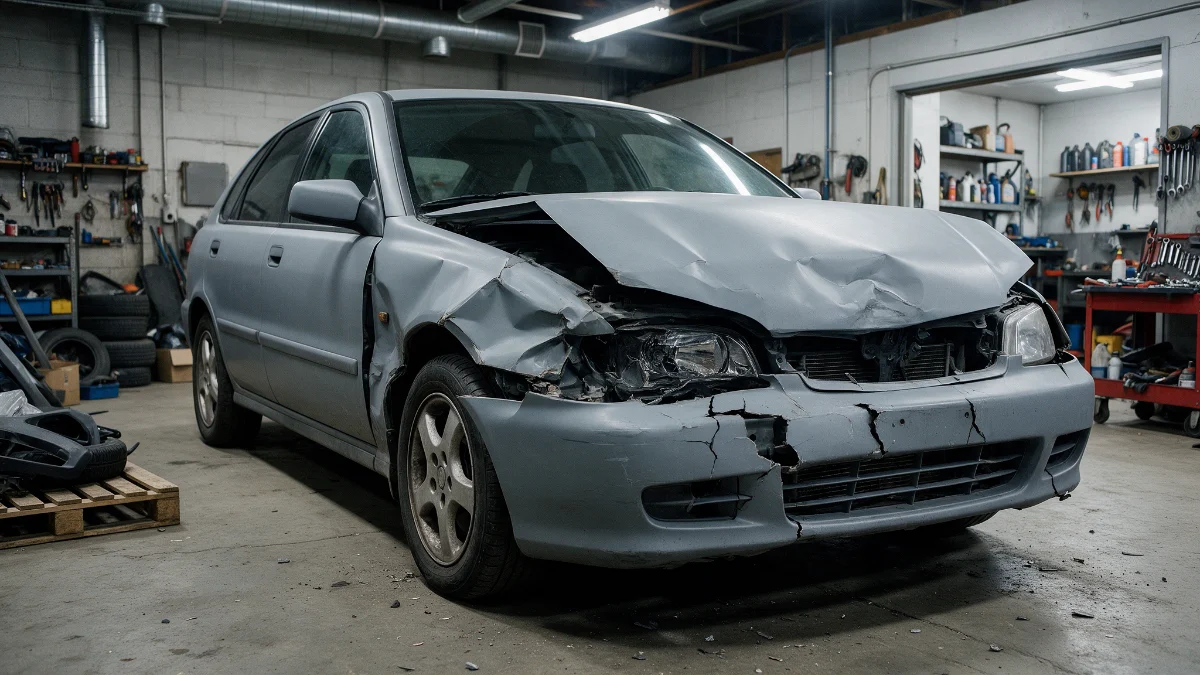
Chassis damage means the monocoque has deformed, which is the welded steel shell that forms the floor, sills, pillars and inner wings of your car as one structure. There is no separate ladder frame to bend on a normal car, so the body is the chassis.
The parts that matter have names worth knowing. Chassis legs run forward and back from the passenger cell and carry the suspension and the crash structure behind your bumper. Suspension turrets locate the top of each strut. The bulkhead separates the engine bay from the cabin. Sills run under the doors and hold the whole thing in column. Deform any of those and the geometry your suspension depends on moves with it, which you will feel long before you see it.
Panel work and structural work part company right there. Your wing bolts on and your sill does not, which is why a dent in one and a shunt into the other sit in different worlds on a quote. Panel level work is set out on bodywork and panel repairs.
What are the signs your car has structural damage
Six signs point at a shell that has moved. A changed panel gap, a door or boot that no longer shuts cleanly, a steering pull, uneven tyre wear, a creak over bumps, and a car sitting lower on one corner. Any one of them after a shunt is a measurement job.
- Panel gaps that are no longer even. Stand at the corner of your car and sight along it. A gap that tapers is the clearest free diagnostic you have.
- A door, bonnet or boot that needs a shove. Apertures go out of square before anything looks bent.
- The steering pulls, or the wheel sits off centre on a straight road. Geometry follows the structure it is bolted to.
- A tyre wearing on one edge. This shows up within a few thousand miles and it is money leaving quietly.
- A creak or a knock over bumps that was not there. Flexing where the shell no longer meets as it should.
- The car sits lower on one corner. Measure the gap from arch to tyre on all four, which takes two minutes.
None of those is proof on its own, and together they are a strong case for getting your car looked at. The rest of the hidden damage picture is in hidden damage after a minor accident.
How is structural damage actually measured
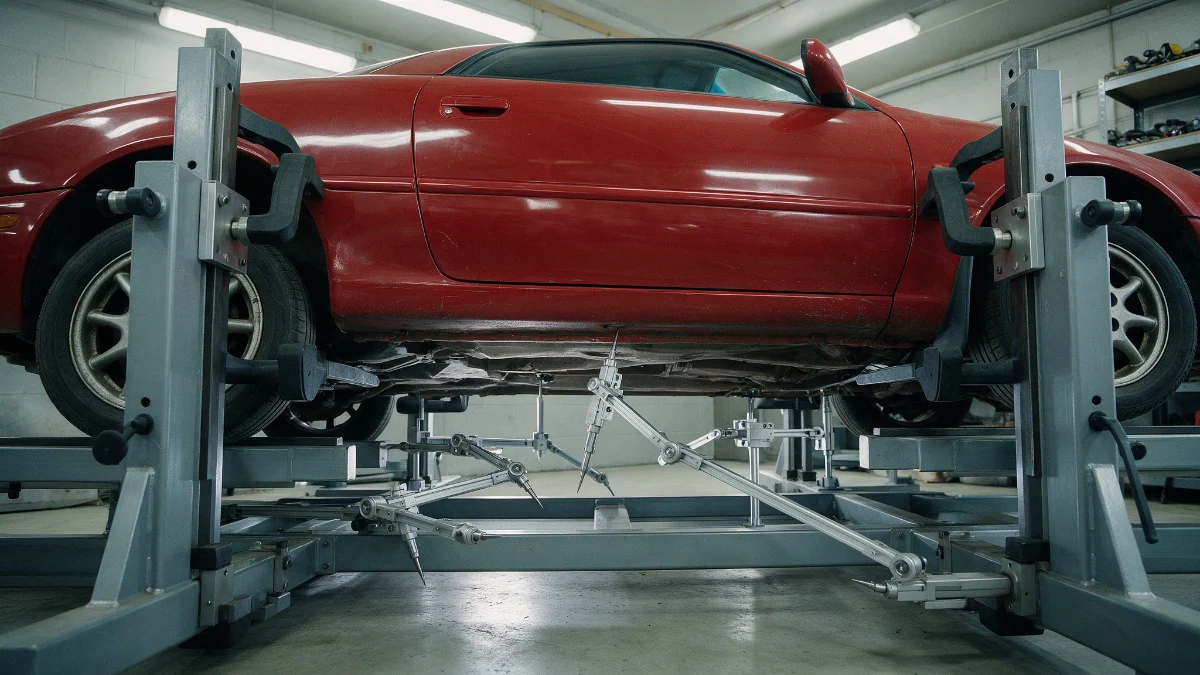
A damaged shell is mounted on a jig and compared point by point against the manufacturer’s data, with every difference recorded in millimetres. Laser, ultrasonic or mechanical systems all do the same job: they compare where a point is against where it should be, and no quote for structural work should be written before that is done.
Your car is clamped at defined locations first, which is what makes the measurements comparable. Reference points on the underside are then measured in three dimensions, and the output is a chart showing each point and its deviation. A shell within tolerance everywhere is a car with no structural damage, whatever the outside looks like.
Ask for that printout, before and after, and keep it with your quote and invoice. It is the document that proves the shell was brought back to specification rather than pulled until the panels lined up, which is a different thing that also makes the gaps look right. The paperwork around an insurance job is covered on insurance claim repairs.
Can chassis damage be repaired
Structural damage is repairable in most cases, by pulling the shell back to its measured positions and replacing sections that cannot be straightened. What decides it is the steel, the location and the number of areas involved, not the drama of the photographs.
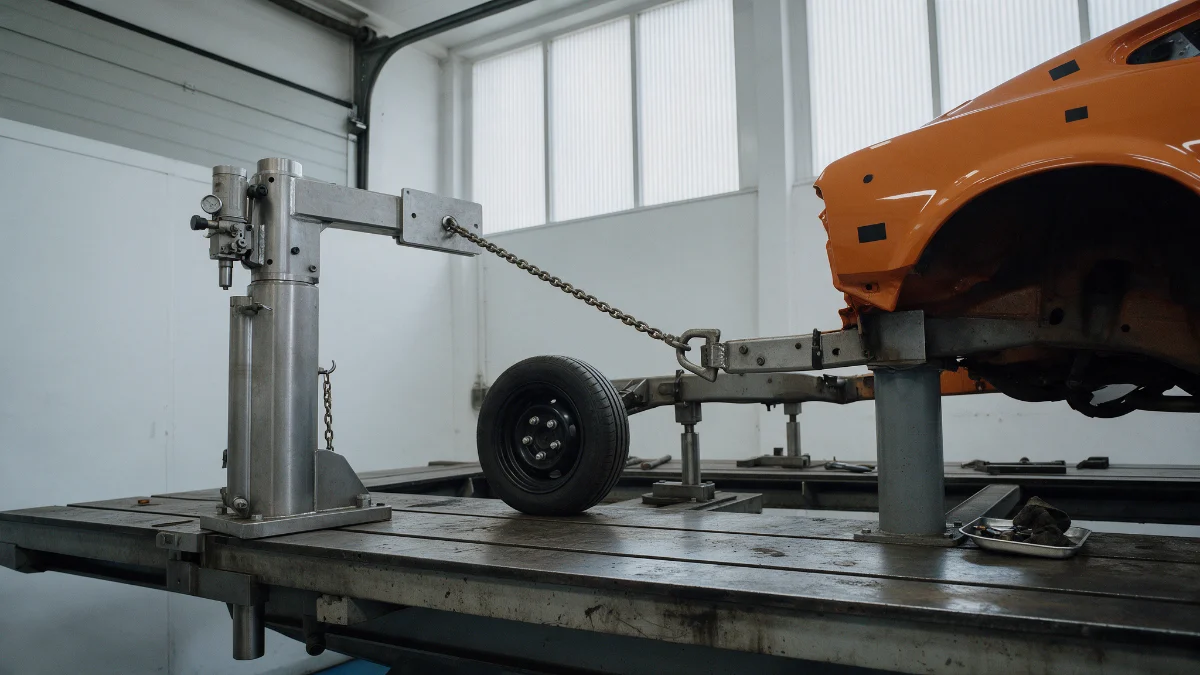
Pulling is done on the jig, slowly, with the shell measured as it moves, so the structure comes back to the data rather than to somebody’s eye. Sectioning replaces a damaged length of a leg or a sill with new material at a manufacturer approved joint, which is normal practice and perfectly sound when the joint is in the right place, then the area is primed and resprayed like any other panel.
The limit is the metal. Modern cars use ultra high strength steels in the safety cell that get their properties from how they were formed, and heating or straightening them destroys exactly what they were chosen for. Those sections are replaced, never pulled, and a shop that heats one to make it fit has quietly removed the protection you paid for. Welding to that standard runs in-house here, alongside the rest of our services.
When does chassis damage make a car a write off
A car is written off when the repair cost passes a proportion of its value, so structural damage tips the decision through cost rather than through any rule about chassis damage itself. There is no law that says a bent leg means the end.
In practice three things push it that way. Structural work is labour heavy, it usually comes with suspension, airbag, respray and calibration work attached, and it tends to reveal more once the car is apart, so the quote you were given can move. On an older car with a modest value, all three together get there quickly, and a kerbed wheel or a scuffed bumper on the same car would never have come close. On a newer car the same damage is routinely repaired.
The category matters more than the label once a car is declared a write off. Category S means structural damage that was assessed as repairable, and the car can return to the road after a proper repair and re-registration. The categories are explained in Cat S and Cat N write-offs.
Is a repaired shell as strong as it was
A shell repaired to the manufacturer method, with the right steels replaced rather than heated and every point measured back to data, performs as designed. One repaired by pulling until the gaps look right does not, and nothing visible tells the two apart.
Method matters more than finish on structural work, and that is the uncomfortable part. Your car can leave a shop with perfect panel gaps, a fresh respray and a safety cell that will fold differently next time. You will never see it, your MOT will not catch it, and you find out in the only circumstance where it counts.
So ask three questions before you agree to structural work. Was it measured on a jig against manufacturer data. Were ultra high strength sections replaced rather than straightened. And can you have the before and after chart. A shop doing it properly will answer all three without hesitating.
What does it mean for value and for selling the car
Structural repair affects resale value and documented structural repair affects it much less, because what frightens a buyer is not the repair, it is not knowing. Keep your measurement charts, your parts list and your invoice together in one folder.
A category S write off stays on your vehicle history permanently, and any buyer running a check will see it. Pretending otherwise when you sell is a quick route to a dispute. Being upfront about it, with your repair paperwork and your excess receipt in hand, is what turns a difficult conversation into a priced one.
A repair carried out without a write off being declared creates no record at all, so your folder is the only proof the work was done properly. That folder is worth real money to you three years from now. How to think about photographing and documenting damage from the start is in photographing car damage for a quote.
How long does structural repair take
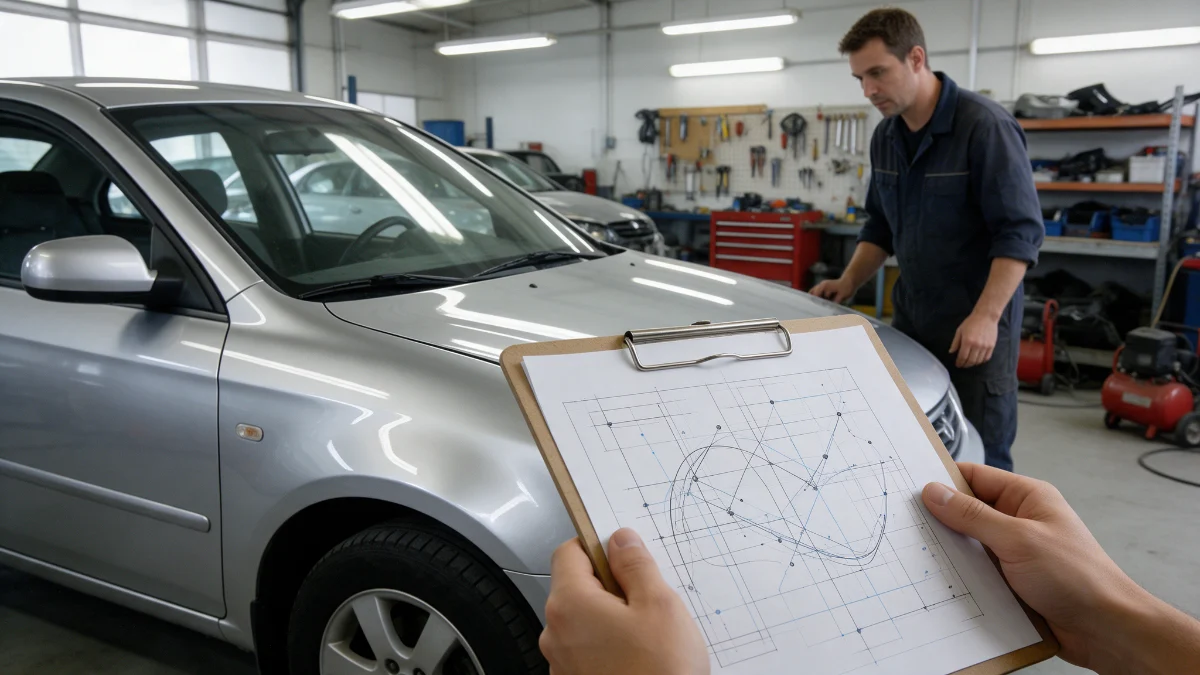
Structural repair takes one to three weeks in most cases, longer where sections have to be ordered or a second round of authorisation is needed. The measuring and pulling is a smaller part of that than you would expect, and the waiting for your insurer is a larger one.
The sequence runs: strip, measure, report, authorise, pull or section, measure again, rebuild, align, calibrate, paint, refit and road test. Every one of those has to finish before the next starts, and two of them involve somebody outside the workshop saying yes.
Ask about a courtesy car early on a job this length, and get the terms in writing before you accept anything, because a hire agreement on a three week repair is a serious commitment for you. The difference between the two kinds is set out in courtesy car against credit hire.
One thing you can do to shorten it: answer quickly when your insurer or the engineer asks you something. A supplementary estimate sitting in an inbox because nobody chased it is the single commonest reason a three week repair becomes five. Ask us who is waiting on what whenever you ring, and we will tell you straight rather than blaming a part that arrived last Tuesday.
Get a shell measured in Cardiff
We are at Unit 4 Wentloog Buildings, Wentloog Road, Rumney, Cardiff CF3 1TH, Monday to Saturday, 9am to 6pm, with six work bays and an on-site spray booth. Tell us what the car hit, what it feels like to drive now and whether the gaps have changed, and we will tell you whether it needs measuring. Cars come to us from across Cardiff and the towns nearby.
Chassis damage questions we get asked
Can you tell by looking whether a car has chassis damage?
You can tell when it is severe, and you cannot tell when it is marginal, which is the case that matters. Changed panel gaps and a steering pull are the signs worth acting on, and only a jig answers it.
Does chassis damage always mean a write off?
No. It means a repair that is labour heavy and usually brings suspension and calibration with it. On a car with reasonable value that is routinely repaired, and on an older car the cost can exceed what the car is worth.
Is a chassis straightened car safe?
Yes, when it was measured back to manufacturer data and the sections that cannot be straightened were replaced instead. Ask for the before and after chart, because that is the only way you can check.
Will structural repair show on an HPI check?
Only if the car was recorded as a write off by an insurer. A repair carried out without a total loss being declared creates no entry, which is exactly why you should keep the paperwork yourself.
My car drives straight. Can the shell still be out?
Yes. Alignment can be adjusted to compensate for a shell that has moved, which makes the car drive straight while leaving the structure wrong. That is why measurement comes before alignment rather than instead of it.
How much does a measurement check cost?
It is quoted as its own item and it is a fraction of any structural repair. Ask for it as a separate line, and where another driver is at fault it forms part of the claim rather than coming out of your pocket.
Tell us what the car hit and whether the gaps have changed, and we will tell you whether the shell needs measuring. Call 07400 454839 or use the contact form.