
Car Body Repair for Penarth Drivers
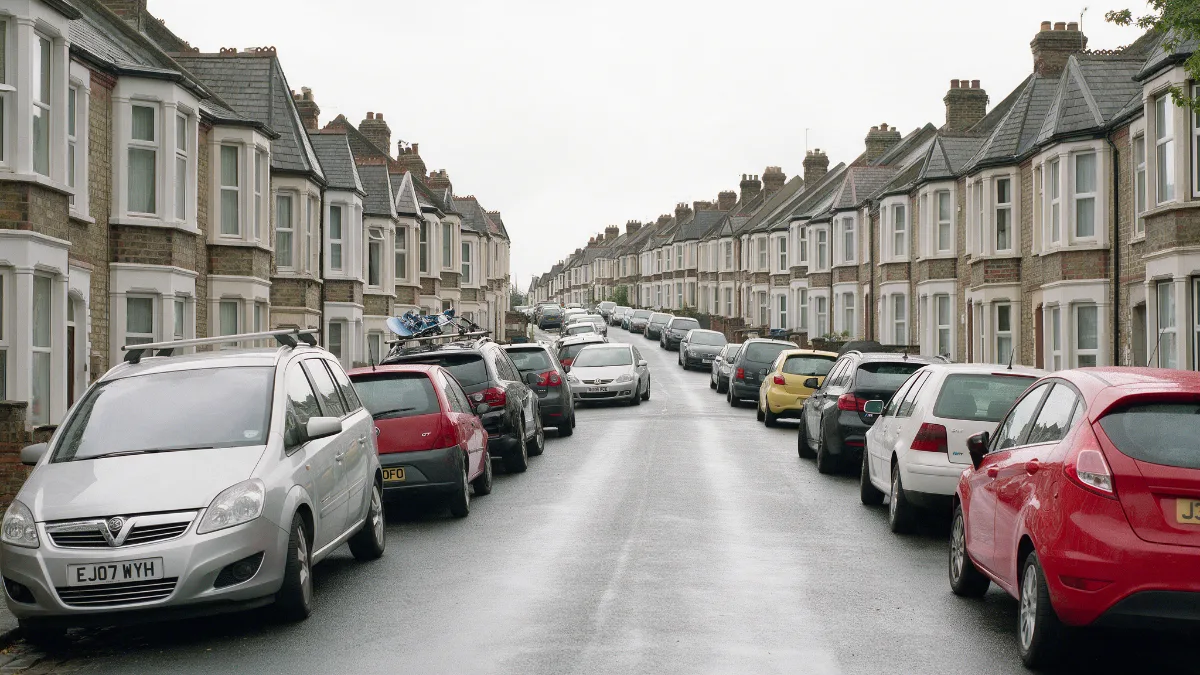
Almost everything that comes in from Penarth happened while the car was stationary, because a town of Victorian terraces with cars parked both sides produces mirror strikes, door edge dents and corner scuffs rather than collisions. That changes what a repair costs and who pays for it, since there is rarely another driver standing there to exchange details. The question owners ask first is simple: will the repair show? The drive to our Rumney workshop, with its on-site spray booth, is twenty five to thirty minutes off peak, and Ali Hindal gives you a written quote after the strip down rather than a figure guessed at the kerbside.
How long does it take to get from Penarth to the workshop
Twenty five to thirty minutes off peak, on the A4232 north and then the A48 east into Rumney. Add fifteen to twenty minutes in rush hour, nearly all of it between the Bay and the A48.
The alternative from the town centre is Penarth Road and the city, which feels more direct on a map and rarely is. The A4232 keeps you out of traffic lights until you are most of the way there.
Rumney is on the eastern edge of Cardiff, so you cross the city either way. If the car is not safe to drive that far, say so when you ring rather than setting off and finding out. Directions from every approach are on the areas we cover.
Why Penarth parking damage is its own category
Because the damage is caused by a car that has already gone, which makes it an insurance problem rather than a repair problem. The repair itself is usually small.
On a narrow street the contact points are predictable. A folded or cracked mirror housing from a passing vehicle. A dent in your door skin at the exact height of the door of the car beside you. A scuffed front or rear corner from somebody shuffling into a space. And a long light scrape down your flank from a van misjudging the gap. Four patterns cover most of it.
With no third party the choice is pay privately or claim on your own policy for an incident that was not your doing, which costs you an excess and usually a no claims discount. On jobs this size the arithmetic almost always points to paying, and that comparison is set out on claiming against paying for car damage.
Mirrors, door edges and the width of an old street
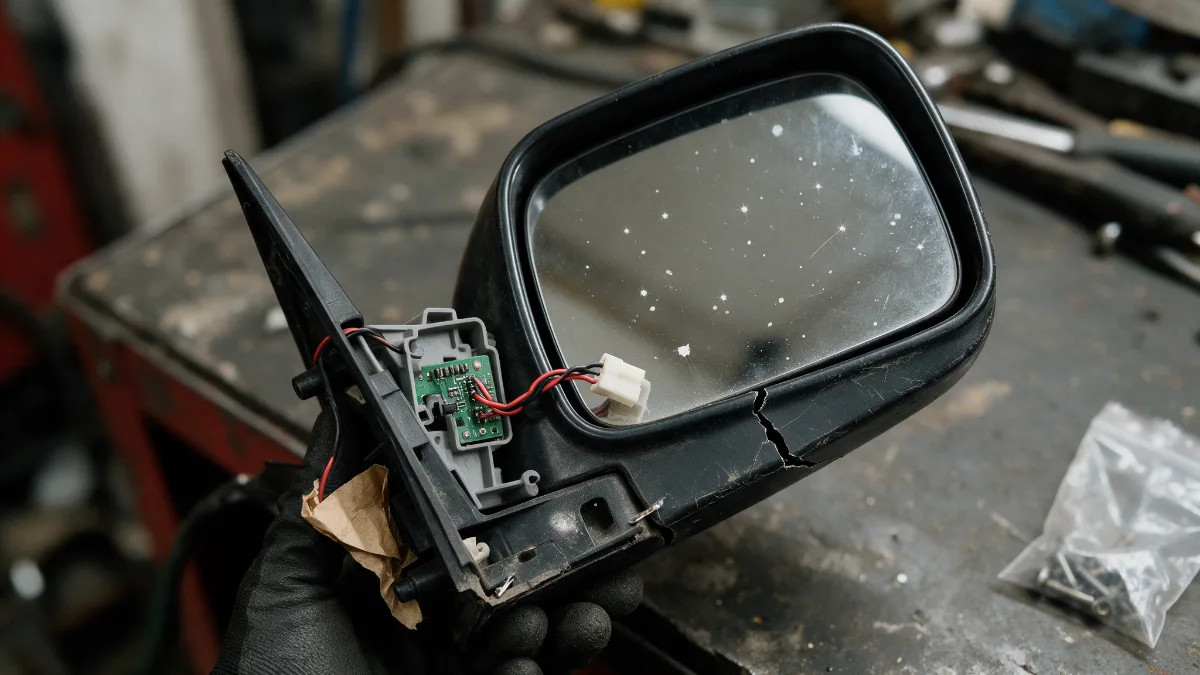
A folded mirror is often a housing and a cap rather than the whole unit, which is the difference between a small job and an expensive one. Get the casing off before anybody quotes you for a mirror.
Modern mirrors carry heating elements, indicator strips, puddle lamps and sometimes a camera, so the price of the unit can surprise you while the part you actually broke is a plastic cover that clips on. The useful question to ask is which part has actually failed.
Door edge dents are the opposite. They look trivial and they sit in the middle of a panel where the metal has nowhere to go, so your panel needs working and usually refinishing. A dent with the paint intact can sometimes be pushed out without paint at all, and where that line falls is on dent and scratch repair.
Matching paint on a car that lives outside
By reading the paint that is on the car rather than the code that left the factory, because a car parked on a street for years has faded and a code match will show as a patch.
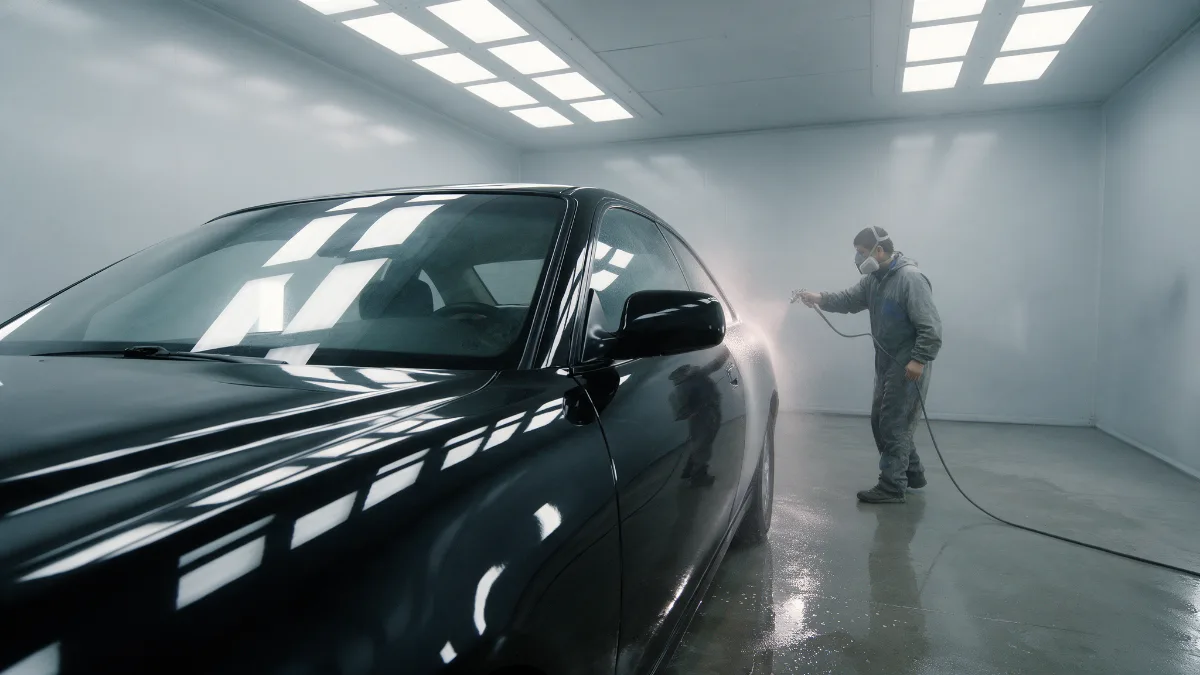
Your paint is read with an instrument, then test cards are sprayed and held against the panel until one disappears. Only then does the colour go on the car. The second half of the job is blending into the neighbouring panels so the eye has no edge to catch on, and on a faded car that is not an extra, it is the repair.
South facing roofs, bonnets and boot lids fade fastest, so if your car has sat on the same side of the same street for a decade it can be measurably different from one side to the other. How colour matching and blending actually work is on paint and spray repairs.
Hills, handbrakes and cars that moved on their own
A car that rolls on a hill damages itself and whatever stops it, and the insurance position is usually that the owner is at fault even with nobody in the vehicle. Penarth has the gradients for this to be a real category rather than a curiosity.
The damage pattern is distinctive. A rear corner and a tow eye area on the car that rolled, and a front bumper and bonnet leading edge on whatever stopped it. On an automatic the handbrake is often found to have been doing the whole job for years without anybody noticing, because the parking pawl was taking the load on the flat.
Photograph the position of both cars before anything is moved. Where damage is structural rather than cosmetic the question shifts from panels to measurement, which is covered in chassis damage after an accident.
Private roads, unadopted lanes and who is liable
On a road the council has not adopted, you have no highway authority to claim against, which catches people out in a town with as many private lanes and shared accesses as Penarth. Vale of Glamorgan Council is the highway authority for adopted roads, and for everything else the answer is whoever owns the surface.
That usually means a management company, a landlord or the residents jointly. Liability still exists in principle, under occupiers liability rather than highways law, but it is harder to pursue and often uninsured. Before you spend time on a claim, find out whether your road is adopted, which the council will tell you.
The same question applies in a car park, where the operator is rarely liable for damage done by another customer. What you can and cannot recover there, including how to ask for footage before it is overwritten, is in who pays for car park damage.
What Penarth customers bring in most
Bumper corners, single door panels and mirror work. Small jobs, usually paid for privately, and usually on cars the owner means to keep rather than sell.
Bumper work splits three ways. A scuff through the lacquer on a sound bumper is prepared, refinished and blended. A split is plastic welded from behind, reinforced and refinished on the face. A bumper pulled off its mountings is replaced. The three routes and what decides between them are on bumper repair.
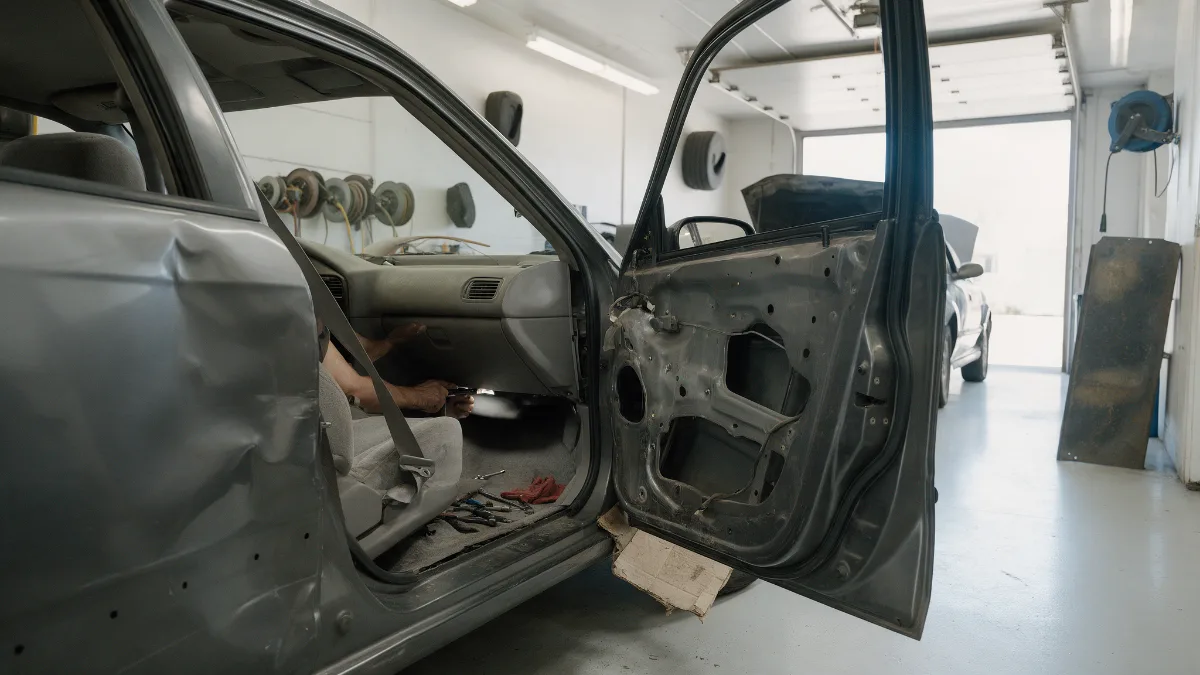
Door panels are where the repair or replace decision gets interesting on an older car, because a good panel repair on original metal is often better than a replacement skin that has to be painted anyway. If the paint on the rest of your car is sound, keeping the original panel is usually the right call.
Getting a quote without driving round the Bay
Send photographs and we will tell you which category the job falls into before you spend half an hour in traffic. A final figure still needs the car, because a bumper has to come off before anybody knows whether the bracket behind it survived.
Take them in daylight, straight on and from an angle, with one wide shot showing where the damage sits. For a mirror, photograph the broken part and the whole unit separately. For a scrape, get close enough that we can see the depth rather than just the length of your damage. The shots that actually help, and the five that waste everybody time, are listed in how to photograph car damage for a quote.
Older cars, kept cars and the repair or replace question
On a car the owner means to keep, repairing the original panel usually beats replacing it, because original metal and original paint depth are things you cannot buy back later. On a car heading for sale next year the arithmetic flips.
A replacement panel arrives in primer and has to be painted anyway, so the saving over a skilled repair is smaller than you would assume once the paint is counted. What a new panel does buy is time, which is why insurers often prefer it. What decides the call on any given panel is the extent of the deformation, whether the metal has stretched, and whether the damage runs into a swage line or an edge.
Penarth brings in a lot of cars in this category, well looked after and not new. The full comparison of the two routes, including what each does to the car afterwards, is on panel beating against panel replacement.
How long will a small job keep the car
A single panel with paint is usually two to three days, because the paint stages set the pace rather than the panel work. A bumper scuff can be quicker and a blend across three panels will be longer.
The sequence is strip down, panel work, primer, colour, lacquer, bake and reassembly, and each paint stage has a flash time that cannot be shortened without the finish suffering. A job that looks like an afternoon on the surface is rarely an afternoon in a booth.
Ask for a collection date when your quote is agreed rather than on the morning you drop the car off, and ask what happens if a part is late. What actually drives the timeline is on how long accident repair takes.
Book a body repair from Penarth
We are at Unit 4 Wentloog Buildings, Wentloog Road, Rumney, Cardiff CF3 1TH, Monday to Saturday, 9am to 6pm, with six work bays and the spray booth on site. Come up the A4232 and take the A48 east to the Rumney turn. Send photographs of the panel and the broken part first and we will tell you whether you are looking at a cap, a housing or a unit. What else the workshop takes on is listed under bodywork repairs.
Questions from Penarth drivers
Somebody hit my parked car and drove off. What can I do?
Photograph it before you move the car, note the time, check for cameras and ask neighbours the same day. Without a third party you are choosing between paying privately and claiming on your own policy for something that was not your fault.
Does claiming for parked damage affect my no claims discount?
Usually yes, because an insurer that cannot recover the money from anybody treats the claim as a fault claim regardless of how it happened. That is the main argument for paying privately on small jobs.
Can you repair just the mirror cap?
Often, yes. Get the broken part identified before accepting a quote for a complete unit, because the glass, the heater and the indicator are frequently undamaged.
My road is private. Who do I claim from for a pothole?
Not the council, if the road is unadopted. It falls to whoever owns the surface, which is usually a management company or the residents jointly. Ask the Vale of Glamorgan whether the road is adopted before you start.
Will a repair on one door match the rest of a faded car?
Yes, if the colour is read off the car rather than the paint code and blended into the adjacent panels. Spraying to the original code on a faded car is what makes a repair visible.
Is a small dent worth repairing on an older car?
Usually yes, because a dent with unbroken paint is the cheapest repair there is. Once the paint is broken it stops being cosmetic, because the panel is then open to the weather.
Photograph parked damage before you move the car, find out which part of the mirror actually broke, and check whether your road is adopted before you start a claim. Call 07400 454839 or use the contact form.