
Accident Repair for Bridgend Drivers
Bridgend is the furthest town we serve and the honest position is that it is not always worth the drive, so this page starts by saying when it is and when it is not. Forty to forty five minutes each way is a real cost, and on a bumper scuff it is not a cost worth paying if there is a shop you trust closer to home. Where it does make sense is on work that needs a controlled spray booth, in house welding or structural measurement, and on cars where a calibration has to follow the panel work. Ali Hindal will tell you which of those your car needs before you commit to the journey, and if your car is off the road he will say so before you arrange anything. The Rumney workshop has six work bays and an on-site spray booth.

How far is Bridgend from the Rumney workshop
Forty to forty five minutes off peak, east on the M4 to junction 29 or junction 28 and then the A48 into Rumney. Add twenty minutes or more at commuting times, because this route goes past Cardiff rather than into it and the whole corridor queues.
Leaving at junction 29 for the A48 east is usually your faster choice, since it avoids the Newport Road approach into the city. Coming off earlier puts you into Cardiff traffic for no gain.
A car that is not safe for forty five minutes of motorway should not be asked to do forty five minutes of motorway. Ring us and we will tell you what the options are. Directions from each approach are on the areas we cover.
When the drive is worth it and when it is not
The drive is worth making when the job needs equipment rather than just a bay, and it is not worth making for a scuff. That is the whole answer, and a body shop that pretends otherwise is selling you a journey rather than a repair you need.
Three kinds of work justify the trip. Paint across more than one panel, because colour matching and blending need a controlled booth rather than a unit with the door open. Structural work, because welding and measuring on a car that has taken a real hit is not something to improvise. And repairs on cars carrying driver assistance systems, where the calibration at the end is part of the repair rather than an afterthought.
One kind of work does not. A single bumper scuff, a kerbed wheel or a small dent with the paint intact is a local job, and you will spend more of your fuel and your time than you save. If that is what you have, get it done near home. What each of those actually involves is on how bodywork repair is priced.
Motorway speed damage and what it hides
At motorway speed the bumper is the least of it, because the load carries past the skin into the bar, the absorbers and the rails behind them. If your car looks lightly damaged after a sixty mile an hour shunt, it frequently is not.
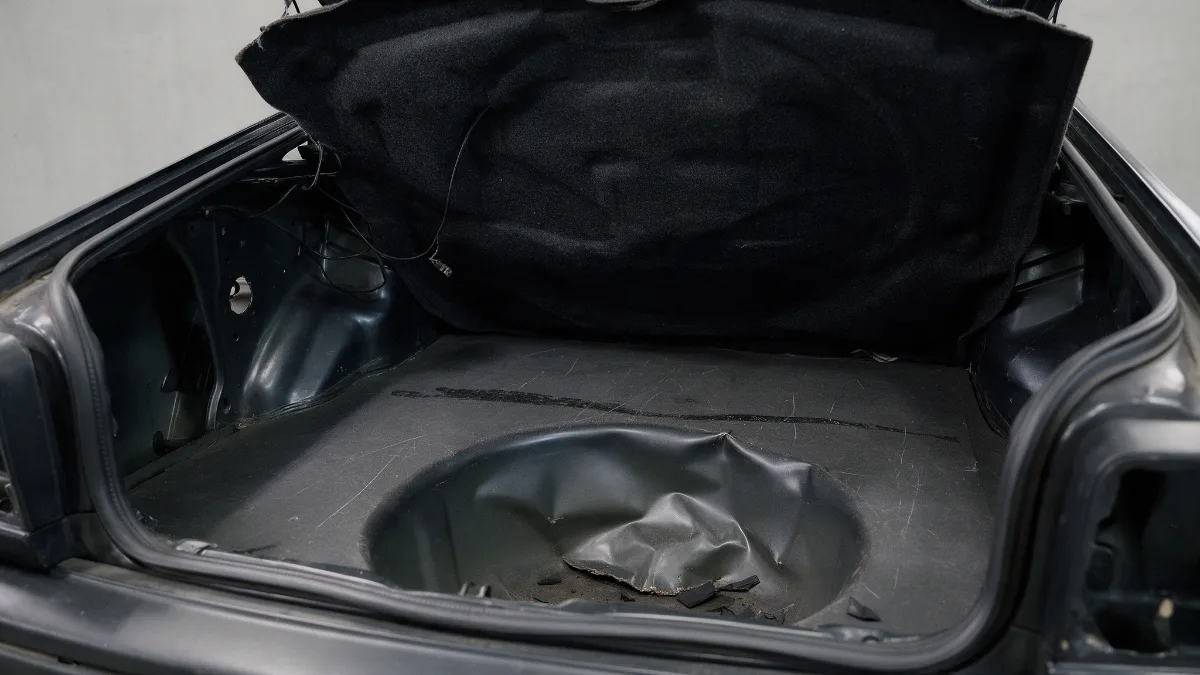
Rear end impacts in queueing traffic are the common one on this corridor, and your bumper skin springs back while the crash bar behind it does not. Boot floor sections, rear panel joints and the spare wheel well are where your cost sits, and none of them are visible with the bumper on.
Debris strikes are the second pattern, taking out windscreens, bonnet leading edges and front bumper faces at speed. The third is lane change contact, which looks like one long scrape and is usually your door, your wing and a quarter panel. What a light looking impact can hide is in hidden damage after a minor accident.
Company cars, lease vehicles and who authorises the work
Find out who is paying before the car comes in, because on a company or lease vehicle the person driving it is usually not the person who authorises the repair. That one phone call saves a week.
Three parties can be involved. The leasing company, which often has standards about parts and finish written into your contract. The fleet manager or employer, who may have a preferred supplier arrangement. And the insurer, if a claim is running. Each will want paperwork, and a repair started without the right authority can end with nobody willing to settle your invoice.
Lease returns are the other half of this. Damage charged at end of contract is assessed against a published fair wear and tear standard, and repairing a panel properly beforehand is almost always cheaper than the charge. On smaller damage, whether to repair at all or absorb the charge is a calculation worth doing, and the repair side of it is on dent and scratch repair.
Driver assistance systems on newer cars
A car with radar behind the grille or a camera on the windscreen is not finished when the panels go back on. Those systems have to be recalibrated, or they aim at the wrong place.
A camera that is a fraction of a degree out at your windscreen is pointing metres off at the distance it is actually watching. The systems that depend on it, automatic braking, lane keeping and adaptive cruise, carry on working and work on bad information, which is worse than not working at all because you have no reason to doubt them.
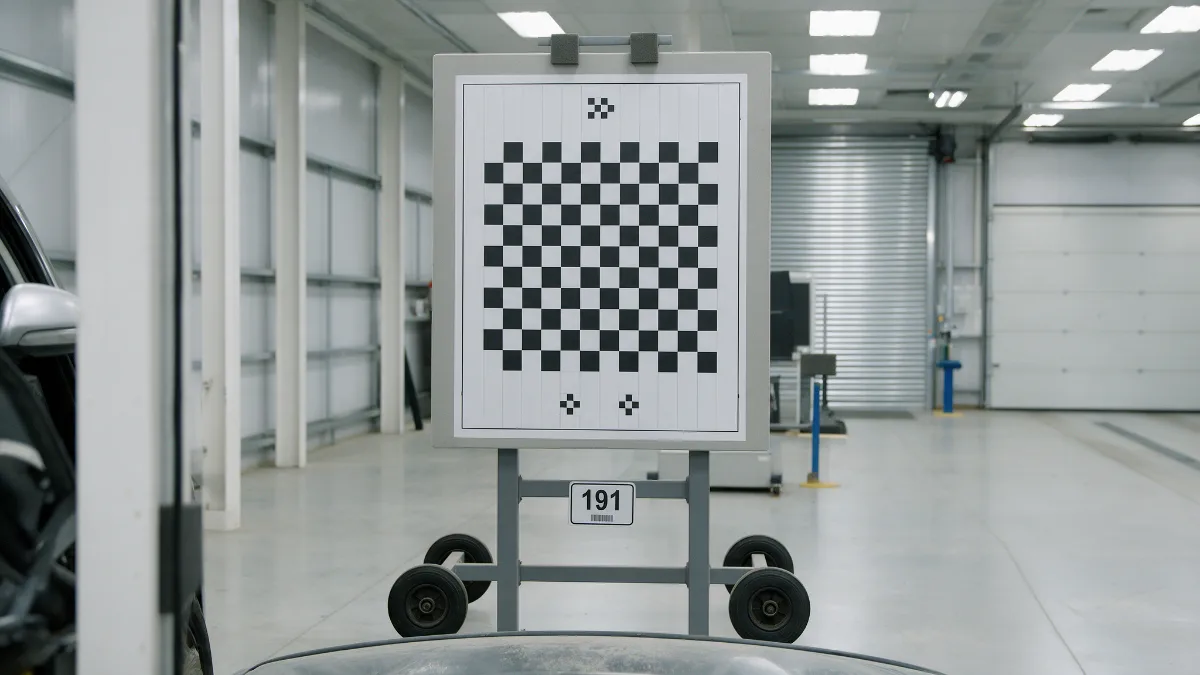
Calibration is done in house with a manufacturer specific procedure arranged where one is required. The practical point for a Bridgend driver is that this is one of the reasons the longer drive can be the right call, rather than an extra line on an invoice. What the process involves is in ADAS calibration after accident repair.
Road damage claims in Bridgend county borough
Bridgend County Borough Council is the highway authority for roads in the borough, and the M4 is not one of them. Motorways and trunk roads across Wales sit with the Welsh Government instead, and in this region the South Wales Trunk Road Agent manages them.
For a commuter that means a single journey crosses two authorities, and your claim follows the road rather than your postcode. A wheel destroyed on the M4 is a Welsh Government claim. The same wheel destroyed on a street in Bridgend is a council claim.
Both are decided on records and both will be defended on the inspection regime. Photograph the defect with something in shot for scale, note the date, time and direction, keep the invoice, and send it to the right body first time, because the defect will be filled long before a misdirected claim finds its way back to you.
What Bridgend customers bring in most
Rear end collision damage, multi panel paint work and calibration jobs on newer cars. That mix is exactly what you would expect, because those are the three things worth travelling for.
Rear end work starts with your bumper off and the boot floor exposed, because that is the only way to know what is being quoted. Multi panel paint means reading the colour off your car rather than the code and blending across the adjacent panels, which is the stage that decides whether anybody can see the repair in daylight.
Electric and hybrid cars are a growing share of it, and they bring their own rules about what can be touched and in what order. High voltage components are isolated before any structural work, and battery damage is referred for specialist assessment rather than improvised with. What that means in practice is in electric and hybrid accident repair.
One trip rather than two
Send photographs first so the trip you make is the trip that leaves the car with us. Driving forty five minutes to be told your bumper needs to come off before anybody can quote is a wasted morning.
Take them in daylight, straight on and from both sides, with a wide shot showing where the damage sits on the car. On a rear impact, open the boot and photograph the floor and the spare wheel well. Say in the message whether the car is on a lease or a company policy and who authorises the work, because that often matters more than the damage. The photographs worth taking before a long drive are covered in how to photograph car damage for a quote.
We will say so if the answer is that the job belongs closer to home. That is a shorter conversation than a wasted journey.
Why multi panel paint needs a booth
Because dust, temperature and airflow decide whether the lacquer stays clear, and none of the three is controlled in a unit with the shutter open. On one small panel you may get away with it. Across three you will not.
A booth holds the air clean and the temperature steady through flash times and the bake, which is what lets paint go off evenly rather than drying at different rates across a car. Uneven drying is what produces the slight difference in sheen you notice on your car when the light is low and you look from an angle, long after the colour itself matched perfectly in the bay.
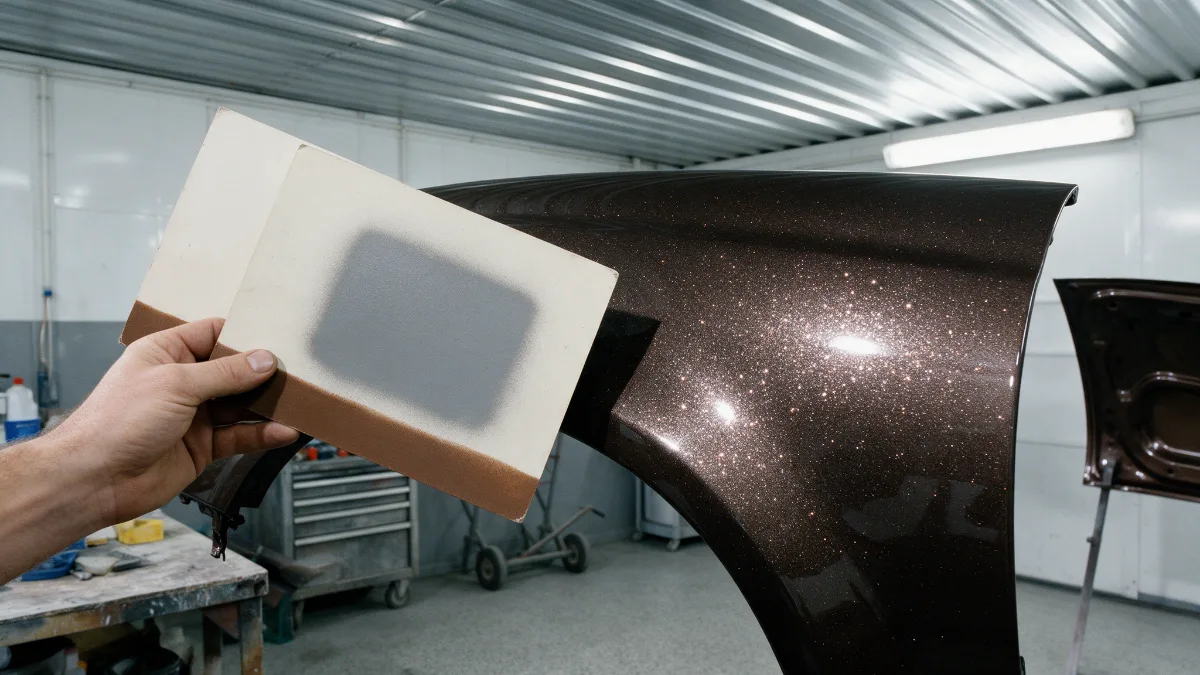
The second half is the colour itself. Paint is read off the existing panels with an instrument and test cards are sprayed until one disappears against the car, then the colour is blended out into the neighbouring panels so there is no edge for the eye to catch. How that is done, and why blending is part of the job rather than an addition to it, is on paint and spray repairs.
How long the car will be away from Bridgend
Plan on a week for a rear end repair with paint across two or three panels, and a few days for a single panel. The paint stages set the pace, not the panel work.
Three things add time and only one is within anybody control once the job starts. Parts, which is the common delay if your car is no longer current enough for a factor to stock it. Insurer authority, which runs at the front of the job rather than in the workshop. And a supplementary estimate, which is what happens when strip down finds something the first quote could not see.
Because the drive is long, agree a collection date at the point the quote is accepted and ask to be told rather than to ring and ask. What drives the timeline, and what causes most of the delays, is on how long accident repair takes.
Book an accident repair from Bridgend
We are at Unit 4 Wentloog Buildings, Wentloog Road, Rumney, Cardiff CF3 1TH, Monday to Saturday, 9am to 6pm, with six work bays and the spray booth on site. Take the M4 east to junction 29, then the A48 east and leave at the Rumney turn. Send photographs before you set off and we will tell you honestly whether the drive is worth making. The rest of what the workshop does is on accident repair.
Questions from Bridgend drivers
Is it worth driving to Cardiff for a bumper scuff?
No. On a single scuff or a kerbed wheel, use a shop near home. The drive earns its keep on multi panel paint, structural work and calibration jobs.
Who authorises a repair on my company car?
Usually the leasing company or the fleet manager rather than you, and sometimes the insurer as well. Find out before the car comes in, because work started without authority can end with nobody paying.
Does my car need recalibrating after a bumper repair?
Yes, if there is radar behind the grille or a camera looking through the windscreen. Those systems do not know they have been moved, which is what makes it a safety issue rather than a convenience.
The M4 destroyed a wheel. Who pays for that?
The Welsh Government, through the South Wales Trunk Road Agent. Bridgend County Borough Council handles roads inside the borough, so the claim follows where the damage happened.
Can you repair an electric car after a collision?
Yes, with the high voltage system isolated before structural work. Damage to the battery itself is referred for specialist assessment rather than worked around, which is the right answer rather than a limitation.
How many trips will I have to make?
One, if you send photographs first and we agree the job is ours. Leave the car, and collect it when the work is signed off.
Send photographs before you set off, find out who authorises the work on a lease or company car, and let us tell you honestly if the job belongs closer to home. Call 07400 454839 or use the contact form.